THE ADVENTURE COLLECTIVE® · Independent discovery and booking for outdoor travel

Escape Hanoi for a day and discover Mai Chau’s limestone passes, rice‑paddy loops and White Thai hospitality. This guided day trip combines scenic drives, a traditional lunch, a cave visit and an easy bike ride through peaceful villages.
Escape Hanoi for a day and discover Mai Chau’s limestone passes, rice‑paddy loops and White Thai hospitality. This guided day trip combines scenic drives, a traditional lunch, a cave visit and an easy bike ride through peaceful villages.
At first light the minivan slips out of Hanoi, the city's density loosening into a long ribbon of rice paddies and low limestone ridges. Three hours later the road climbs and the air cools—Thung Khe Pass unfolds like a theatrical curtain: rock faces leaning over the highway, clouds weaving through teeth of karst. From that vantage the Mai Chau valley lies below, a bowl of emerald fields punctuated by stilt houses and narrow lanes where water buffalo amble and bicycles thread between farmers.
Verified experiences and guided adventures in the surrounding area.
Operated by Open Asia Travel · Mai Chau, Hoa Binh
At first light the minivan slips out of Hanoi, the city's density loosening into a long ribbon of rice paddies and low limestone ridges. Three hours later the road climbs and the air cools—Thung Khe Pass unfolds like a theatrical curtain: rock faces leaning over the highway, clouds weaving through teeth of karst. From that vantage the Mai Chau valley lies below, a bowl of emerald fields punctuated by stilt houses and narrow lanes where water buffalo amble and bicycles thread between farmers.
Mai Chau sits in Hoa Binh province and has for generations been home to the White Thai people, whose village life and weaving traditions are the centerpiece of this one-day escape. Geologically the landscape is a classic northern Vietnam karst landscape: limestone uplifted and carved by millennia of rain and river, yielding caves like Mo Luong and dramatic passes like Thung Khe that were once strategic routes between Red River lowlands and the highlands.
Cultural contact is immediate. A guided visit to a Thai household offers a demonstration of hand-loom weaving, the slow geometry of motifs stitched by women who’ve passed the patterns down through family lines. Food follows in the same unhurried spirit: a communal Vietnamese lunch balanced around sticky rice, fresh herbs, and grilled local fish—simple flavors that feel like a map of the valley.
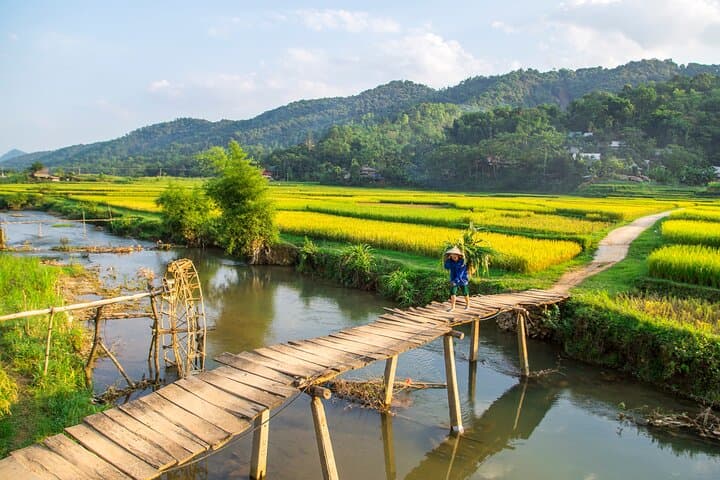
The ride portion is purposely modest: a 45–60 minute loop on quiet lanes and packed-dirt tracks that hugs paddies and skirts the foot of karst outcrops. Terrain is flat to gently rolling; elevation in the valley averages around 400–600 meters, while Thung Khe reaches roughly 1,000 meters—enough to alter the light and cool the breeze.
Practicalities matter on a compact day trip. Expect about 7–8 hours total, including round-trip driving from Hanoi, short stops at viewpoints, a cave visit, the cultural call at a home workshop, and an easy guided bike loop. Wear closed-toe shoes for the short cave and village walks, bring sun protection and a light rain shell—weather flips quickly on the pass. Hydration is covered by the operator (three bottles provided), but carrying a refillable bottle is still worthwhile for the bicycle leg.
For travelers short on time, this itinerary strikes a tidy balance of scenery, culture and active travel: a highland pass that demands a camera, rice paddies that invite slow observation, and a family lunch that connects the route on the map to people who live there. Timing your departure early from Hanoi and listening to local rhythms—tea before the meal, a patient explanation of weaving—turns a day trip into a clear slice of northern Vietnam.
easy.
7–8 hours.
Suitable for most fitness levels; expect short easy walks and a gentle 45–60 minute bike loop on mostly flat terrain.
Expect about 2.5–3.5 hours to Thung Khe and another short drive into Mai Chau; total road time round trip is roughly 6–7 hours depending on traffic.
Yes—the ride is a relaxed 45–60 minute loop on quiet village lanes and packed-dirt tracks with minimal climbing.
A traditional Vietnamese lunch with local White Thai dishes is included, featuring sticky rice, local vegetables and grilled items; vegetarian options can usually be arranged with advance notice.
Infants must sit on an adult’s lap; the trip is family-friendly but note the long drives and some uneven surfaces.
Mo Luong cave involves short, low-ceiling sections and uneven floors—moderate mobility is sufficient but it’s not recommended for those with serious back or mobility issues.
An English-speaking guide is provided for the tour.
The White Thai people have inhabited Mai Chau for centuries; their stilt houses and woven textiles reflect a long tradition of upland rice cultivation and artisanal weaving.
Visitors are encouraged to support local artisans directly and minimize plastic waste; stick to marked lanes to avoid trampling young rice shoots.
Open Asia Travel operates guided outdoor trips and adventures with an emphasis on safety, stewardship, and memorable experiences.
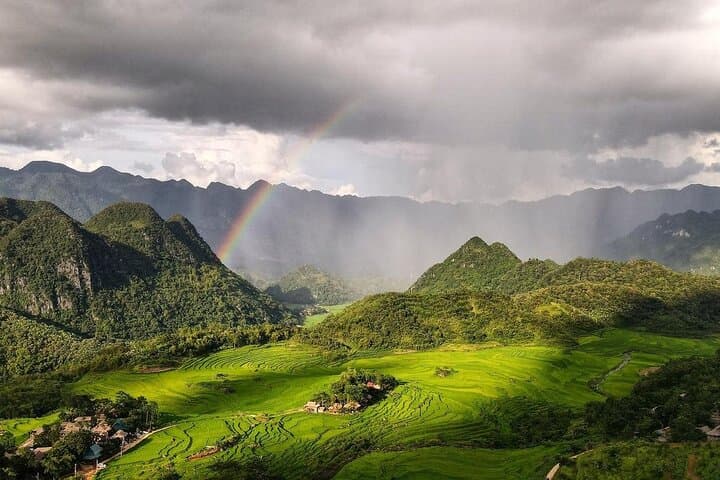
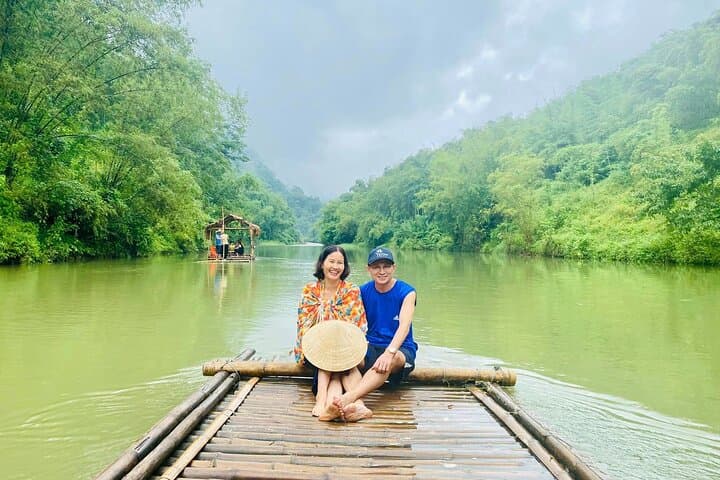
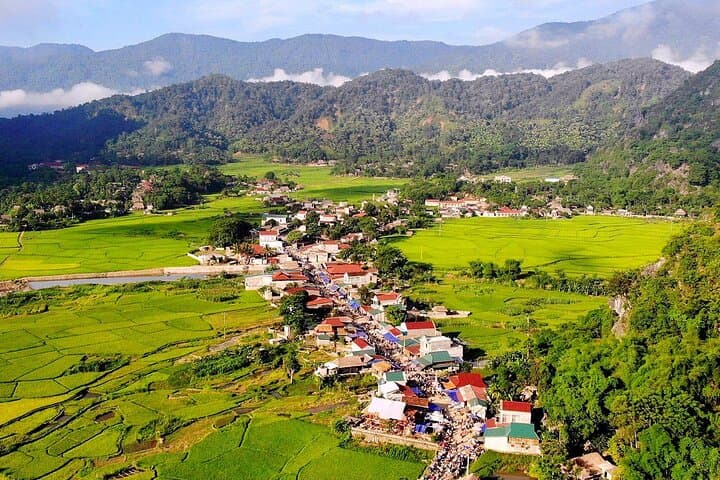
At first light the minivan slips out of Hanoi, the city's density loosening into a long ribbon of rice paddies and low limestone ridges. Three hours later the road climbs and the air cools—Thung Khe Pass unfolds like a theatrical curtain: rock faces leaning over the highway, clouds weaving through teeth of karst. From that vantage the Mai Chau valley lies below, a bowl of emerald fields punctuated by stilt houses and narrow lanes where water buffalo amble and bicycles thread between farmers.
At first light the minivan slips out of Hanoi, the city's density loosening into a long ribbon of rice paddies and low limestone ridges. Three hours later the road climbs and the air cools—Thung Khe Pass unfolds like a theatrical curtain: rock faces leaning over the highway, clouds weaving through teeth of karst. From that vantage the Mai Chau valley lies below, a bowl of emerald fields punctuated by stilt houses and narrow lanes where water buffalo amble and bicycles thread between farmers.
Mai Chau sits in Hoa Binh province and has for generations been home to the White Thai people, whose village life and weaving traditions are the centerpiece of this one-day escape. Geologically the landscape is a classic northern Vietnam karst landscape: limestone uplifted and carved by millennia of rain and river, yielding caves like Mo Luong and dramatic passes like Thung Khe that were once strategic routes between Red River lowlands and the highlands.
Cultural contact is immediate. A guided visit to a Thai household offers a demonstration of hand-loom weaving, the slow geometry of motifs stitched by women who’ve passed the patterns down through family lines. Food follows in the same unhurried spirit: a communal Vietnamese lunch balanced around sticky rice, fresh herbs, and grilled local fish—simple flavors that feel like a map of the valley.
The ride portion is purposely modest: a 45–60 minute loop on quiet lanes and packed-dirt tracks that hugs paddies and skirts the foot of karst outcrops. Terrain is flat to gently rolling; elevation in the valley averages around 400–600 meters, while Thung Khe reaches roughly 1,000 meters—enough to alter the light and cool the breeze.
Practicalities matter on a compact day trip. Expect about 7–8 hours total, including round-trip driving from Hanoi, short stops at viewpoints, a cave visit, the cultural call at a home workshop, and an easy guided bike loop. Wear closed-toe shoes for the short cave and village walks, bring sun protection and a light rain shell—weather flips quickly on the pass. Hydration is covered by the operator (three bottles provided), but carrying a refillable bottle is still worthwhile for the bicycle leg.
For travelers short on time, this itinerary strikes a tidy balance of scenery, culture and active travel: a highland pass that demands a camera, rice paddies that invite slow observation, and a family lunch that connects the route on the map to people who live there. Timing your departure early from Hanoi and listening to local rhythms—tea before the meal, a patient explanation of weaving—turns a day trip into a clear slice of northern Vietnam.