THE ADVENTURE COLLECTIVE® · Independent discovery and booking for outdoor travel

Walk the Magnificent Mile with a local guide and see Chicago’s skyline evolve from Beaux‑Arts to modernist towers. Upgrade to 360 Chicago to cap the tour with panoramic views from 1,030 feet above the city.
Walk the Magnificent Mile with a local guide and see Chicago’s skyline evolve from Beaux‑Arts to modernist towers. Upgrade to 360 Chicago to cap the tour with panoramic views from 1,030 feet above the city.
You set off from the north edge of Millennium Park where the city opens like a stage: Lake Michigan looming to the east, the glass and limestone of the Magnificent Mile rising to the north. Your guide—orange hat, steady cadence—steers the small group past the Cancer Survivors’ Garden and across Field Boulevard, and the street begins to tell a century of Chicago in a single block.
Verified experiences and guided adventures in the surrounding area.
Operated by ExperienceFirst · Chicago, Illinois
You set off from the north edge of Millennium Park where the city opens like a stage: Lake Michigan looming to the east, the glass and limestone of the Magnificent Mile rising to the north. Your guide—orange hat, steady cadence—steers the small group past the Cancer Survivors’ Garden and across Field Boulevard, and the street begins to tell a century of Chicago in a single block.
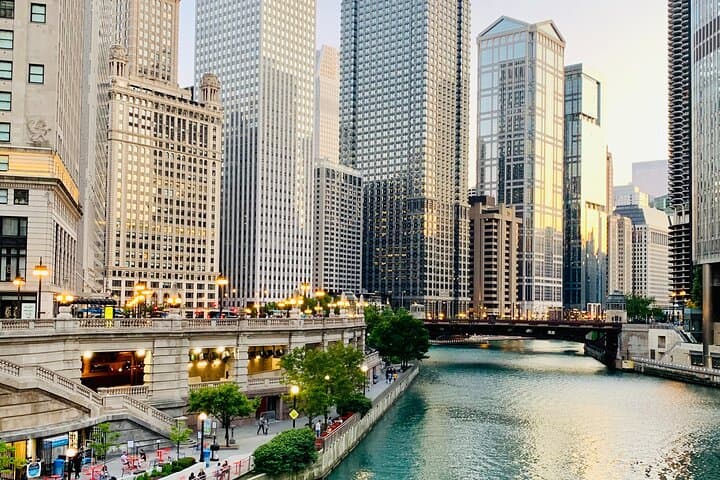
The Mile is a lesson in architectural temper and reinvention. Here the Beaux-Arts grace of early 20th-century facades rubs shoulders with Art Deco setbacks and later Modernist towers. The walk tracks the city’s recovery after the Great Chicago Fire of 1871 and the flowering of the Chicago School, where steel frames turned masonry into ornament rather than structure. The Tribune Tower’s Gothic flourishes and the Wrigley Building’s sunlit terra cotta carry that civic ambition into stone; further north, late-modern glass and minimalist retail fronts argue for 21st-century commerce.
Geology is quieter but present: the shoreline and reclaimed riverbanks shaped where streets could rise, and Lake Michigan remains a constant—its wind and light animating facades and inviting reflection. Along the way you’ll pass storefront oddities (yes, the world’s largest Starbucks and a Harry Potter shop), high fashion windows, and the hushed interior of the Chicago Cultural Center, whose ornate ceilings are an unexpected lung of calm.
If you upgrade, the finale is 360 Chicago atop the former John Hancock Center—1,030 feet of vantage where the grid below resolves into lines and the lake becomes a bright margin. The deck is self-guided; linger for a skyline study at golden hour, or buy TILT on the spot for a quick jolt over Michigan Avenue.
Practical pulse: the route is roughly 1.5–2 miles of paved city sidewalks with frequent crosswalks—flat, urban, accessible. Expect two hours: a steady walk with stops totaling about 90–120 minutes. Bring comfortable shoes, a transit card (the Red Line and bus routes get you close), and a small water bottle; Chicago wind can make a short outing feel longer. Arrive 15 minutes early—the tour starts promptly at the Federal Building Columns—and factor extra time if you add the observation deck.
Local insight: ask your guide about the hidden markers in facades—stones from demolished European landmarks are embedded in the Tribune Tower—and watch the sky: peregrine falcons nest on towers, and gulls patrol the lakefront. This is a city tour with the blunt, bright energy of commerce and the careful patience of preserved ornament; it’s both a primer and an invitation to walk the spine of Chicago’s downtown.
easy.
2 hours.
Suitable for all fitness levels; requires standing and walking on flat city sidewalks for up to two hours.
Meet on the north side of the Cancer Survivors’ Garden in front of the Federal Building Columns at Field Boulevard and E. Randolph Street; guides wear an orange ExperienceFirst hat.
Yes—if you didn’t pre-book the upgrade you can buy a 360 Chicago ticket onsite after the walking portion, though availability for peak times may vary.
Yes—the sidewalks and stops along Michigan Avenue are wheelchair accessible; notify the operator of accessibility needs when booking.
There are public restrooms near Millennium Park and inside major retail buildings, and you'll have time during stops to use facilities when available.
Yes—strollers are allowed and the tour is family-friendly, though toddlers should be able to handle the walking pace and street crossings.
The observation deck visit is self-guided; you can stay as long as you like within the deck’s operating hours after the tour ends.
The Magnificent Mile grew after the Great Chicago Fire and flourished in the 1920s when the city embraced Beaux‑Arts and Art Deco design; later 20th‑century construction layered modernism onto that urban fabric.
Chicago manages its lakefront and riverfront with shoreline restoration and public‑space initiatives; stay on sidewalks and avoid disturbing shoreline plantings and bird nesting sites.
ExperienceFirst operates guided outdoor trips and adventures with an emphasis on safety, stewardship, and memorable experiences.
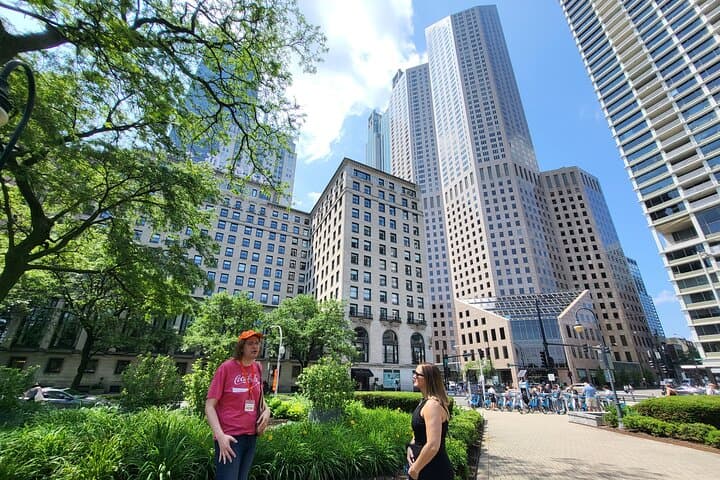


You set off from the north edge of Millennium Park where the city opens like a stage: Lake Michigan looming to the east, the glass and limestone of the Magnificent Mile rising to the north. Your guide—orange hat, steady cadence—steers the small group past the Cancer Survivors’ Garden and across Field Boulevard, and the street begins to tell a century of Chicago in a single block.
You set off from the north edge of Millennium Park where the city opens like a stage: Lake Michigan looming to the east, the glass and limestone of the Magnificent Mile rising to the north. Your guide—orange hat, steady cadence—steers the small group past the Cancer Survivors’ Garden and across Field Boulevard, and the street begins to tell a century of Chicago in a single block.
The Mile is a lesson in architectural temper and reinvention. Here the Beaux-Arts grace of early 20th-century facades rubs shoulders with Art Deco setbacks and later Modernist towers. The walk tracks the city’s recovery after the Great Chicago Fire of 1871 and the flowering of the Chicago School, where steel frames turned masonry into ornament rather than structure. The Tribune Tower’s Gothic flourishes and the Wrigley Building’s sunlit terra cotta carry that civic ambition into stone; further north, late-modern glass and minimalist retail fronts argue for 21st-century commerce.
Geology is quieter but present: the shoreline and reclaimed riverbanks shaped where streets could rise, and Lake Michigan remains a constant—its wind and light animating facades and inviting reflection. Along the way you’ll pass storefront oddities (yes, the world’s largest Starbucks and a Harry Potter shop), high fashion windows, and the hushed interior of the Chicago Cultural Center, whose ornate ceilings are an unexpected lung of calm.
If you upgrade, the finale is 360 Chicago atop the former John Hancock Center—1,030 feet of vantage where the grid below resolves into lines and the lake becomes a bright margin. The deck is self-guided; linger for a skyline study at golden hour, or buy TILT on the spot for a quick jolt over Michigan Avenue.
Practical pulse: the route is roughly 1.5–2 miles of paved city sidewalks with frequent crosswalks—flat, urban, accessible. Expect two hours: a steady walk with stops totaling about 90–120 minutes. Bring comfortable shoes, a transit card (the Red Line and bus routes get you close), and a small water bottle; Chicago wind can make a short outing feel longer. Arrive 15 minutes early—the tour starts promptly at the Federal Building Columns—and factor extra time if you add the observation deck.
Local insight: ask your guide about the hidden markers in facades—stones from demolished European landmarks are embedded in the Tribune Tower—and watch the sky: peregrine falcons nest on towers, and gulls patrol the lakefront. This is a city tour with the blunt, bright energy of commerce and the careful patience of preserved ornament; it’s both a primer and an invitation to walk the spine of Chicago’s downtown.