THE ADVENTURE COLLECTIVE® · Independent discovery and booking for outdoor travel

Ride a Class III stretch of the Trancura River beneath the shadow of Villarrica Volcano. This half-day rafting trip from Pucón combines technical rapids, glacier-cold water and expert guides—ideal for families with older kids and anyone seeking an adrenaline-packed river run.
Ride a Class III stretch of the Trancura River beneath the shadow of Villarrica Volcano. This half-day rafting trip from Pucón combines technical rapids, glacier-cold water and expert guides—ideal for families with older kids and anyone seeking an adrenaline-packed river run.
A cool wind pushes off the water as the raft noses into the first chop. Paddle blades slice the Trancura’s clear flow and the mountain line of the Villarrica Volcano hangs like a dark backdrop above the river valley. Guides call commands in short, precise bursts—left, right, brace—and the boat answers like a single organism, rising and falling on whitewater.
Verified experiences and guided adventures in the surrounding area.
Operated by Kila Aventura · Pucón, Araucanía
A cool wind pushes off the water as the raft noses into the first chop. Paddle blades slice the Trancura’s clear flow and the mountain line of the Villarrica Volcano hangs like a dark backdrop above the river valley. Guides call commands in short, precise bursts—left, right, brace—and the boat answers like a single organism, rising and falling on whitewater.
The Lower Trancura run is a concentrated lesson in southern Chile’s volcanic rivers: steep gradient, cold meltwater, and a channel carved through basalt and glacial deposits. Indigenous Mapuche communities long used the river corridors for seasonal travel and fishing; later, settlers and loggers shaped the valley’s access roads and small camps. Today the Trancura alternates between playful Class III rapids that demand teamwork and quieter pools that allow a breath and a view back to the forested slopes.
Geology is visible here in the form of dark lava outcrops and rounded boulders smoothed by repeated floods. The river teases out bedrock sections where water funnels and speeds up, then spreads into eddies where native alders and coihue trees overhang the banks. You’ll pass stretches where fallen logs pin the current and others where the channel widens into glassy slackwater reflecting the sky.
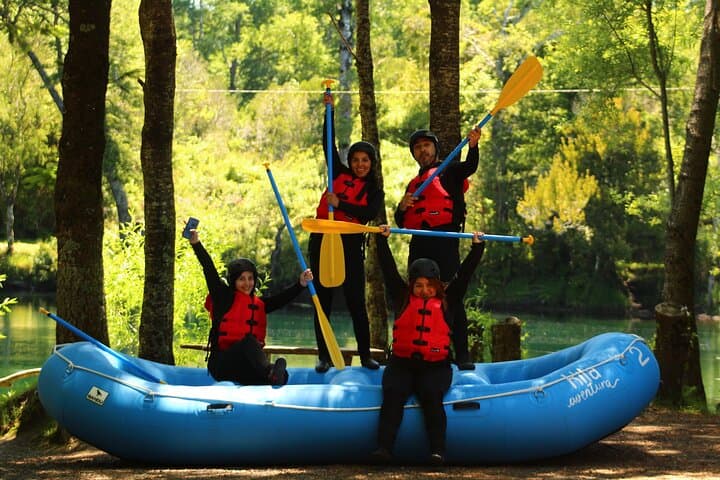
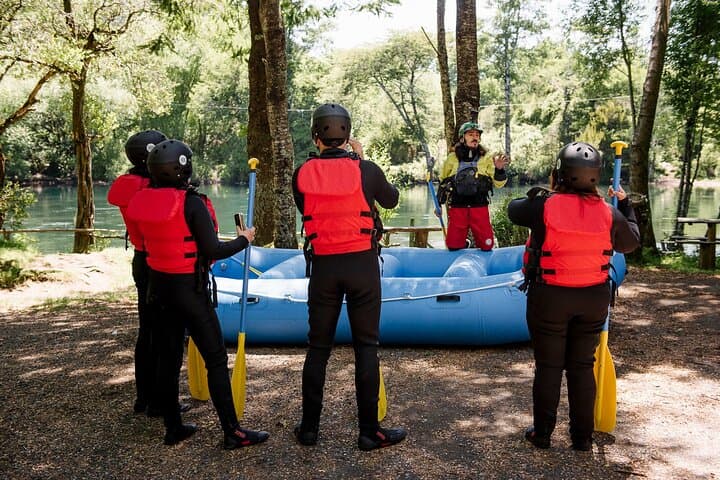
Culturally, Pucón is the gateway—the town hums with outdoor outfitters, Mapuche craft stalls, and bakeries serving hallulla bread. Most operators meet at a base in Quetroleufu just outside town to kit you up in wetsuits, helmets and neoprene boots. Guides supply a brief safety talk and teach the strokes before launching.
Practicalities: the full outing is about three hours from meeting to return, with roughly one hour on the water. The rapids are rated Class III—exciting but suitable for families with children over 8 and for paddlers with a moderate fitness level. Organizers provide wetsuits, neoprene ankle boots, helmets and life jackets; bring a swim suit, quick-dry layers, and a waterproof bag for valuables.
Timing matters—late afternoon light is beautiful but water is cold year-round; spring melt raises flows and can make sections faster, while late summer offers lower, more technical waves. Hydration, sunscreen, and a clear head are essential: if you have back problems, heart issues or pregnancy, this run is not recommended. Guides regularly practice Leave No Trace and work with local operators to limit shoreline impact, so respect briefing rules and help keep river-access points clean.
If you want a crisp, active half-day that pairs a technical paddle with mountain scenery and easy logistics from Pucón, the Lower Trancura delivers: fast water that still leaves room to look up and take in the volcanic skyline.
moderate.
3 hours (approx.) with ~1 hour on water.
Moderate fitness — comfortable with bursts of exertion and able to get in and out of the raft
Participants should be at least 8 years old; children must be able to follow instructions and fit the provided safety gear.
The river is glacier-fed and cold year-round; operators provide full wetsuits, neoprene boots, helmets and life jackets.
No—this Class III run is guided and suited to beginners with a moderate fitness level; guides teach paddling technique before launch.
Meet in central Pucón at the operator’s office (Colo Colo Street near Bernardo O'Higgins Avenue) and shared transport to the base is included.
This activity is not recommended for pregnant travelers or people with serious heart or spinal conditions; check with your doctor and inform the operator of any concerns.
For a full refund cancel at least 24 hours before departure; trips may be canceled for bad weather or insufficient participants.
The Trancura corridor was long used by Mapuche communities and later became a route for settlers and recreational visitors drawn to the river’s energy and the volcano’s presence.
Operators work to minimize shoreline impact and encourage guests to pack out waste; higher flows in spring require extra care to avoid bank erosion.
Kila Aventura operates guided outdoor trips and adventures with an emphasis on safety, stewardship, and memorable experiences.
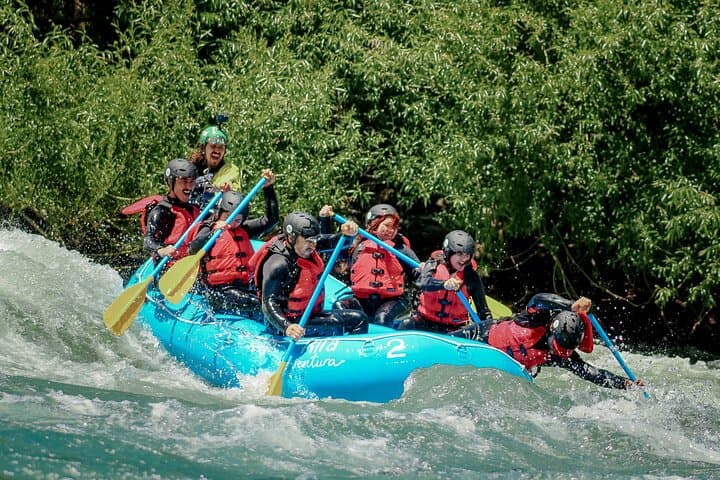
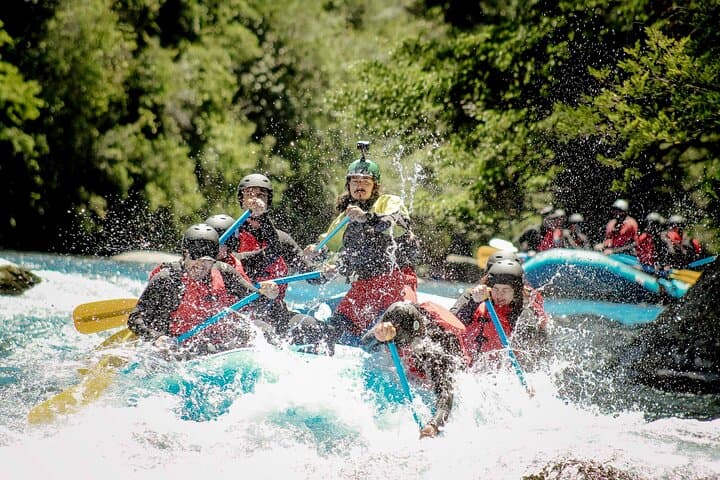
A cool wind pushes off the water as the raft noses into the first chop. Paddle blades slice the Trancura’s clear flow and the mountain line of the Villarrica Volcano hangs like a dark backdrop above the river valley. Guides call commands in short, precise bursts—left, right, brace—and the boat answers like a single organism, rising and falling on whitewater.
A cool wind pushes off the water as the raft noses into the first chop. Paddle blades slice the Trancura’s clear flow and the mountain line of the Villarrica Volcano hangs like a dark backdrop above the river valley. Guides call commands in short, precise bursts—left, right, brace—and the boat answers like a single organism, rising and falling on whitewater.
The Lower Trancura run is a concentrated lesson in southern Chile’s volcanic rivers: steep gradient, cold meltwater, and a channel carved through basalt and glacial deposits. Indigenous Mapuche communities long used the river corridors for seasonal travel and fishing; later, settlers and loggers shaped the valley’s access roads and small camps. Today the Trancura alternates between playful Class III rapids that demand teamwork and quieter pools that allow a breath and a view back to the forested slopes.
Geology is visible here in the form of dark lava outcrops and rounded boulders smoothed by repeated floods. The river teases out bedrock sections where water funnels and speeds up, then spreads into eddies where native alders and coihue trees overhang the banks. You’ll pass stretches where fallen logs pin the current and others where the channel widens into glassy slackwater reflecting the sky.
Culturally, Pucón is the gateway—the town hums with outdoor outfitters, Mapuche craft stalls, and bakeries serving hallulla bread. Most operators meet at a base in Quetroleufu just outside town to kit you up in wetsuits, helmets and neoprene boots. Guides supply a brief safety talk and teach the strokes before launching.
Practicalities: the full outing is about three hours from meeting to return, with roughly one hour on the water. The rapids are rated Class III—exciting but suitable for families with children over 8 and for paddlers with a moderate fitness level. Organizers provide wetsuits, neoprene ankle boots, helmets and life jackets; bring a swim suit, quick-dry layers, and a waterproof bag for valuables.
Timing matters—late afternoon light is beautiful but water is cold year-round; spring melt raises flows and can make sections faster, while late summer offers lower, more technical waves. Hydration, sunscreen, and a clear head are essential: if you have back problems, heart issues or pregnancy, this run is not recommended. Guides regularly practice Leave No Trace and work with local operators to limit shoreline impact, so respect briefing rules and help keep river-access points clean.
If you want a crisp, active half-day that pairs a technical paddle with mountain scenery and easy logistics from Pucón, the Lower Trancura delivers: fast water that still leaves room to look up and take in the volcanic skyline.