THE ADVENTURE COLLECTIVE® · Independent discovery and booking for outdoor travel

A private, full-day circuit from La Paz to Copacabana and Isla del Sol on Lake Titicaca—boat crossings, Inca stairways, Sacred Fountain visits and a local market—packed into 12–13 hours. Ideal for travelers who want a concise, guided introduction to the lake’s landscape and living culture.
A private, full-day circuit from La Paz to Copacabana and Isla del Sol on Lake Titicaca—boat crossings, Inca stairways, Sacred Fountain visits and a local market—packed into 12–13 hours. Ideal for travelers who want a concise, guided introduction to the lake’s landscape and living culture.
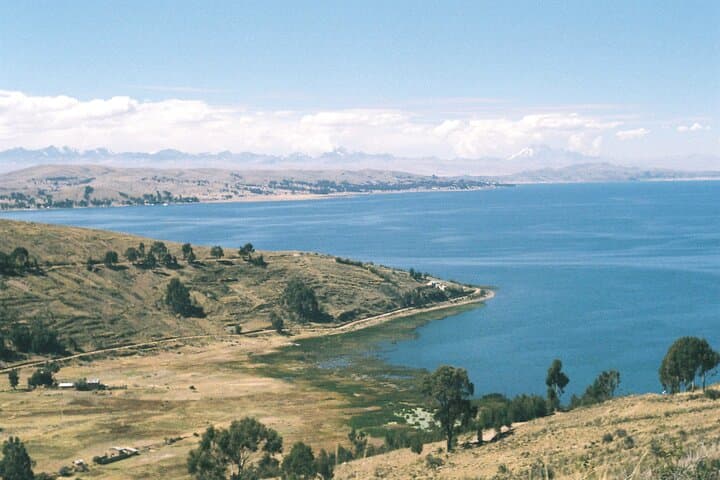
The day begins before sunrise in La Paz, when a private driver slips through the city's web of streets and heads west across the altiplano. The road climbs and opens onto a pale, wind-sculpted plain; by midmorning the outline of Lake Titicaca appears—a shallow, cobalt mirror that dares you to get closer.
Verified experiences and guided adventures in the surrounding area.
Operated by Mundicontact Expeditions · Copacabana, La Paz
The day begins before sunrise in La Paz, when a private driver slips through the city's web of streets and heads west across the altiplano. The road climbs and opens onto a pale, wind-sculpted plain; by midmorning the outline of Lake Titicaca appears—a shallow, cobalt mirror that dares you to get closer.
At Copacabana, the town's low-slung houses and the whitewashed Sanctuary of the Virgin Morena puncture the lakeshore. The guide steps off the boat with practical directions and local stories: pre-Inca and Inca rituals, the lake's role as a cradle of Andean origin myth, and how Copacabana became both pilgrimage stop and fishermen’s market. A short snack and a visit to the basilica offer a human counterpoint to the vast water beyond.
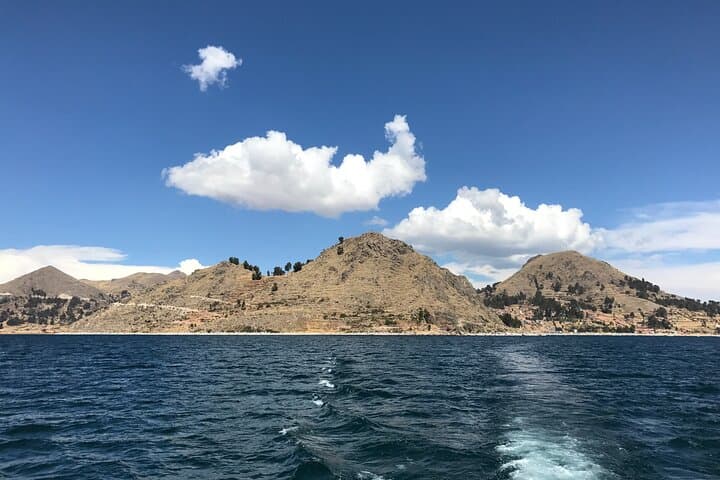
The crossing to Isla del Sol is a slow, private cruise. The lake sits at roughly 3,800 meters, its surface a bright, cold blue that reflects the high sky. Geologically, Titicaca is an Andean basin carved by tectonic uplift and modified by glaciation; the shoreline alternates between pebble beaches and rocky cliffs, and the island's terraces and stonework bear the imprint of centuries of human adaptation.
On Isla del Sol the tour follows sections of the Inca grand staircase and narrow stone paths that braid up the island's slopes. Expect cobbled steps, patches of loose rock and short, steep pitches—about 2–4 kilometers of walking over uneven terrain with a cumulative gain near 200–300 meters depending on the route. Stops include the Sacred Fountain, small ancestral sites, and a local market where woven textiles and carved wooden figures are sold by families with generations on the island.
Lunch is served at a local archaeological restaurant—often simple, hearty fare focused on trout and quinoa—before more market browsing and a return boat ride that frames the island against the looming peaks of the Cordillera Real.
Practical guidance: this is a full-day private trip (12–13 hours) that combines driving, a private boat ride, and several hours of walking at high altitude. Hydrate steadily the day before, wear stiff-soled shoes for cobbles and stairs, sun protection and layered clothing for temperature swings. Bring small bills for market purchases and modest tipping.
Culturally aware travelers will find this day trip both revealing and manageable: it pairs big-water panoramas with close-up encounters—sacred springs and living artisanry—while the private format keeps pace flexible. For those who want a compact taste of Titicaca’s landscape and history without overnight logistics, this loop from La Paz is direct, informative and surprisingly intimate.
moderate.
12–13 hours.
Good walking fitness for several hours at high elevation; able to ascend short steep stair sections and manage uneven terrain.
The drive is roughly 2.5–4 hours each way depending on traffic and route—plan for an early departure and a long day.
Most crossings are calm in the morning, but the lake can be choppy in afternoon winds; private boats tend to choose sheltered routes when possible.
Yes—there are small restaurants and market stalls serving local dishes and trout, but options are limited so bring snacks if you have dietary needs.
The trip includes stair sections and uneven terrain; travelers with limited mobility should consult the operator—some portions and boat embarkation may be difficult.
Yes—vendors usually accept Bolivianos; small bills are best. Some places may accept cards but don’t rely on them.
According to the itinerary, ticketed attractions and boat transportation on the private boat are included in the tour price.
Lake Titicaca is central to Andean origin myths; Isla del Sol was a sacred Inca site said to be the birthplace of the sun and royal lineage.
Visitors should use refillable water bottles and avoid buying products made from threatened lake species; local communities emphasize low-impact tourism to preserve island terraces and freshwater sources.
Mundicontact Expeditions operates guided outdoor trips and adventures with an emphasis on safety, stewardship, and memorable experiences.
The day begins before sunrise in La Paz, when a private driver slips through the city's web of streets and heads west across the altiplano. The road climbs and opens onto a pale, wind-sculpted plain; by midmorning the outline of Lake Titicaca appears—a shallow, cobalt mirror that dares you to get closer.
The day begins before sunrise in La Paz, when a private driver slips through the city's web of streets and heads west across the altiplano. The road climbs and opens onto a pale, wind-sculpted plain; by midmorning the outline of Lake Titicaca appears—a shallow, cobalt mirror that dares you to get closer.
At Copacabana, the town's low-slung houses and the whitewashed Sanctuary of the Virgin Morena puncture the lakeshore. The guide steps off the boat with practical directions and local stories: pre-Inca and Inca rituals, the lake's role as a cradle of Andean origin myth, and how Copacabana became both pilgrimage stop and fishermen’s market. A short snack and a visit to the basilica offer a human counterpoint to the vast water beyond.
The crossing to Isla del Sol is a slow, private cruise. The lake sits at roughly 3,800 meters, its surface a bright, cold blue that reflects the high sky. Geologically, Titicaca is an Andean basin carved by tectonic uplift and modified by glaciation; the shoreline alternates between pebble beaches and rocky cliffs, and the island's terraces and stonework bear the imprint of centuries of human adaptation.
On Isla del Sol the tour follows sections of the Inca grand staircase and narrow stone paths that braid up the island's slopes. Expect cobbled steps, patches of loose rock and short, steep pitches—about 2–4 kilometers of walking over uneven terrain with a cumulative gain near 200–300 meters depending on the route. Stops include the Sacred Fountain, small ancestral sites, and a local market where woven textiles and carved wooden figures are sold by families with generations on the island.
Lunch is served at a local archaeological restaurant—often simple, hearty fare focused on trout and quinoa—before more market browsing and a return boat ride that frames the island against the looming peaks of the Cordillera Real.
Practical guidance: this is a full-day private trip (12–13 hours) that combines driving, a private boat ride, and several hours of walking at high altitude. Hydrate steadily the day before, wear stiff-soled shoes for cobbles and stairs, sun protection and layered clothing for temperature swings. Bring small bills for market purchases and modest tipping.
Culturally aware travelers will find this day trip both revealing and manageable: it pairs big-water panoramas with close-up encounters—sacred springs and living artisanry—while the private format keeps pace flexible. For those who want a compact taste of Titicaca’s landscape and history without overnight logistics, this loop from La Paz is direct, informative and surprisingly intimate.