THE ADVENTURE COLLECTIVE® · Independent discovery and booking for outdoor travel

Paddle quiet lagoons, snorkel vibrant reef flats and watch turtles and rays from a double sea kayak on this full-day Ningaloo tour. Small groups, guided landings and a relaxed beach lunch make it ideal for first-time kayakers who want close encounters with marine life.
Paddle quiet lagoons, snorkel vibrant reef flats and watch turtles and rays from a double sea kayak on this full-day Ningaloo tour. Small groups, guided landings and a relaxed beach lunch make it ideal for first-time kayakers who want close encounters with marine life.
The morning light on the Coral Coast slices across a flat, turquoise lagoon. Paddles dip in time with small, purposeful waves as a white-van convoy unloads double kayaks onto a wide, quiet beach inside Cape Range National Park. Guides fit lifejackets and hand over dry bags; the ocean seems to breathe, a slow steady pull that invites you to push off and glide.
Verified experiences and guided adventures in the surrounding area.
Operated by Exmouth Adventure Co · Exmouth, Western Australia
The morning light on the Coral Coast slices across a flat, turquoise lagoon. Paddles dip in time with small, purposeful waves as a white-van convoy unloads double kayaks onto a wide, quiet beach inside Cape Range National Park. Guides fit lifejackets and hand over dry bags; the ocean seems to breathe, a slow steady pull that invites you to push off and glide.
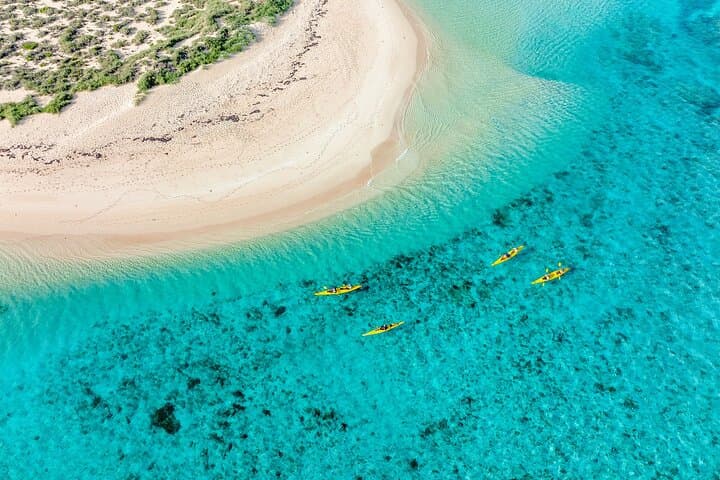
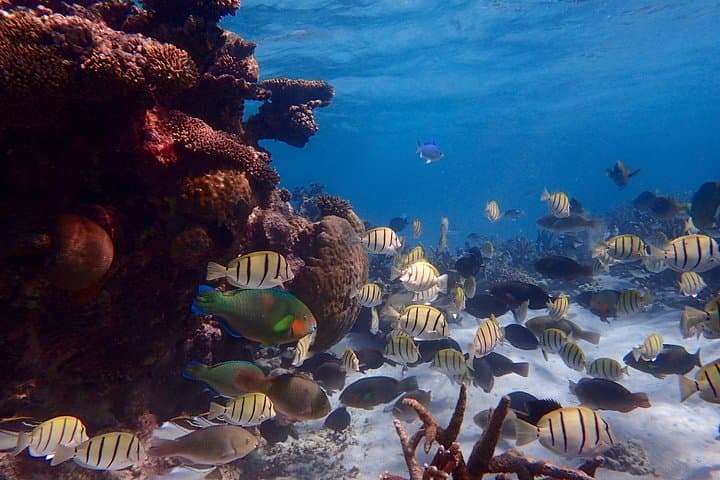
This is the Lagoon Explorer—an eight-hour loop of sheltered paddling, shallow reef-slope snorkeling and beach stops between Ned’s Camp, Lakeside and Osprey Bay. It’s not the broad, exposed ocean most visitors imagine; it’s the intimate back-country of Ningaloo where reef meets range and the water plays with light like a living map. Turtles bob for air on the surface and rays angle like shadows under your hull; on the right day you might watch dolphins thread through blue or glimpse dugong grazing on seagrass (most commonly May–July).
Geologically, Cape Range is a limestone spine carved by ancient seas; its cliffs and canyons fall abruptly to reef flats that support a dense coral community. The Ningaloo Coast is globally important for seasonal wildlife movements and coral diversity—features that brought international attention and strong local protections. The region’s Yamatji and Ngarluma people have long-held connections to these waters; local guides often share small cultural notes about fish, turtle seasons and traditional foodways while you pause onshore.
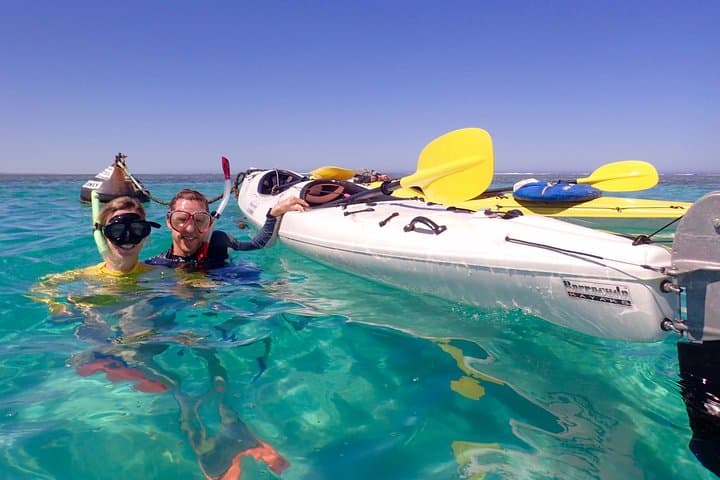
Practicality underpins the romance here. Tours run with a maximum of eight guests, which keeps lanes of silence between kayaks and reduces trampling on fragile reef. Launch sites shift with wind and tide; your guide chooses the calmest lagoon for the day to maximize snorkeling conditions and wildlife chances. Morning tea and a relaxed beach lunch break are part of the rhythm—time to rinse salt from your hair, swap lenses on cameras and listen to the tide calling the reef back to life.
For travelers: plan for sun and salt. The sun is unrelenting—reef-safe sunscreen, long-sleeve rash shirts and a broad-brim hat are non-negotiable. Hydration matters: bring 1–2 liters in winter and up to 3 liters in summer. If you’ve never kayaked, the guides will coach you: basic strokes and re-entry techniques are covered in the safety briefing. There’s a per-person kayak weight limit of 110 kg; book early and confirm pickup times—Exmouth transfers run from about 8:00am with a return around 4:00pm.
When you slide back onto the sand at day’s end, your arms pleasantly tired and camera full of close-up reef shots, the reef will have done what it does best: offered a way to slow down and see the sea as an ecosystem rather than a backdrop. Small-group, guided access here gives you a better seat to watch it all unfold—quietly, responsibly, and very, very close.
moderate.
8 hours (approx. 8:00am–4:00pm).
Suitable for travelers with moderate fitness—comfortable paddling for several hours and short swims/snorkels.
No—guides provide a safety briefing and basic paddle technique; the tour uses stable double sit-inside kayaks suitable for beginners.
There is a per-person limit of 110 kg for the kayaks used on this tour—contact the provider if you have concerns.
Wildlife sightings aren’t guaranteed, but dugong are most commonly seen May–July and dolphins or manta rays are possible any time of year.
Bring reef-safe sunscreen, a hat, swimwear, towel, a water bottle (1–3L depending on season), and any personal snorkel gear if you prefer your own.
Children aged 12–17 are welcome but must be accompanied by an adult; younger children are not permitted on this tour.
The tour may be cancelled for unsafe sea conditions or insufficient travelers; full refunds are available if cancelled at least 24 hours prior.
Cape Range’s limestone ridges were formed by ancient coral and marine deposits; the Ningaloo Coast is recognized for its rich marine biodiversity and community protections.
Choose reef-safe sunscreen, avoid touching coral and maintain respectful distances from wildlife; small-group tours reduce pressure on sensitive sites.
Exmouth Adventure Co operates guided outdoor trips and adventures with an emphasis on safety, stewardship, and memorable experiences.
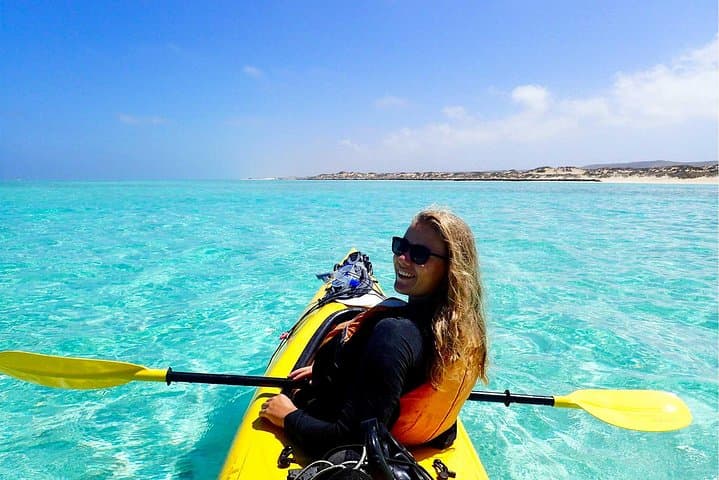
The morning light on the Coral Coast slices across a flat, turquoise lagoon. Paddles dip in time with small, purposeful waves as a white-van convoy unloads double kayaks onto a wide, quiet beach inside Cape Range National Park. Guides fit lifejackets and hand over dry bags; the ocean seems to breathe, a slow steady pull that invites you to push off and glide.
The morning light on the Coral Coast slices across a flat, turquoise lagoon. Paddles dip in time with small, purposeful waves as a white-van convoy unloads double kayaks onto a wide, quiet beach inside Cape Range National Park. Guides fit lifejackets and hand over dry bags; the ocean seems to breathe, a slow steady pull that invites you to push off and glide.
This is the Lagoon Explorer—an eight-hour loop of sheltered paddling, shallow reef-slope snorkeling and beach stops between Ned’s Camp, Lakeside and Osprey Bay. It’s not the broad, exposed ocean most visitors imagine; it’s the intimate back-country of Ningaloo where reef meets range and the water plays with light like a living map. Turtles bob for air on the surface and rays angle like shadows under your hull; on the right day you might watch dolphins thread through blue or glimpse dugong grazing on seagrass (most commonly May–July).
Geologically, Cape Range is a limestone spine carved by ancient seas; its cliffs and canyons fall abruptly to reef flats that support a dense coral community. The Ningaloo Coast is globally important for seasonal wildlife movements and coral diversity—features that brought international attention and strong local protections. The region’s Yamatji and Ngarluma people have long-held connections to these waters; local guides often share small cultural notes about fish, turtle seasons and traditional foodways while you pause onshore.
Practicality underpins the romance here. Tours run with a maximum of eight guests, which keeps lanes of silence between kayaks and reduces trampling on fragile reef. Launch sites shift with wind and tide; your guide chooses the calmest lagoon for the day to maximize snorkeling conditions and wildlife chances. Morning tea and a relaxed beach lunch break are part of the rhythm—time to rinse salt from your hair, swap lenses on cameras and listen to the tide calling the reef back to life.
For travelers: plan for sun and salt. The sun is unrelenting—reef-safe sunscreen, long-sleeve rash shirts and a broad-brim hat are non-negotiable. Hydration matters: bring 1–2 liters in winter and up to 3 liters in summer. If you’ve never kayaked, the guides will coach you: basic strokes and re-entry techniques are covered in the safety briefing. There’s a per-person kayak weight limit of 110 kg; book early and confirm pickup times—Exmouth transfers run from about 8:00am with a return around 4:00pm.
When you slide back onto the sand at day’s end, your arms pleasantly tired and camera full of close-up reef shots, the reef will have done what it does best: offered a way to slow down and see the sea as an ecosystem rather than a backdrop. Small-group, guided access here gives you a better seat to watch it all unfold—quietly, responsibly, and very, very close.