THE ADVENTURE COLLECTIVE® · Independent discovery and booking for outdoor travel

Spend a sun-drenched day cruising from Zadar through Kornati’s sculpted limestone and into Telašćica’s sheltered bay. Swim crystalline waters, explore cliff faces, and visit Mir salt lake on this eight‑hour boat trip with breakfast and lunch included.
Spend a sun-drenched day cruising from Zadar through Kornati’s sculpted limestone and into Telašćica’s sheltered bay. Swim crystalline waters, explore cliff faces, and visit Mir salt lake on this eight‑hour boat trip with breakfast and lunch included.
You step off the quay at Liburnska Obala with salt on your lips and the Dalmatian sun already pulling color into the limestone. The boat slides away from Zadar’s stone ribs and within an hour the skyline thins into islands—hundreds of low, sculpted heads of rock rising from an Adriatic too clear to be ordinary. This is Kornati, the archipelago locals call the "Tears of God," and the day’s move is simple: drift, swim, and read the shorelines with your hands.
Verified experiences and guided adventures in the surrounding area.
Operated by Croatica · Zadar, Zadar County
You step off the quay at Liburnska Obala with salt on your lips and the Dalmatian sun already pulling color into the limestone. The boat slides away from Zadar’s stone ribs and within an hour the skyline thins into islands—hundreds of low, sculpted heads of rock rising from an Adriatic too clear to be ordinary. This is Kornati, the archipelago locals call the "Tears of God," and the day’s move is simple: drift, swim, and read the shorelines with your hands.
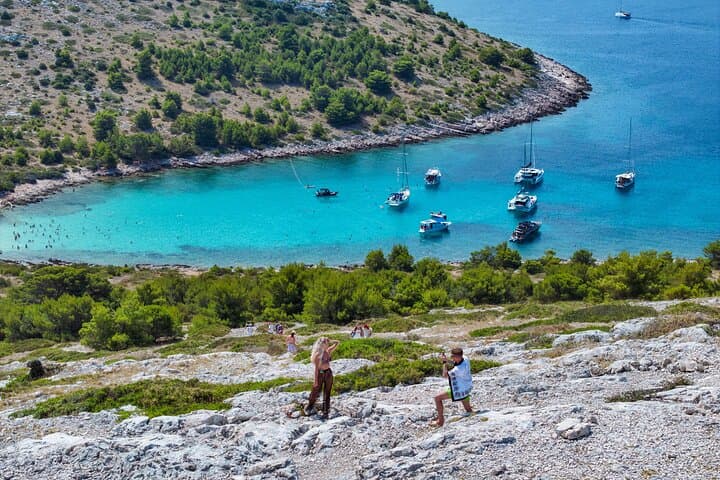
Kornati is a place where geology keeps time. Jagged karst cliffs, scoured by wind and water, rise from deep blue that drops off fast—there are spots where you can see the seabed at 40 meters. The islands are mostly treeless limestone, scarred with ancient dry-stone walls and the ghost of small-scale farming that once eked a living from thin soil. Telašćica, on the southern tip of Dugi Otok, offers a counterpoint: a huge, protected bay with sheltered coves, 161‑meter cliffs on Dugi Otok and a brackish salt lake, Mir, ringed by reeds and surprising greenery.
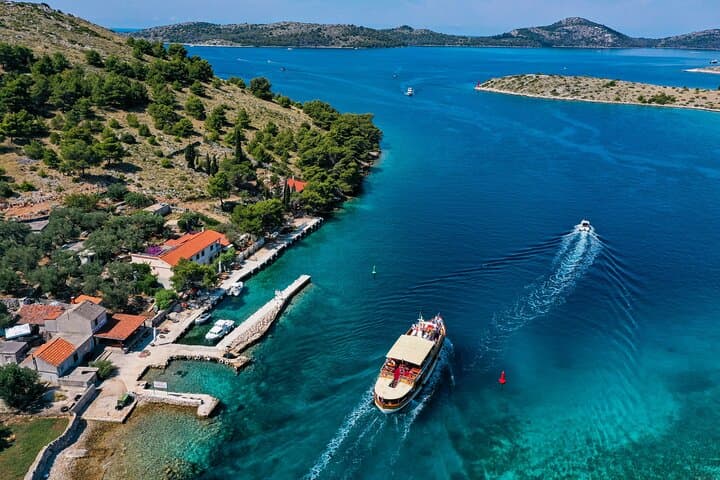
Culturally, the archipelago has always been cracked into pockets of human life—fishermen, shepherds, and salt workers who left stone terraces and simple chapels. Today the islands are protected: Kornati National Park and Telašćica Nature Park regulate anchoring and visitation to preserve the fragile marine meadows and seabird colonies.
On the tour you’ll stop twice for roughly three hours of swimming, snorkeling, and shoreline exploration, with breakfast and a midday lunch served on board. Expect live commentary from a local guide who points out sea caves, diving spots, and where the currents run cool. Bring sunscreen and a reef‑friendly attitude: anchoring and litter are taken seriously here.
Practicalities: meet at Liburnska Obala in Zadar (no hotel pickup). National Park entrance is not included and is payable in cash at check‑in (about 100 HRK). The trip runs about eight hours and is weather‑dependent—strong wind or rough seas can change the route or force cancellation. Boats are designed for comfort but balance: be ready for sun, sea spray, and a descent ladder for swims.
Why go? In one day you experience the raw geometry of Dalmatian karst, the sheltered calm of Telašćica’s bay, the surprising warm‑salt pocket of Mir Lake, and bright Adriatic water that invites you to float and look down. It’s an efficient, sensory way to understand this corner of the Adriatic—wild, human, and marine all at once.
easy.
8 hours.
Suitable for most fitness levels; you should be comfortable getting on/off a boat and swimming short distances.
No — the Kornati National Park entrance fee (~100 HRK) is payable at check‑in in cash.
Some tours carry basic snorkeling masks and fins, but it’s best to bring your own for fit and hygiene; confirm with the operator before departure.
No — guests must meet at Liburnska Obala in Zadar; the operator sends detailed meeting instructions one day before departure.
Trips are weather‑dependent. In case of strong winds or rough seas the tour can be rescheduled or canceled with a full refund if within policy.
Yes — infants must sit on an adult’s lap and all children should be supervised during swimming stops; the trip is rated easy for physical demand.
Yes — a meat or fish menu is standard, but vegetarian options can be arranged with prior notice.
The Kornati islands carry centuries of small‑scale pastoral and fishing heritage; stone walls and abandoned terraces mark the limits of what people once farmed on thin karst soils.
Kornati and Telašćica are protected areas with rules on anchoring and visitor numbers; staying on marked paths and using reef‑safe products reduces impact.
Croatica operates guided outdoor trips and adventures with an emphasis on safety, stewardship, and memorable experiences.
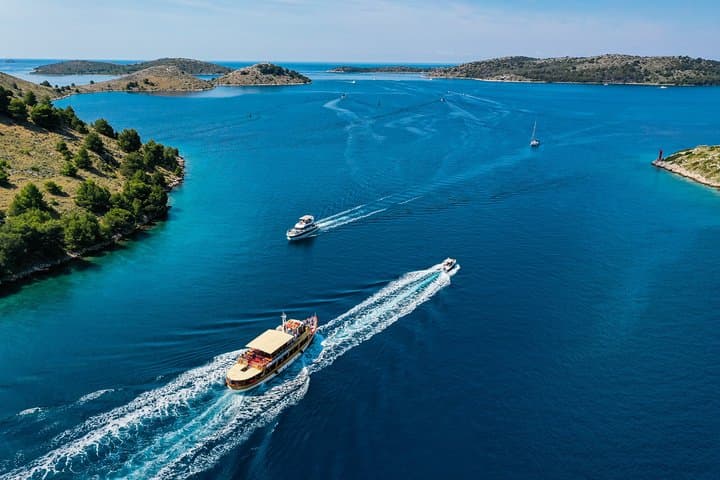
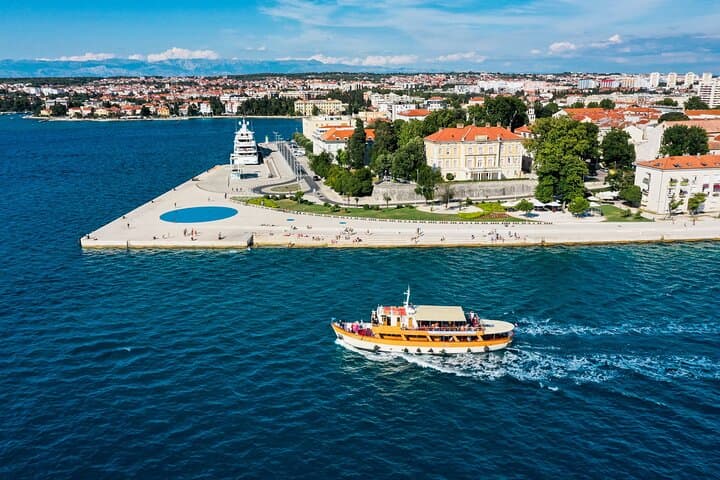
You step off the quay at Liburnska Obala with salt on your lips and the Dalmatian sun already pulling color into the limestone. The boat slides away from Zadar’s stone ribs and within an hour the skyline thins into islands—hundreds of low, sculpted heads of rock rising from an Adriatic too clear to be ordinary. This is Kornati, the archipelago locals call the "Tears of God," and the day’s move is simple: drift, swim, and read the shorelines with your hands.
You step off the quay at Liburnska Obala with salt on your lips and the Dalmatian sun already pulling color into the limestone. The boat slides away from Zadar’s stone ribs and within an hour the skyline thins into islands—hundreds of low, sculpted heads of rock rising from an Adriatic too clear to be ordinary. This is Kornati, the archipelago locals call the "Tears of God," and the day’s move is simple: drift, swim, and read the shorelines with your hands.
Kornati is a place where geology keeps time. Jagged karst cliffs, scoured by wind and water, rise from deep blue that drops off fast—there are spots where you can see the seabed at 40 meters. The islands are mostly treeless limestone, scarred with ancient dry-stone walls and the ghost of small-scale farming that once eked a living from thin soil. Telašćica, on the southern tip of Dugi Otok, offers a counterpoint: a huge, protected bay with sheltered coves, 161‑meter cliffs on Dugi Otok and a brackish salt lake, Mir, ringed by reeds and surprising greenery.
Culturally, the archipelago has always been cracked into pockets of human life—fishermen, shepherds, and salt workers who left stone terraces and simple chapels. Today the islands are protected: Kornati National Park and Telašćica Nature Park regulate anchoring and visitation to preserve the fragile marine meadows and seabird colonies.
On the tour you’ll stop twice for roughly three hours of swimming, snorkeling, and shoreline exploration, with breakfast and a midday lunch served on board. Expect live commentary from a local guide who points out sea caves, diving spots, and where the currents run cool. Bring sunscreen and a reef‑friendly attitude: anchoring and litter are taken seriously here.
Practicalities: meet at Liburnska Obala in Zadar (no hotel pickup). National Park entrance is not included and is payable in cash at check‑in (about 100 HRK). The trip runs about eight hours and is weather‑dependent—strong wind or rough seas can change the route or force cancellation. Boats are designed for comfort but balance: be ready for sun, sea spray, and a descent ladder for swims.
Why go? In one day you experience the raw geometry of Dalmatian karst, the sheltered calm of Telašćica’s bay, the surprising warm‑salt pocket of Mir Lake, and bright Adriatic water that invites you to float and look down. It’s an efficient, sensory way to understand this corner of the Adriatic—wild, human, and marine all at once.