THE ADVENTURE COLLECTIVE® · Independent discovery and booking for outdoor travel

A quieter, well-paced ascent to Uhuru Peak via Kilimanjaro’s Rongai Route — seven days of forest, moorland, alpine desert and a summit night under the stars. This guide explains the route, logistics and the practical steps you’ll need to reach the roof of Africa.
A quieter, well-paced ascent to Uhuru Peak via Kilimanjaro’s Rongai Route — seven days of forest, moorland, alpine desert and a summit night under the stars. This guide explains the route, logistics and the practical steps you’ll need to reach the roof of Africa.
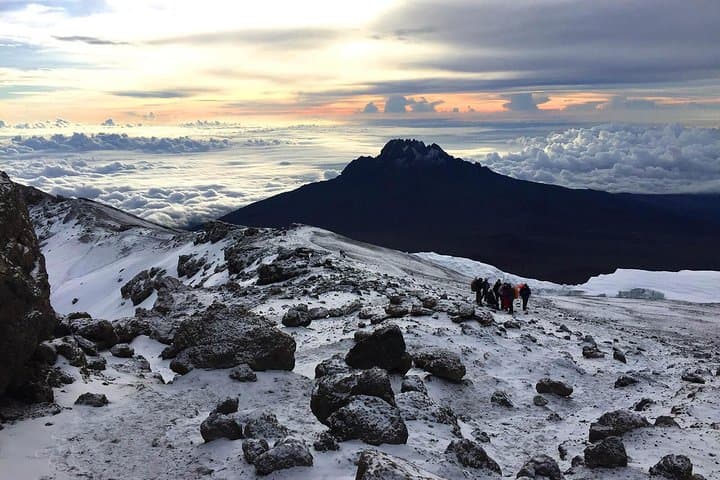
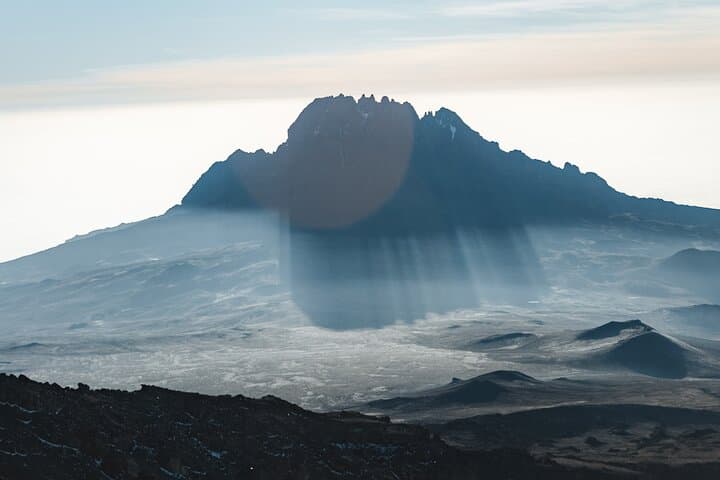
The first light on Kilimanjaro feels decisive — a cold, white rim that grows out of the night as you zip your sleeping bag and listen to the wind re-shape the tents. On the Rongai Route, the approach is calm and wide-open: you enter the mountain from the north, moving from thick, damp montane forest into heath and moorland, then onto the high, rocky semidesert that leads to Kibo’s glacier.
Verified experiences and guided adventures in the surrounding area.
Operated by Altezza Travel · Moshi, Kilimanjaro Region
The first light on Kilimanjaro feels decisive — a cold, white rim that grows out of the night as you zip your sleeping bag and listen to the wind re-shape the tents. On the Rongai Route, the approach is calm and wide-open: you enter the mountain from the north, moving from thick, damp montane forest into heath and moorland, then onto the high, rocky semidesert that leads to Kibo’s glacier.
This seven-day itinerary trades crowds for clear acclimatization and scenery. You begin at Nalemuru Gate (2,020 m) and step into conifer forest, gaining about 600 m to Simba Camp (2,625 m) the first day. Over subsequent days the route climbs to Second Cave (3,480 m), then to Kikilewa (3,630 m) and Mawenzi Tarn before reaching Kibo Camp (4,700 m). The summit push begins from School Hut and tops out at Uhuru Peak (5,895 m) — a total elevation gain of roughly 3,875 m from the park gate.
Geologically, Kilimanjaro is a volcanic massif built from layered lava flows and ash; Kibo’s crater is the silent core of a once-active system whose glaciers now cling to ridgelines. Culturally the mountain sits in the homeland of the Chagga, whose irrigation terraces and towns ring the slopes; guides and porters on any ascent will likely be Chagga or Maasai, carrying not only kit but decades of route knowledge.
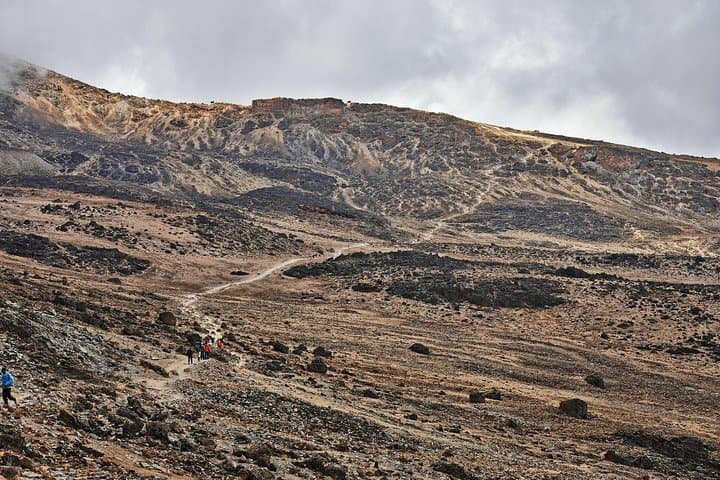
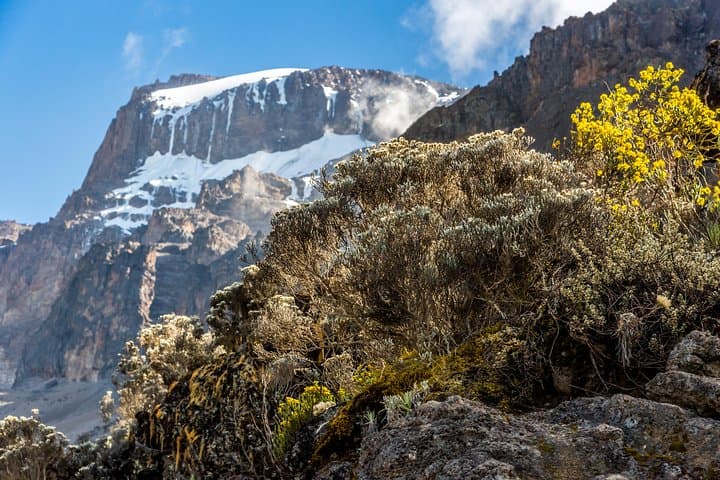
Expect a succession of terrains: shaded, muddy tracks under moss-draped trees; wide moorland with giant lobelias and dense heather; then a stark, boulder-strewn alpine desert where wind and cold dominate. Wildlife retreats with altitude, but the forest sections host colobus monkeys and abundant birdlife.
Practically, this package includes airport transfers, two hotel nights in Moshi, professional climbing crews, North Face VE-25 tents, meals (three per day on the mountain) and medical monitoring with oximeters and oxygen tanks. The itinerary builds in acclimatization hikes — a crucial factor in the Rongai Route’s higher summit success rates.
Preparation is straightforward but serious: train with long hikes and sustained elevation gain, log some nights above 3,000 m if possible, and learn to walk slowly — the mountain rewards steady pacing. Hydration is mandatory (aim for ~4 liters/day at altitude) and many climbers use acetazolamide (Diamox) after consulting a physician. Bring layered insulation for summit night; conditions shift from cool camp evenings to subzero winds on the crater rim.
Guide selection matters: choose operators who pay fair wages and carry adequate rescue gear. If you want clearer skies and reduced traffic, the Rongai’s northern approach gives you fewer faces on the trail and more room to watch the mountain breathe.
challenging.
7–8 days.
You should have good cardiovascular fitness and experience with multi-day hikes; the effort is aerobic more than technical.
Rongai is considered one of the gentler routes in terms of crowding and initial gradients; acclimatization is paced well, but altitude still makes the summit push demanding.
The clearest windows are June–October and late December–February; avoid the long rains (March–May) when trails are wet and visibility poor.
No technical climbing skills are required — the route is a hike — but prior multi-day trekking and high-altitude exposure greatly improve success odds.
Professional crews carry first-aid kits, oximeters and oxygen; guides monitor climber vitals and can facilitate evacuation if necessary.
Yes — the tour provides communal dining tents, sleeping pads, branded VE-25 tents and three meals per day while on the mountain.
Operators typically limit personal luggage carried by porters; excess weight may incur extra porter fees — pack light and follow your operator’s guidelines.
Kilimanjaro’s twin peaks, Kibo and Mawenzi, are remnants of a much larger volcanic system; the mountain has been a landmark and cultural feature for the Chagga people for centuries and was first recorded by Europeans in the 19th century.
All climbs pass through Kilimanjaro National Park; park fees support conservation, trail maintenance and ranger patrols, and choosing reputable operators helps ensure fair porter wages and reduced environmental impact.
Altezza Travel operates guided outdoor trips and adventures with an emphasis on safety, stewardship, and memorable experiences.
The first light on Kilimanjaro feels decisive — a cold, white rim that grows out of the night as you zip your sleeping bag and listen to the wind re-shape the tents. On the Rongai Route, the approach is calm and wide-open: you enter the mountain from the north, moving from thick, damp montane forest into heath and moorland, then onto the high, rocky semidesert that leads to Kibo’s glacier.
The first light on Kilimanjaro feels decisive — a cold, white rim that grows out of the night as you zip your sleeping bag and listen to the wind re-shape the tents. On the Rongai Route, the approach is calm and wide-open: you enter the mountain from the north, moving from thick, damp montane forest into heath and moorland, then onto the high, rocky semidesert that leads to Kibo’s glacier.
This seven-day itinerary trades crowds for clear acclimatization and scenery. You begin at Nalemuru Gate (2,020 m) and step into conifer forest, gaining about 600 m to Simba Camp (2,625 m) the first day. Over subsequent days the route climbs to Second Cave (3,480 m), then to Kikilewa (3,630 m) and Mawenzi Tarn before reaching Kibo Camp (4,700 m). The summit push begins from School Hut and tops out at Uhuru Peak (5,895 m) — a total elevation gain of roughly 3,875 m from the park gate.
Geologically, Kilimanjaro is a volcanic massif built from layered lava flows and ash; Kibo’s crater is the silent core of a once-active system whose glaciers now cling to ridgelines. Culturally the mountain sits in the homeland of the Chagga, whose irrigation terraces and towns ring the slopes; guides and porters on any ascent will likely be Chagga or Maasai, carrying not only kit but decades of route knowledge.
Expect a succession of terrains: shaded, muddy tracks under moss-draped trees; wide moorland with giant lobelias and dense heather; then a stark, boulder-strewn alpine desert where wind and cold dominate. Wildlife retreats with altitude, but the forest sections host colobus monkeys and abundant birdlife.
Practically, this package includes airport transfers, two hotel nights in Moshi, professional climbing crews, North Face VE-25 tents, meals (three per day on the mountain) and medical monitoring with oximeters and oxygen tanks. The itinerary builds in acclimatization hikes — a crucial factor in the Rongai Route’s higher summit success rates.
Preparation is straightforward but serious: train with long hikes and sustained elevation gain, log some nights above 3,000 m if possible, and learn to walk slowly — the mountain rewards steady pacing. Hydration is mandatory (aim for ~4 liters/day at altitude) and many climbers use acetazolamide (Diamox) after consulting a physician. Bring layered insulation for summit night; conditions shift from cool camp evenings to subzero winds on the crater rim.
Guide selection matters: choose operators who pay fair wages and carry adequate rescue gear. If you want clearer skies and reduced traffic, the Rongai’s northern approach gives you fewer faces on the trail and more room to watch the mountain breathe.