THE ADVENTURE COLLECTIVE® · Independent discovery and booking for outdoor travel

Start before dawn in Moshi and spend a day threading the rainforest of Kilimanjaro’s Lemosho flank. This eight-hour trek delivers primates, volcanic geology, and steady climbs without the multi-day logistics of summit routes.
Start before dawn in Moshi and spend a day threading the rainforest of Kilimanjaro’s Lemosho flank. This eight-hour trek delivers primates, volcanic geology, and steady climbs without the multi-day logistics of summit routes.
The minibus eases out of Moshi before dawn, headlights cutting through low cloud as your guide talks quietly about the day ahead. By the time the road narrows and turns to rutted track, the mountain has already begun to assert itself: a broad, dark shoulder rising into mist. At Londorossi Gate the air smells of wet earth and green things; within an hour you’re under a closed canopy where ferns and vines tug at your sleeves and the trail narrows to a single band of churned soil.
Verified experiences and guided adventures in the surrounding area.
Operated by Gracepatt Ecotours Kenya · Moshi, Kilimanjaro Region
The minibus eases out of Moshi before dawn, headlights cutting through low cloud as your guide talks quietly about the day ahead. By the time the road narrows and turns to rutted track, the mountain has already begun to assert itself: a broad, dark shoulder rising into mist. At Londorossi Gate the air smells of wet earth and green things; within an hour you’re under a closed canopy where ferns and vines tug at your sleeves and the trail narrows to a single band of churned soil.
This one-day Lemosho trek is a concentrated excerpt of Kilimanjaro’s lower ecosystems. You move from cultivated foothills to a lush rainforest where giant lobelias and towering fig trees crowd the path, and troops of colobus and blue monkeys slip through branches above, chattering like oncoming weather. The route climbs steadily rather than steeply — expect rooty sections, muddy steps, and the occasional steep switchback. The operator’s itinerary sets aside about eight hours total, with 10–12 km covered and roughly 600–900 m of ascent depending on the turn-back point.
Geologically, Kilimanjaro is an extinct stratovolcano made of layered lava and ash; the Lemosho flank exposes the mountain’s western scars, alternating dense forest with open moorland higher up. Culturally, Moshi and the surrounding slopes belong largely to the Chagga people, who have farmed the rich volcanic soils for generations and maintain a deep respect for the mountain as a source of weather, water, and tradition. Guides often point out ancient terracing, coffee farms, and small shrines on approaches to the park.
Practical edge: permits and national park fees are included, and your group will have a professional guide. Footing can be unpredictable — good waterproof boots and a steady pace matter more than sprint fitness. Acclimatization is limited on a single-day outing, so altitude risks are low but not absent; drink frequently and watch for headaches or nausea. Bring a compact lunch provided by the operator, but pack extra snacks and a reusable water bottle.
Timing matters: start early to avoid afternoon clouds and to catch birds and primates at their most active. Expect muddy sections after rain; gaiters and trekking poles change the feel of the trail. Wildlife sightings are common but variable — patience, quiet steps, and a lens ready at hip level will reward you.
This itinerary is an efficient way to experience Kilimanjaro’s rainforest and to feel the mountain’s scale without multi-day logistics. It’s an ideal primer before attempting longer routes, or a standalone day for travelers based in Moshi or Arusha who want nature, culture, and a solid dose of elevation before tea back at the hotel.
moderate.
8 hours.
Suitable for most active travelers; expect steady uphill walking on uneven terrain—basic cardio and leg strength recommended.
The day is moderately strenuous: steady uphill walking on uneven, sometimes muddy trails. It’s suitable for most active people with basic hiking experience.
Not necessarily—this itinerary gains a few hundred meters and stays below high-altitude zones, but anyone with cardiovascular issues should consult a doctor first.
Yes—national park fees, a professional mountain guide, water, and lunch are listed as included in the tour.
Expect to encounter monkeys (colobus, blue monkeys), various forest birds, and occasionally small mammals along the trail.
Sturdy waterproof hiking boots with ankle support and good tread are recommended due to mud and roots.
Yes—the operator offers hotel pickup in Moshi (and optional Arusha pickup) with the guide collecting guests about 15 minutes before departure.
Kilimanjaro is a dormant stratovolcano whose lava flows and glacial history shaped distinct ecological zones; local Chagga communities cultivated the fertile volcanic soils for centuries.
Mount Kilimanjaro National Park is protected; stay on trails, pack out waste, and respect wildlife to minimize impact—local guides enforce leave-no-trace practices.
Gracepatt Ecotours Kenya operates guided outdoor trips and adventures with an emphasis on safety, stewardship, and memorable experiences.

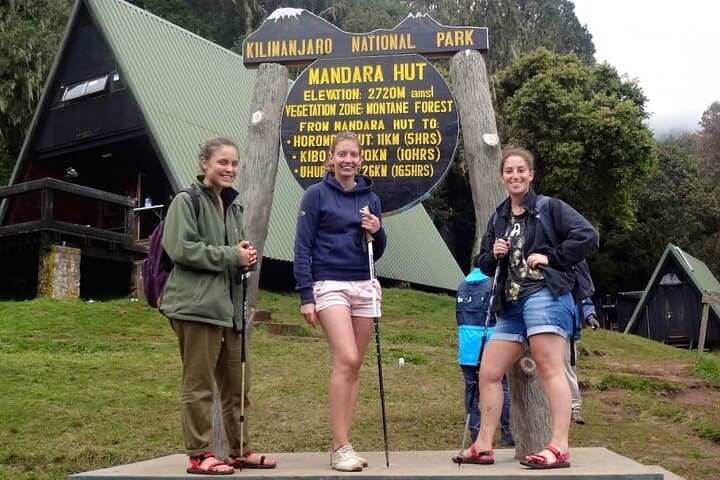


The minibus eases out of Moshi before dawn, headlights cutting through low cloud as your guide talks quietly about the day ahead. By the time the road narrows and turns to rutted track, the mountain has already begun to assert itself: a broad, dark shoulder rising into mist. At Londorossi Gate the air smells of wet earth and green things; within an hour you’re under a closed canopy where ferns and vines tug at your sleeves and the trail narrows to a single band of churned soil.
The minibus eases out of Moshi before dawn, headlights cutting through low cloud as your guide talks quietly about the day ahead. By the time the road narrows and turns to rutted track, the mountain has already begun to assert itself: a broad, dark shoulder rising into mist. At Londorossi Gate the air smells of wet earth and green things; within an hour you’re under a closed canopy where ferns and vines tug at your sleeves and the trail narrows to a single band of churned soil.
This one-day Lemosho trek is a concentrated excerpt of Kilimanjaro’s lower ecosystems. You move from cultivated foothills to a lush rainforest where giant lobelias and towering fig trees crowd the path, and troops of colobus and blue monkeys slip through branches above, chattering like oncoming weather. The route climbs steadily rather than steeply — expect rooty sections, muddy steps, and the occasional steep switchback. The operator’s itinerary sets aside about eight hours total, with 10–12 km covered and roughly 600–900 m of ascent depending on the turn-back point.
Geologically, Kilimanjaro is an extinct stratovolcano made of layered lava and ash; the Lemosho flank exposes the mountain’s western scars, alternating dense forest with open moorland higher up. Culturally, Moshi and the surrounding slopes belong largely to the Chagga people, who have farmed the rich volcanic soils for generations and maintain a deep respect for the mountain as a source of weather, water, and tradition. Guides often point out ancient terracing, coffee farms, and small shrines on approaches to the park.
Practical edge: permits and national park fees are included, and your group will have a professional guide. Footing can be unpredictable — good waterproof boots and a steady pace matter more than sprint fitness. Acclimatization is limited on a single-day outing, so altitude risks are low but not absent; drink frequently and watch for headaches or nausea. Bring a compact lunch provided by the operator, but pack extra snacks and a reusable water bottle.
Timing matters: start early to avoid afternoon clouds and to catch birds and primates at their most active. Expect muddy sections after rain; gaiters and trekking poles change the feel of the trail. Wildlife sightings are common but variable — patience, quiet steps, and a lens ready at hip level will reward you.
This itinerary is an efficient way to experience Kilimanjaro’s rainforest and to feel the mountain’s scale without multi-day logistics. It’s an ideal primer before attempting longer routes, or a standalone day for travelers based in Moshi or Arusha who want nature, culture, and a solid dose of elevation before tea back at the hotel.