THE ADVENTURE COLLECTIVE® · Independent discovery and booking for outdoor travel

A compact, high-value introduction to Mount Kilimanjaro: hike the lower stretches of the Marangu Route to Mandara Hut, through wet montane forest to panoramic views of Kibo. Ideal for beginners or travelers short on time.
A compact, high-value introduction to Mount Kilimanjaro: hike the lower stretches of the Marangu Route to Mandara Hut, through wet montane forest to panoramic views of Kibo. Ideal for beginners or travelers short on time.
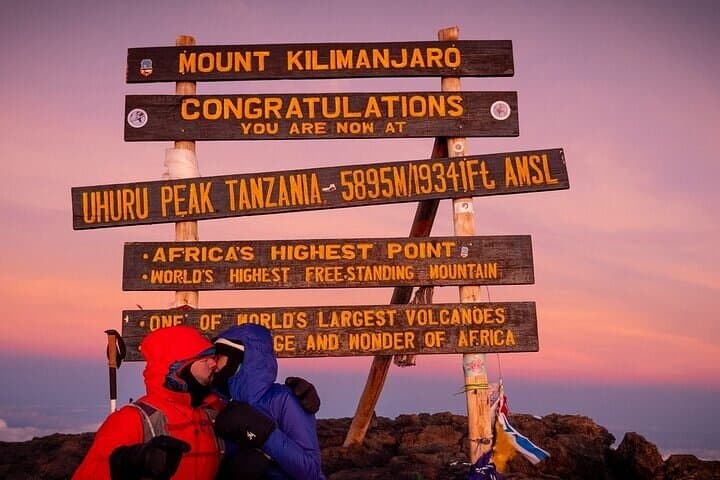
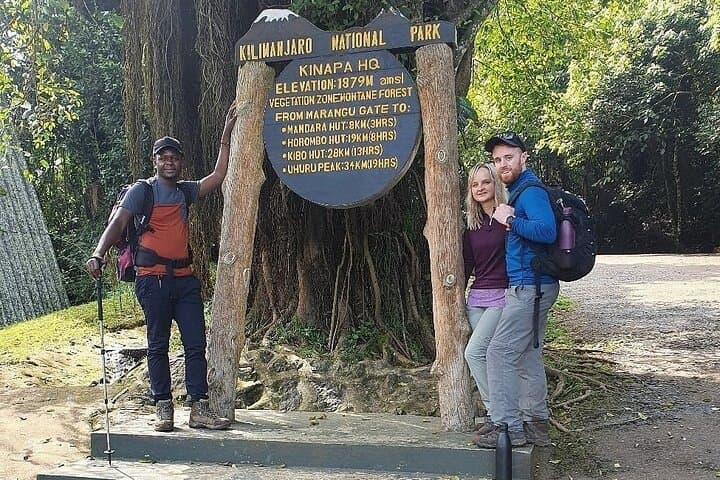
You step off the minivan into a cool, damp hush — the low forest seems to inhale and hold its breath as the trail pulls you toward the mountain. The jagged crown of Kilimanjaro pierces the sky above the canopy, white with ice but softened by distance; lower down, the rainforest owns the sound, a chorus of birds and the occasional chitter of monkeys. This is the Marangu Route on a private day hike from Moshi or Arusha: a contained, high-reward walk that reaches Mandara Hut and delivers a compressed taste of Kilimanjaro’s vertical worlds.
Verified experiences and guided adventures in the surrounding area.
Operated by King Mufasa Expeditions · Moshi, Kilimanjaro Region
You step off the minivan into a cool, damp hush — the low forest seems to inhale and hold its breath as the trail pulls you toward the mountain. The jagged crown of Kilimanjaro pierces the sky above the canopy, white with ice but softened by distance; lower down, the rainforest owns the sound, a chorus of birds and the occasional chitter of monkeys. This is the Marangu Route on a private day hike from Moshi or Arusha: a contained, high-reward walk that reaches Mandara Hut and delivers a compressed taste of Kilimanjaro’s vertical worlds.
The Marangu Route is the island’s oldest established path, sliced into the mountain during early 20th-century ascents. Geologically, Kilimanjaro is a three-peaked stratovolcano whose ancient eruptions stacked lava, ash and scoria into the broad cone you see today; the flanks host distinct ecological bands — coffee farms and villages at the base, then montane forest, heather and moorland, and finally the alpine desert near the summit. Your day stops in the forest band, where giant lobelia and towering fig trees give the trail a cathedral scale and moisture clings to every surface.
Cultural life sits close to the trail. In Marangu village, Chagga farmers tend steep terraces and coffee plots irrigated by streams that descend the mountain; on a good day, you’ll catch the scent of roasting beans and the sharp laughter of local guides comparing notes. Wildlife here is bold and visible — blue monkeys and colobus sweep through the branches, banded mongoose scuttle underbrush, and turacos flash emerald across the trail.
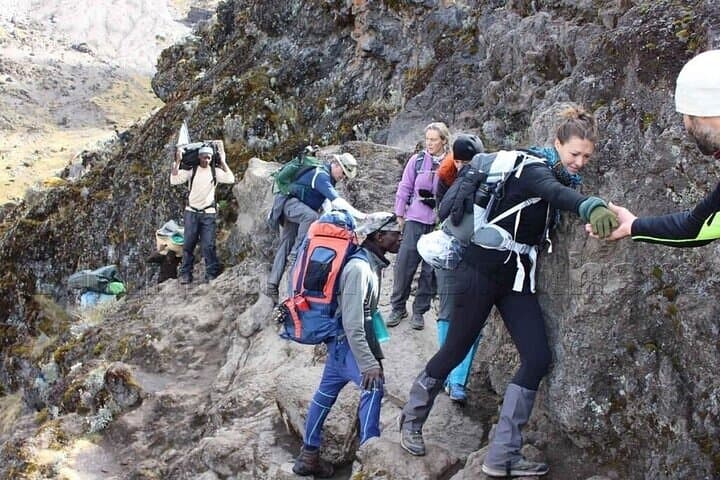
Practicalities matter on a hike that climbs roughly 800 meters (2,600 feet) round trip and covers about 8–12 km depending on exact routing. Expect muddy, root-strewn singletrack in the forest, some slick slopes after rain, and a steady, breath-stealing ascent to Mandara Hut at just under 2,700 meters. The private format makes pacing flexible: guides will stop for birding, photos and a picnic lunch with views toward Kibo.
Plan for layered clothing, good ankle support, and water capacity for the day; altitude can sap energy even on an easy grade, so hydrate and move deliberately. Morning departures are best for drier trails and clearer summit views. If you’re short on time or easing into high-altitude trekking, this day hike is a smart introduction to Kilimanjaro — it shows the mountain’s changing faces without the logistical weight of a multi-day climb, and it leaves you back in town with a cold Kilimanjaro beer and a few convincing reasons to return.
moderate.
8–10 hours (door-to-door).
Suitable for travelers in general good health who can sustain 3–5 hours of steady uphill walking; brief altitude exposure requires caution.
Yes — the tour includes park fees for non-residents and necessary registration at Marangu Gate, as stated in the inclusions.
The trail gains roughly 700–900 meters in elevation over a few kilometers; it’s steady but not technical, so it’s moderate rather than strenuous.
No prior high-altitude experience is required for this day hike, but those with heart or serious respiratory conditions should consult a doctor.
Expect forest birds, blue monkeys and possibly colobus monkeys and small mammals like mongoose along the lower slopes.
Yes — the tour includes a picnic lunch at or near Mandara Hut and drinking water throughout the day.
Yes — pickup from hotels in Moshi and Arusha is offered; confirm your pickup point when booking.
Marangu Route is one of the oldest paths on Kilimanjaro and was used by early 20th-century explorers and local porters, shaping nearby Chagga village life.
Kilimanjaro National Park protects distinct ecological zones; stay on the trail, pack out waste, and follow guide instructions to minimize impact.
King Mufasa Expeditions operates guided outdoor trips and adventures with an emphasis on safety, stewardship, and memorable experiences.
You step off the minivan into a cool, damp hush — the low forest seems to inhale and hold its breath as the trail pulls you toward the mountain. The jagged crown of Kilimanjaro pierces the sky above the canopy, white with ice but softened by distance; lower down, the rainforest owns the sound, a chorus of birds and the occasional chitter of monkeys. This is the Marangu Route on a private day hike from Moshi or Arusha: a contained, high-reward walk that reaches Mandara Hut and delivers a compressed taste of Kilimanjaro’s vertical worlds.
You step off the minivan into a cool, damp hush — the low forest seems to inhale and hold its breath as the trail pulls you toward the mountain. The jagged crown of Kilimanjaro pierces the sky above the canopy, white with ice but softened by distance; lower down, the rainforest owns the sound, a chorus of birds and the occasional chitter of monkeys. This is the Marangu Route on a private day hike from Moshi or Arusha: a contained, high-reward walk that reaches Mandara Hut and delivers a compressed taste of Kilimanjaro’s vertical worlds.
The Marangu Route is the island’s oldest established path, sliced into the mountain during early 20th-century ascents. Geologically, Kilimanjaro is a three-peaked stratovolcano whose ancient eruptions stacked lava, ash and scoria into the broad cone you see today; the flanks host distinct ecological bands — coffee farms and villages at the base, then montane forest, heather and moorland, and finally the alpine desert near the summit. Your day stops in the forest band, where giant lobelia and towering fig trees give the trail a cathedral scale and moisture clings to every surface.
Cultural life sits close to the trail. In Marangu village, Chagga farmers tend steep terraces and coffee plots irrigated by streams that descend the mountain; on a good day, you’ll catch the scent of roasting beans and the sharp laughter of local guides comparing notes. Wildlife here is bold and visible — blue monkeys and colobus sweep through the branches, banded mongoose scuttle underbrush, and turacos flash emerald across the trail.
Practicalities matter on a hike that climbs roughly 800 meters (2,600 feet) round trip and covers about 8–12 km depending on exact routing. Expect muddy, root-strewn singletrack in the forest, some slick slopes after rain, and a steady, breath-stealing ascent to Mandara Hut at just under 2,700 meters. The private format makes pacing flexible: guides will stop for birding, photos and a picnic lunch with views toward Kibo.
Plan for layered clothing, good ankle support, and water capacity for the day; altitude can sap energy even on an easy grade, so hydrate and move deliberately. Morning departures are best for drier trails and clearer summit views. If you’re short on time or easing into high-altitude trekking, this day hike is a smart introduction to Kilimanjaro — it shows the mountain’s changing faces without the logistical weight of a multi-day climb, and it leaves you back in town with a cold Kilimanjaro beer and a few convincing reasons to return.