THE ADVENTURE COLLECTIVE® · Independent discovery and booking for outdoor travel

Walk the Machame or “Whisky” Route over six days from Moshi to Uhuru Peak. This tented, acclimatization-focused itinerary trades huts for longer days and better summit odds, moving through rainforest, moorland, and alpine scree to a sunrise on Africa’s roof.
Walk the Machame or “Whisky” Route over six days from Moshi to Uhuru Peak. This tented, acclimatization-focused itinerary trades huts for longer days and better summit odds, moving through rainforest, moorland, and alpine scree to a sunrise on Africa’s roof.
Night falls over Moshi and the silhouette of Africa’s highest peak sharpens against a bank of stars. The Machame Route begins under a sky so close you can almost feel it press against your pack; early trekking starts in a wet, green rainforest where mist clings to the trunks and tree roots weave like ropes across the trail. By day two the forest opens to heather and moorland; by day five the mountain’s moods have changed from damp undergrowth to wind-scoured scree and ice.
Verified experiences and guided adventures in the surrounding area.
Operated by Twende Africa Tours · Moshi, Kilimanjaro Region
Night falls over Moshi and the silhouette of Africa’s highest peak sharpens against a bank of stars. The Machame Route begins under a sky so close you can almost feel it press against your pack; early trekking starts in a wet, green rainforest where mist clings to the trunks and tree roots weave like ropes across the trail. By day two the forest opens to heather and moorland; by day five the mountain’s moods have changed from damp undergrowth to wind-scoured scree and ice.
The Machame—nicknamed the Whisky Route for its steep, single-track character—is a classic southern ascent. It follows a western arc around Kilimanjaro’s massif, trading the busier hut-lined Marangu for tented camps, longer acclimatization, and consistently stronger summit odds. Geologically, Kilimanjaro is a stratovolcano with three cones—Kibo, Mawenzi, and Shira—carved by ancient eruptions and glacial retreat. The trek climbs from roughly 1,830m at Machame Gate to 5,895m at Uhuru Peak, slicing through distinct ecological bands: montane forest, moorland, semi-desert, and alpine ice.
Local culture threads through the route. The Chagga people, who farm the lower slopes, raise terraces of bananas and coffee that perfume the valley air; porters and guides—often from nearby villages—bring stories, songs, and logistical expertise that are as essential as the tents. Hans Meyer’s late-19th-century accounts helped popularize the mountain among European explorers, but the climb today is shaped by Tanzanian rangers, park fees, and conservation rules that protect fragile high-altitude habitats.
Practically, plan for long days on mixed terrain: expect muddy, root-strewn trails early on, then rocky ridgelines and loose scree approaching Stella Point. Distances vary daily—11km on day one with 1,170m gain to Machame Camp, shorter but steeper sections to Shira, and the critical acclimatization loop over Lava Tower before descending to Barranco. Summit night starts around midnight and includes a steep, hours-long push through scree to Stella Point (5,685m) and the final snow-slab to Uhuru Peak.
Prepare for altitude: hydration, a conservative pace, and a night in a warm sleeping bag make a difference. Gear up with warm layers and gaiters for muddy approach trails; a reliable headlamp and trekking poles repay themselves every step of the summit push. Respect the mountain’s rhythms—allow time for acclimatization, follow your guide’s instructions, and be ready to turn back if acclimatization fails. When the sun finally bleeds gold across the crater rim, the view is an uncompromising reward: the plain below, the arc of Mawenzi, and the thin, sharp world above the clouds.
challenging.
6 days (approx. 6–10 hrs of hiking on major days).
Good cardiovascular fitness with prior multi-day hiking experience; ability to carry a daypack and walk 6–8 hours on uneven terrain is recommended.
June–October is the main dry season with more stable summit weather; January–February is also popular. Short rains in March–May make trails muddier and less predictable.
No formal experience is required, but prior multi-day trekking and a program of aerobic conditioning will greatly improve comfort and summit chances.
Acute mountain sickness is common; the itinerary’s acclimatization days reduce risk, but symptoms vary—listen to guides and be prepared to descend if necessary.
This tour includes staff and porters as part of the logistics; they carry tents and communal gear while climbers carry personal daypacks and summit essentials.
A valid passport is required for booking and park entry; the operator handles Kilimanjaro National Park permits and fees included in the package.
Toilets at camps are basic pit or portable facilities; showers are not available on the mountain—expect rustic conditions until you return to Moshi.
The Chagga people have lived on Kilimanjaro’s lower slopes for centuries; European ascents began in the late 1800s with explorers like Hans Meyer. Parks regulations now manage access and conservation.
Kilimanjaro National Park fees fund rangers and trails; choose operators who follow waste-removal protocols and support porter welfare to reduce environmental and cultural impact.
Twende Africa Tours operates guided outdoor trips and adventures with an emphasis on safety, stewardship, and memorable experiences.
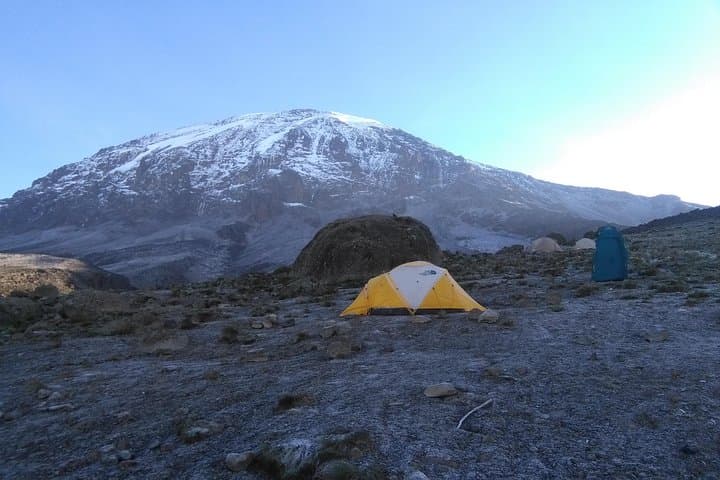
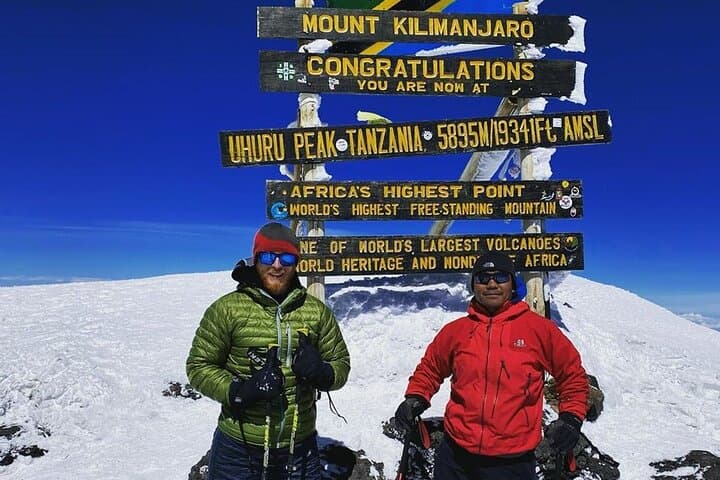
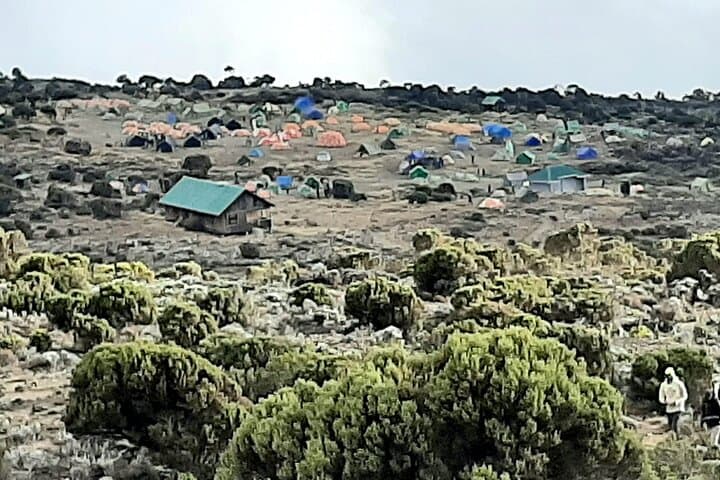
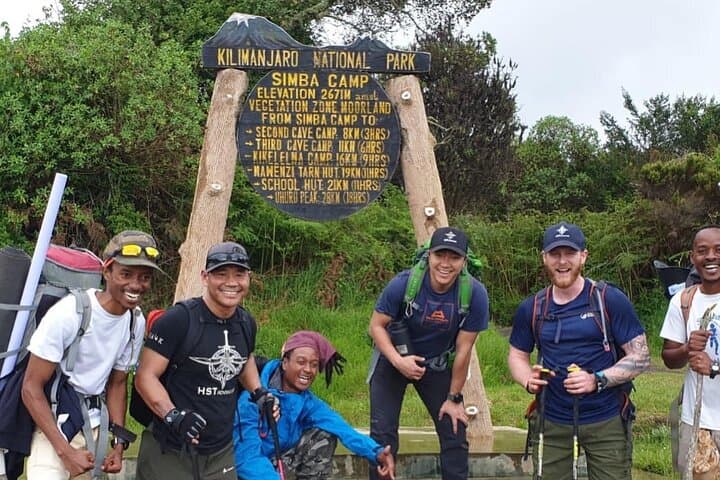
Night falls over Moshi and the silhouette of Africa’s highest peak sharpens against a bank of stars. The Machame Route begins under a sky so close you can almost feel it press against your pack; early trekking starts in a wet, green rainforest where mist clings to the trunks and tree roots weave like ropes across the trail. By day two the forest opens to heather and moorland; by day five the mountain’s moods have changed from damp undergrowth to wind-scoured scree and ice.
Night falls over Moshi and the silhouette of Africa’s highest peak sharpens against a bank of stars. The Machame Route begins under a sky so close you can almost feel it press against your pack; early trekking starts in a wet, green rainforest where mist clings to the trunks and tree roots weave like ropes across the trail. By day two the forest opens to heather and moorland; by day five the mountain’s moods have changed from damp undergrowth to wind-scoured scree and ice.
The Machame—nicknamed the Whisky Route for its steep, single-track character—is a classic southern ascent. It follows a western arc around Kilimanjaro’s massif, trading the busier hut-lined Marangu for tented camps, longer acclimatization, and consistently stronger summit odds. Geologically, Kilimanjaro is a stratovolcano with three cones—Kibo, Mawenzi, and Shira—carved by ancient eruptions and glacial retreat. The trek climbs from roughly 1,830m at Machame Gate to 5,895m at Uhuru Peak, slicing through distinct ecological bands: montane forest, moorland, semi-desert, and alpine ice.
Local culture threads through the route. The Chagga people, who farm the lower slopes, raise terraces of bananas and coffee that perfume the valley air; porters and guides—often from nearby villages—bring stories, songs, and logistical expertise that are as essential as the tents. Hans Meyer’s late-19th-century accounts helped popularize the mountain among European explorers, but the climb today is shaped by Tanzanian rangers, park fees, and conservation rules that protect fragile high-altitude habitats.
Practically, plan for long days on mixed terrain: expect muddy, root-strewn trails early on, then rocky ridgelines and loose scree approaching Stella Point. Distances vary daily—11km on day one with 1,170m gain to Machame Camp, shorter but steeper sections to Shira, and the critical acclimatization loop over Lava Tower before descending to Barranco. Summit night starts around midnight and includes a steep, hours-long push through scree to Stella Point (5,685m) and the final snow-slab to Uhuru Peak.
Prepare for altitude: hydration, a conservative pace, and a night in a warm sleeping bag make a difference. Gear up with warm layers and gaiters for muddy approach trails; a reliable headlamp and trekking poles repay themselves every step of the summit push. Respect the mountain’s rhythms—allow time for acclimatization, follow your guide’s instructions, and be ready to turn back if acclimatization fails. When the sun finally bleeds gold across the crater rim, the view is an uncompromising reward: the plain below, the arc of Mawenzi, and the thin, sharp world above the clouds.