THE ADVENTURE COLLECTIVE® · Independent discovery and booking for outdoor travel

The Lemosho route circles Kilimanjaro’s western flanks across rainforest, moorland and alpine desert, culminating in a midnight summit push to Uhuru Peak. This 8-day guided itinerary balances scenery with acclimatization for a high summit success rate.
The Lemosho route circles Kilimanjaro’s western flanks across rainforest, moorland and alpine desert, culminating in a midnight summit push to Uhuru Peak. This 8-day guided itinerary balances scenery with acclimatization for a high summit success rate.
The trek opens before dawn at Londorossi Gate, where a damp forest breathes cold air across the first switchbacks and the mountain slowly reveals itself through the trees. Climbers step into a changing world: moss-slick trunks in the rainforest give way to heather-carpeted plateaus, then the high, wind-scoured desert below Kibo’s glaciers. On the Lemosho route each day reads like a chapter—Big Tree Camp’s shaded quiet, the broad expanse of Shira Plateau, the weathered lava spires at Lava Tower and the final, thin-air push toward Stella Point and Uhuru Peak.
Verified experiences and guided adventures in the surrounding area.
Operated by Nafika tours · Moshi, Kilimanjaro Region
The trek opens before dawn at Londorossi Gate, where a damp forest breathes cold air across the first switchbacks and the mountain slowly reveals itself through the trees. Climbers step into a changing world: moss-slick trunks in the rainforest give way to heather-carpeted plateaus, then the high, wind-scoured desert below Kibo’s glaciers. On the Lemosho route each day reads like a chapter—Big Tree Camp’s shaded quiet, the broad expanse of Shira Plateau, the weathered lava spires at Lava Tower and the final, thin-air push toward Stella Point and Uhuru Peak.
Geology and history are visible in the route: Kilimanjaro is a composite of three volcanic cones—Shira, Mawenzi and Kibo—each etched by glaciers and time. Lemosho approaches from the west and circles toward the southern slopes, offering views of Kibo’s ice fields and Mawenzi’s jagged ridge. Culturally, the climb is run from Moshi, where Chagga and Pare communities have long acted as mountain stewards; local guides and porters carry both equipment and deep practical knowledge of the mountain’s moods.
The Lemosho itinerary is designed for acclimatization: starting at ~2,335 m (Londorossi) and rising to 5,895 m at Uhuru Peak, the route’s gradual profile and several short acclimatization walks increase summit probability. The day-by-day plan averages 4–10 km on most days with notable altitude gains (for example, Shira 1 to Shira 2 takes you from ~3,650 m to ~3,850 m). Summit night is a long, cold push—expect a midnight departure and 6–8 hours of climbing in thin air, with the sun breaking over Stella Point.
Practical preparation is straightforward and serious: train with long hikes and elevation gain, break in waterproof boots, and practice layering for temperatures that swing from humid forest to sub-zero on the summit. Hydration, slow pacing, and sleep are the best defenses against altitude sickness; professional operators on this route include oxygen and first-aid kits and perform regular health checks, but personal awareness is crucial.
Logistics: most climbs begin and end in Moshi with hotel nights before and after the mountain, private transport to Lemosho Gate, and full camping gear supplied. Budget time for weather setbacks—rainy seasons can make higher trails wind-scoured and slippery. Tipping protocol matters here: guides and porters depend on fair compensation; factor that into trip costs.
For a serious, multi-day mountain experience that balances panoramic exposure with careful acclimatization, Lemosho delivers one of Kilimanjaro’s highest summit success rates. The climb is equal parts physical test and a lesson in alpine ecology, where glaciers demand respect and the mountain’s slow rhythms reward patience.
difficult.
8 days.
Good aerobic fitness with experience on multi-day hikes and elevation gain; train with long hikes and stair sessions.
Dry months (January–March and June–October) offer the most stable conditions; heavy rains typically fall March–May and in November.
Summit night is the hardest single day: expect a midnight start, 6–8 hours of steep, cold climbing and strong winds near the rim.
Prior multi-day trekking experience is highly recommended; guided acclimatization on Lemosho helps but physical preparation is essential.
Most operators include park fees and camping permits in the package—confirm with your provider and carry ID for registration at gates.
Guides conduct regular health checks; minor AMS is managed with rest and fluids, severe cases trigger descent and use of supplemental oxygen.
Plan approximately 10–15% of the tour price for tipping staff, distributed among guides, cooks and porters; operators often advise a suggested tipping scale.
Kilimanjaro’s three cones—Shira, Mawenzi and Kibo—record different volcanic phases; Lemosho rounds the older Shira cone before moving toward Kibo’s summit crater.
Climbers should stick to designated trails, pack out waste where required and support operators who pay fair wages to porters and follow park regulations.
Nafika tours operates guided outdoor trips and adventures with an emphasis on safety, stewardship, and memorable experiences.
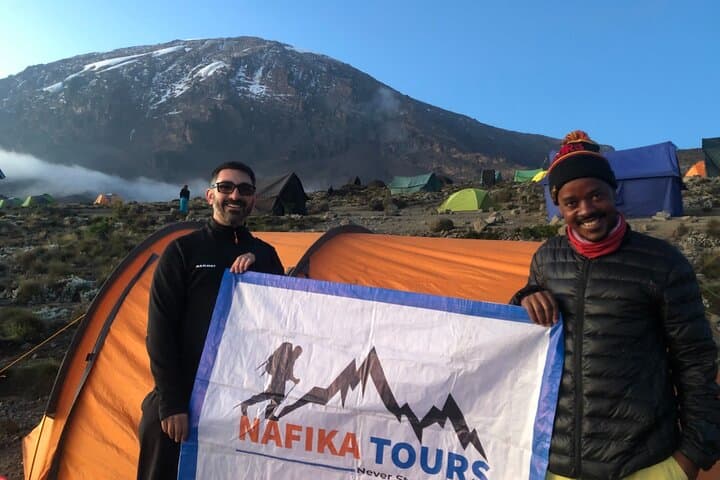
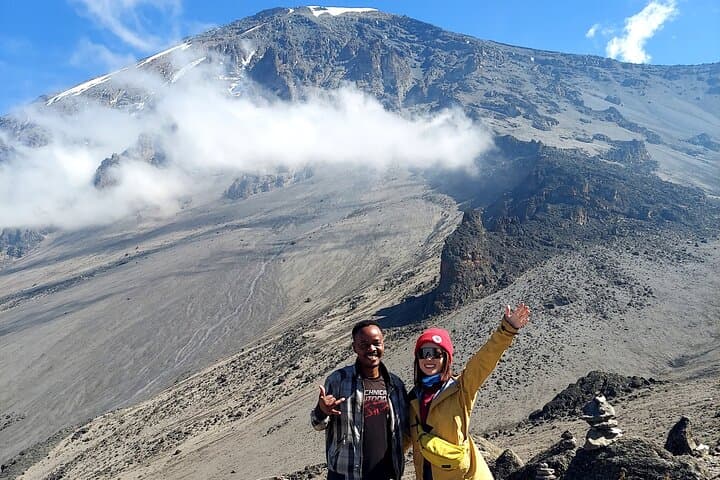
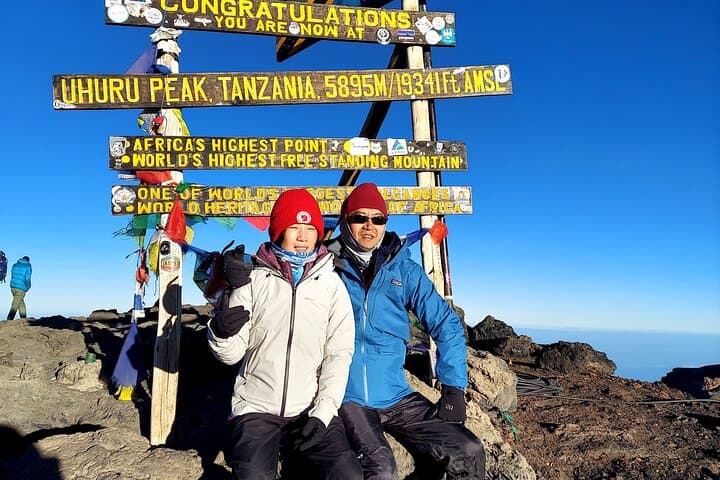
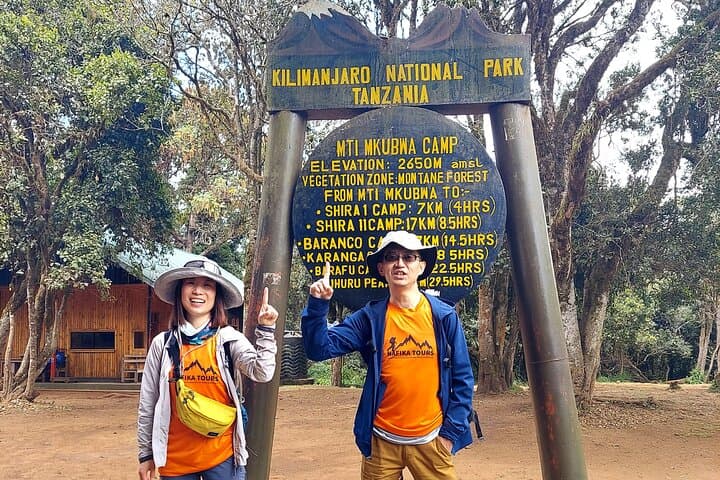
The trek opens before dawn at Londorossi Gate, where a damp forest breathes cold air across the first switchbacks and the mountain slowly reveals itself through the trees. Climbers step into a changing world: moss-slick trunks in the rainforest give way to heather-carpeted plateaus, then the high, wind-scoured desert below Kibo’s glaciers. On the Lemosho route each day reads like a chapter—Big Tree Camp’s shaded quiet, the broad expanse of Shira Plateau, the weathered lava spires at Lava Tower and the final, thin-air push toward Stella Point and Uhuru Peak.
The trek opens before dawn at Londorossi Gate, where a damp forest breathes cold air across the first switchbacks and the mountain slowly reveals itself through the trees. Climbers step into a changing world: moss-slick trunks in the rainforest give way to heather-carpeted plateaus, then the high, wind-scoured desert below Kibo’s glaciers. On the Lemosho route each day reads like a chapter—Big Tree Camp’s shaded quiet, the broad expanse of Shira Plateau, the weathered lava spires at Lava Tower and the final, thin-air push toward Stella Point and Uhuru Peak.
Geology and history are visible in the route: Kilimanjaro is a composite of three volcanic cones—Shira, Mawenzi and Kibo—each etched by glaciers and time. Lemosho approaches from the west and circles toward the southern slopes, offering views of Kibo’s ice fields and Mawenzi’s jagged ridge. Culturally, the climb is run from Moshi, where Chagga and Pare communities have long acted as mountain stewards; local guides and porters carry both equipment and deep practical knowledge of the mountain’s moods.
The Lemosho itinerary is designed for acclimatization: starting at ~2,335 m (Londorossi) and rising to 5,895 m at Uhuru Peak, the route’s gradual profile and several short acclimatization walks increase summit probability. The day-by-day plan averages 4–10 km on most days with notable altitude gains (for example, Shira 1 to Shira 2 takes you from ~3,650 m to ~3,850 m). Summit night is a long, cold push—expect a midnight departure and 6–8 hours of climbing in thin air, with the sun breaking over Stella Point.
Practical preparation is straightforward and serious: train with long hikes and elevation gain, break in waterproof boots, and practice layering for temperatures that swing from humid forest to sub-zero on the summit. Hydration, slow pacing, and sleep are the best defenses against altitude sickness; professional operators on this route include oxygen and first-aid kits and perform regular health checks, but personal awareness is crucial.
Logistics: most climbs begin and end in Moshi with hotel nights before and after the mountain, private transport to Lemosho Gate, and full camping gear supplied. Budget time for weather setbacks—rainy seasons can make higher trails wind-scoured and slippery. Tipping protocol matters here: guides and porters depend on fair compensation; factor that into trip costs.
For a serious, multi-day mountain experience that balances panoramic exposure with careful acclimatization, Lemosho delivers one of Kilimanjaro’s highest summit success rates. The climb is equal parts physical test and a lesson in alpine ecology, where glaciers demand respect and the mountain’s slow rhythms reward patience.