THE ADVENTURE COLLECTIVE® · Independent discovery and booking for outdoor travel

Trade Colombo’s bustle for a day on the Kelani River—five kilometers of rapids, expert local guides and a rainforest-fringed route that’s both beginner-friendly and pulse-raising. Read on for what to expect, when to go and how to prepare.
Trade Colombo’s bustle for a day on the Kelani River—five kilometers of rapids, expert local guides and a rainforest-fringed route that’s both beginner-friendly and pulse-raising. Read on for what to expect, when to go and how to prepare.
The morning you leave Colombo the city unravels behind you: tuk-tuks, honking buses and smeared sea air give way to a slick ribbon of highway cutting into the wet foothills. By the time the van drops you at the river, the Kelani has already been working on the land for millennia—she runs quick, dark and restless, pushing toward the plains with a voice that dares you to climb aboard.
Verified experiences and guided adventures in the surrounding area.
Operated by KINGFISHER TOURS SRI LANKA · Kitulgala, Sabaragamuwa Province
The morning you leave Colombo the city unravels behind you: tuk-tuks, honking buses and smeared sea air give way to a slick ribbon of highway cutting into the wet foothills. By the time the van drops you at the river, the Kelani has already been working on the land for millennia—she runs quick, dark and restless, pushing toward the plains with a voice that dares you to climb aboard.
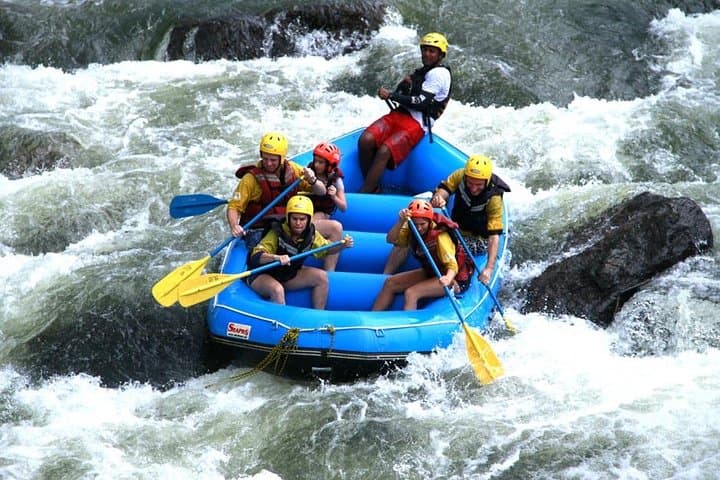
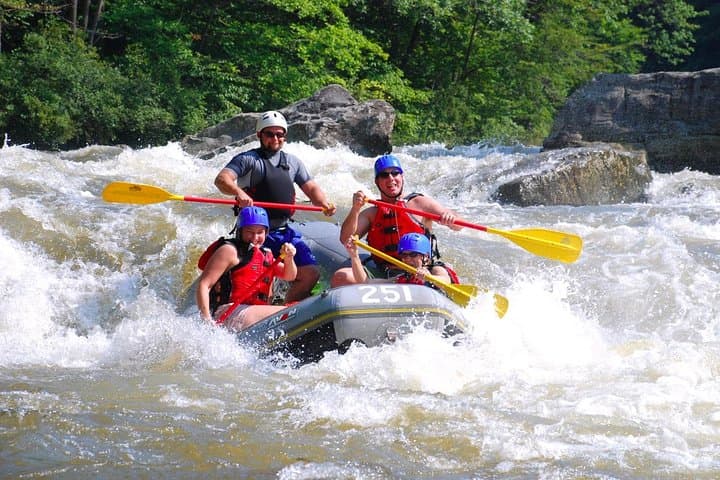
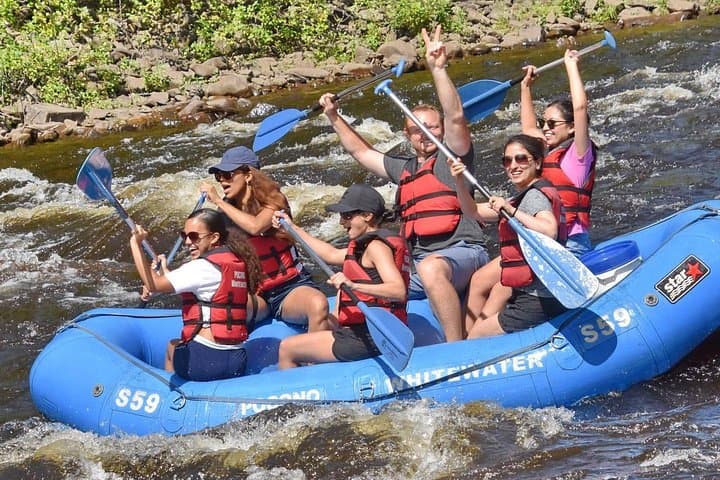
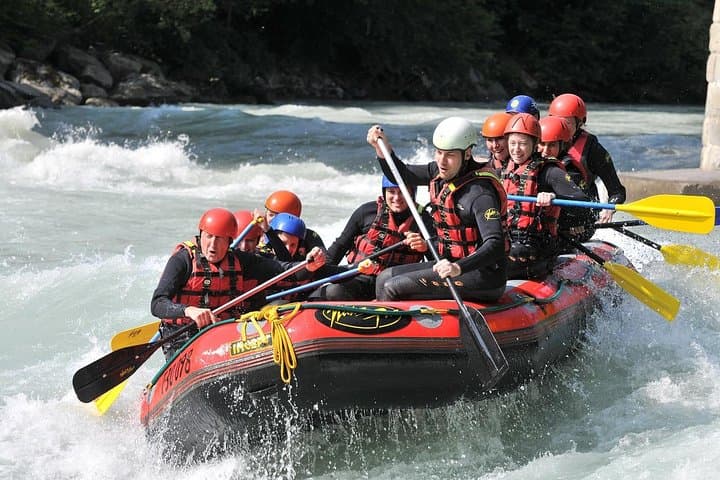
Guides fit lifejackets with practiced hands and give a short safety briefing; then you’re in a rubber raft and the river takes its turn. The advertised 5-kilometer stretch delivers seven named rapids—Virgin’s Breast, Killer Falls, Head Chopper—each a compact sequence of drops and holes that reward sharp paddling and attention. Between surges the river widens into quiet pools, edged by steep forested banks where sunlight slants through figs and creepers and the occasional kingfisher jerks away like punctuation.
Kitulgala sits on the edge of Sri Lanka’s central highlands and the Kelani’s behavior here reflects that origin: rapidly changing flow, fed by mountain run-off and seasonal rains. The geology is straightforward—the river has cut through ancient metamorphic rock, producing pocketed channels and occasional boulder gardens that make the rapids technical but concentrated. Culturally, Kitulgala is a working town: small workshops, tea estates higher up, and local operators who have run commercially guided rafting for decades. The activity brought a new tourism rhythm to the village while still relying on local crews and craft traditions.
Practicalities matter here as much as adrenaline. Expect a full day—most operators run 6-hour excursions that include hotel pickup from Colombo, Negombo or Kandy. Bring quick-dry layers, a secure pair of water shoes, and a waterproof phone case if you want photos. Guides will brief on commands, paddle technique and what to do if you flip—basic swimming ability and willingness to follow instruction are non-negotiable. Weather can change quickly: the river runs highest and most aggressive during the southwest monsoon, and operators may cancel if conditions exceed safe limits.
For a first-timer this is a perfect introduction: rapids that test effort and coordination without long, exposed portages. For repeat paddlers, the Kelani’s tight boulder fields demand boat control and reward clean lines.
Timing your trip around the drier months (December–April) gives more predictable water levels and clearer skies, while monsoon-season runs deliver bigger drops but more cancellations. Local teams provide safety equipment and often include hotel drop-off—ask in advance about return logistics. When you step off the raft, river water still clinging to your shorts, you’ll know why Kitulgala keeps calling adventurers back: the river is an active partner, never passive, always ready to push the day forward.
moderate.
6 hours.
Moderate fitness; basic swimming ability and the capacity to paddle for short bursts recommended.
The main guided stretch is about 5 kilometres and typically lasts 1–2 hours on the water, within a full-day tour of roughly 6 hours including transport and briefing.
No—this stretch is suitable for beginners, but participants should be able to swim and follow guide instructions.
Yes—most operators include hotel pickup and (selected) drop-off in Colombo, Negombo and other nearby towns; confirm your pickup point at booking.
Operators may cancel or postpone trips during heavy rain or high river levels for safety; check the operator’s weather and cancellation policy before you book.
Children are often permitted but age and weight limits vary by operator; confirm minimum age and required life jacket fit when you book.
Yes—guides supply lifejackets, helmets and rafting gear; bring your own shoes and personal items in a waterproof bag.
Kitulgala grew from a trading and transit point on the Kelani; its riverside location later turned it into an adventure hub as rafting operators organized commercial trips.
Operators increasingly emphasize leave-no-trace practices and use local crews to maintain access; avoid single-use plastics and follow guide instructions to protect riverbanks and aquatic life.
KINGFISHER TOURS SRI LANKA operates guided outdoor trips and adventures with an emphasis on safety, stewardship, and memorable experiences.
The morning you leave Colombo the city unravels behind you: tuk-tuks, honking buses and smeared sea air give way to a slick ribbon of highway cutting into the wet foothills. By the time the van drops you at the river, the Kelani has already been working on the land for millennia—she runs quick, dark and restless, pushing toward the plains with a voice that dares you to climb aboard.
The morning you leave Colombo the city unravels behind you: tuk-tuks, honking buses and smeared sea air give way to a slick ribbon of highway cutting into the wet foothills. By the time the van drops you at the river, the Kelani has already been working on the land for millennia—she runs quick, dark and restless, pushing toward the plains with a voice that dares you to climb aboard.
Guides fit lifejackets with practiced hands and give a short safety briefing; then you’re in a rubber raft and the river takes its turn. The advertised 5-kilometer stretch delivers seven named rapids—Virgin’s Breast, Killer Falls, Head Chopper—each a compact sequence of drops and holes that reward sharp paddling and attention. Between surges the river widens into quiet pools, edged by steep forested banks where sunlight slants through figs and creepers and the occasional kingfisher jerks away like punctuation.
Kitulgala sits on the edge of Sri Lanka’s central highlands and the Kelani’s behavior here reflects that origin: rapidly changing flow, fed by mountain run-off and seasonal rains. The geology is straightforward—the river has cut through ancient metamorphic rock, producing pocketed channels and occasional boulder gardens that make the rapids technical but concentrated. Culturally, Kitulgala is a working town: small workshops, tea estates higher up, and local operators who have run commercially guided rafting for decades. The activity brought a new tourism rhythm to the village while still relying on local crews and craft traditions.
Practicalities matter here as much as adrenaline. Expect a full day—most operators run 6-hour excursions that include hotel pickup from Colombo, Negombo or Kandy. Bring quick-dry layers, a secure pair of water shoes, and a waterproof phone case if you want photos. Guides will brief on commands, paddle technique and what to do if you flip—basic swimming ability and willingness to follow instruction are non-negotiable. Weather can change quickly: the river runs highest and most aggressive during the southwest monsoon, and operators may cancel if conditions exceed safe limits.
For a first-timer this is a perfect introduction: rapids that test effort and coordination without long, exposed portages. For repeat paddlers, the Kelani’s tight boulder fields demand boat control and reward clean lines.
Timing your trip around the drier months (December–April) gives more predictable water levels and clearer skies, while monsoon-season runs deliver bigger drops but more cancellations. Local teams provide safety equipment and often include hotel drop-off—ask in advance about return logistics. When you step off the raft, river water still clinging to your shorts, you’ll know why Kitulgala keeps calling adventurers back: the river is an active partner, never passive, always ready to push the day forward.