THE ADVENTURE COLLECTIVE® · Independent discovery and booking for outdoor travel

Paddle away from Holbox’s shoreline into a night lit by stars and bioluminescent plankton. This guided kayak trip to Punta Mosquito combines easy paddling with the rare thrill of seeing the ocean glow with every stroke.
Paddle away from Holbox’s shoreline into a night lit by stars and bioluminescent plankton. This guided kayak trip to Punta Mosquito combines easy paddling with the rare thrill of seeing the ocean glow with every stroke.
The night opens over Holbox like a slow breath of salt and stars. Paddles cut the black surface in soft, patient strokes and every fingertip that drags the sea leaves a neon trail—the water seems alive, daring you to move. Guides steer small kayaks away from the lamps of the village, toward Punta Mosquito, where the sandbank rises like a pale fingernail from the dark and the ocean holds its own private galaxy.
Verified experiences and guided adventures in the surrounding area.
Operated by Eco-Adventure Holbox · Holbox, Quintana Roo
The night opens over Holbox like a slow breath of salt and stars. Paddles cut the black surface in soft, patient strokes and every fingertip that drags the sea leaves a neon trail—the water seems alive, daring you to move. Guides steer small kayaks away from the lamps of the village, toward Punta Mosquito, where the sandbank rises like a pale fingernail from the dark and the ocean holds its own private galaxy.
This is a phenomenon rooted in tiny lives: dinoflagellates that flash when disturbed. For millennia the shallow lagoons and calm bays of the Yucatán have hosted these microbes; locals learned to read tidal rhythms and moon phases and built a quiet culture around the sea’s moods. Geologically, Holbox sits on the flat carbonate plain that defines the northern Yucatán—sand and shattered coral create broad shallows that warm quickly, concentrating plankton in the right conditions.
Culturally the island is low-key and practical: fishermen, boatmen, and small-hoteliers who respect the rhythms of the tide and the nocturnal economy. The guides running this tour lean on that local knowledge—choosing dark pockets where the water and the sky can compete for attention. On clear nights the Milky Way stretches tight and brilliant above you while bioluminescence mirrors it below; the result is a double sky that asks for quiet.
Practically, expect about 2 km of paddling from the launch to Punta Mosquito and back within a roughly 105-minute outing. Conditions matter: the intensity can vary from faint pinpricks to a neon ribbon that outlines every arm stroke. The tour provides kayaks, life jackets, dry bags and lockers; guides will brief you on safety and low-impact behavior—avoid sunscreen and insect repellents that wash into the water and harm plankton and reefs.
Bring footwear that can handle sand and seawater, a small headlamp with a red filter for moving onshore, and a sense of patience; sometimes the show builds slowly. If you plan to swim, be aware that night paddling and nocturnal currents require basic comfort in open water. Respect local wildlife—flamingos and shorebirds feed in the shallows by day; sea turtles nest seasonally—and leave no trace: this display depends on clean, calm water.
For adventurous travelers, the Holbox night kayak is a concentrated, nearly otherworldly encounter: it’s half science, half theater, and entirely a reminder that small organisms can make the ocean sing if we let it be.
moderate.
1.5–2 hours.
Moderate fitness; comfortable with 30–40 minutes of continuous paddling and basic swimming ability
The route is roughly 2 km from the launch to Punta Mosquito; total tour time is about 105 minutes including briefing and time on the sandbank.
Yes—guides often allow short swims to see the bioluminescence up close, but only in calm, safe spots and with life jackets nearby.
Basic paddling skills are sufficient; guides give instruction and keep groups tight—be prepared for steady, controlled strokes in the dark.
Policies vary by operator, but children who can handle a kayak and follow safety instructions are usually allowed; check age limits when booking.
Tide, moon phase, wind and recent rainfall all influence intensity—guides pick locations to maximize visibility, but it’s a natural phenomenon with no guarantees.
Yes, but long-exposure and waterproof cameras work best; phones have limited ability to capture faint bioluminescence without special settings—keep devices in dry bags when not in use.
Holbox has long been a fishing community tied to the bay’s seasonal rhythms; its economy shifted toward ecotourism as visitors sought the island’s calm beaches and unique wildlife.
The bioluminescence is sensitive to pollution and light; operators emphasize low-impact practices and many work with local conservation groups to reduce runoff and light pollution.
Eco-Adventure Holbox operates guided outdoor trips and adventures with an emphasis on safety, stewardship, and memorable experiences.
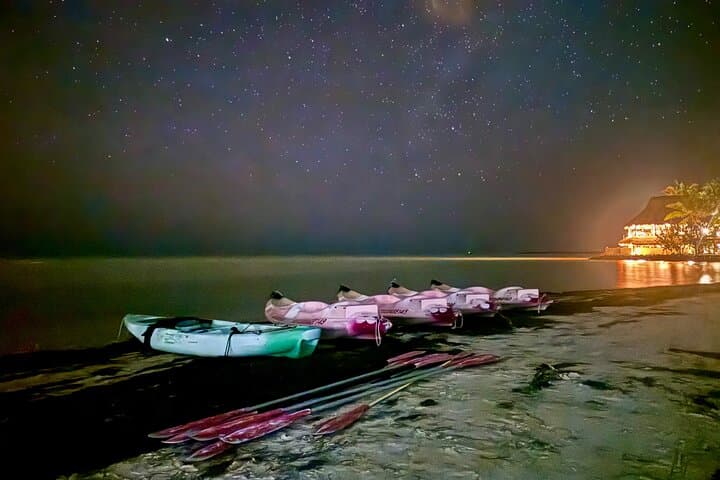
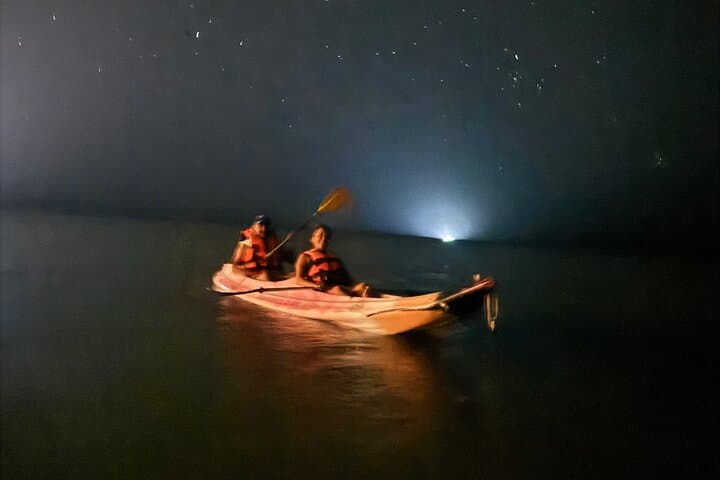
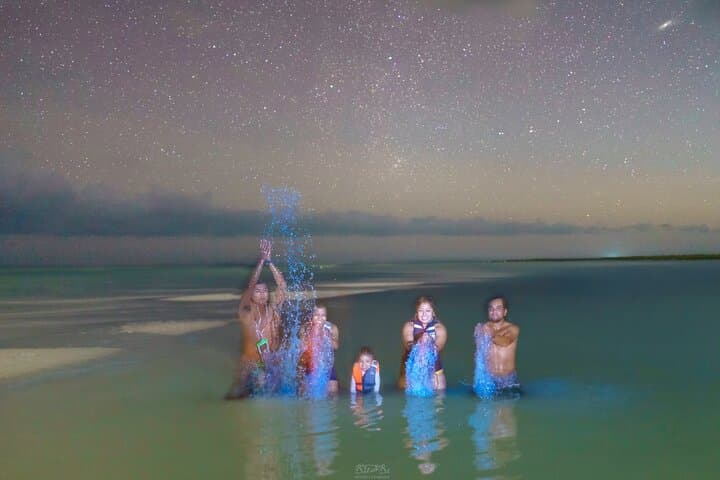
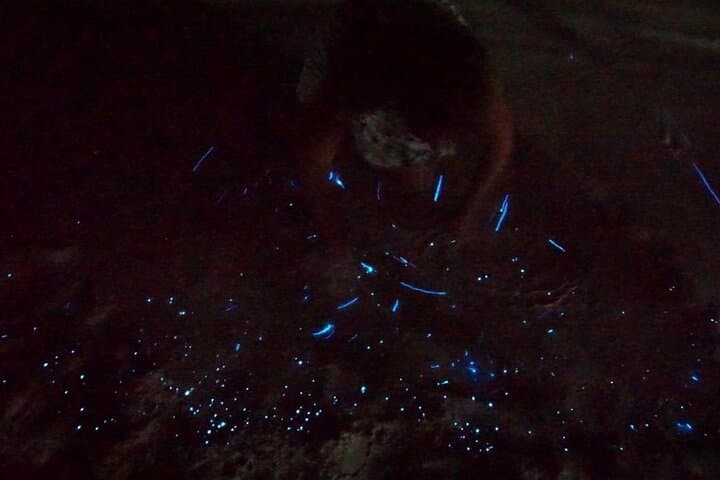
The night opens over Holbox like a slow breath of salt and stars. Paddles cut the black surface in soft, patient strokes and every fingertip that drags the sea leaves a neon trail—the water seems alive, daring you to move. Guides steer small kayaks away from the lamps of the village, toward Punta Mosquito, where the sandbank rises like a pale fingernail from the dark and the ocean holds its own private galaxy.
The night opens over Holbox like a slow breath of salt and stars. Paddles cut the black surface in soft, patient strokes and every fingertip that drags the sea leaves a neon trail—the water seems alive, daring you to move. Guides steer small kayaks away from the lamps of the village, toward Punta Mosquito, where the sandbank rises like a pale fingernail from the dark and the ocean holds its own private galaxy.
This is a phenomenon rooted in tiny lives: dinoflagellates that flash when disturbed. For millennia the shallow lagoons and calm bays of the Yucatán have hosted these microbes; locals learned to read tidal rhythms and moon phases and built a quiet culture around the sea’s moods. Geologically, Holbox sits on the flat carbonate plain that defines the northern Yucatán—sand and shattered coral create broad shallows that warm quickly, concentrating plankton in the right conditions.
Culturally the island is low-key and practical: fishermen, boatmen, and small-hoteliers who respect the rhythms of the tide and the nocturnal economy. The guides running this tour lean on that local knowledge—choosing dark pockets where the water and the sky can compete for attention. On clear nights the Milky Way stretches tight and brilliant above you while bioluminescence mirrors it below; the result is a double sky that asks for quiet.
Practically, expect about 2 km of paddling from the launch to Punta Mosquito and back within a roughly 105-minute outing. Conditions matter: the intensity can vary from faint pinpricks to a neon ribbon that outlines every arm stroke. The tour provides kayaks, life jackets, dry bags and lockers; guides will brief you on safety and low-impact behavior—avoid sunscreen and insect repellents that wash into the water and harm plankton and reefs.
Bring footwear that can handle sand and seawater, a small headlamp with a red filter for moving onshore, and a sense of patience; sometimes the show builds slowly. If you plan to swim, be aware that night paddling and nocturnal currents require basic comfort in open water. Respect local wildlife—flamingos and shorebirds feed in the shallows by day; sea turtles nest seasonally—and leave no trace: this display depends on clean, calm water.
For adventurous travelers, the Holbox night kayak is a concentrated, nearly otherworldly encounter: it’s half science, half theater, and entirely a reminder that small organisms can make the ocean sing if we let it be.