THE ADVENTURE COLLECTIVE® · Independent discovery and booking for outdoor travel

Paddle across Simpson Bay Lagoon from Kim Sha Beach on a guided 2½‑hour kayak tour that mixes calm paddling with maritime history and mangrove ecology. Perfect for travelers wanting a low-stress introduction to St. Maarten’s largest saltwater lagoon.
Paddle across Simpson Bay Lagoon from Kim Sha Beach on a guided 2½‑hour kayak tour that mixes calm paddling with maritime history and mangrove ecology. Perfect for travelers wanting a low-stress introduction to St. Maarten’s largest saltwater lagoon.
The paddle begins on warm sand at Kim Sha Beach—sit-on-top hulls rocking gently as guides tighten straps and point toward the wide, brackish sweep of Simpson Bay Lagoon. At a leisurely cadence you push off into the largest saltwater lagoon in the Antilles, the water slick under your blade and mega-yachts frowning in the distance like slow-moving castles. The guide steers a course past mangrove fingers and across the informal line where Dutch and French waters meet, narrating the island’s split personality as island life drifts by: Dutch marinas, French cafés and a history written at the water’s edge.
Verified experiences and guided adventures in the surrounding area.
Operated by Tri-Sport · Simpson Bay, Sint Maarten
The paddle begins on warm sand at Kim Sha Beach—sit-on-top hulls rocking gently as guides tighten straps and point toward the wide, brackish sweep of Simpson Bay Lagoon. At a leisurely cadence you push off into the largest saltwater lagoon in the Antilles, the water slick under your blade and mega-yachts frowning in the distance like slow-moving castles. The guide steers a course past mangrove fingers and across the informal line where Dutch and French waters meet, narrating the island’s split personality as island life drifts by: Dutch marinas, French cafés and a history written at the water’s edge.
Geology here is simple and readable: shallow lagoon basins ringed by reefs and mangrove roots that trap sand and sediment, forming the calm paddling channels. Culturally the lagoon is a working playground—yachts winter in shelter while local fishermen and mangrove birds mark quieter rhythms. Guides often explain the Treaty of Concordia that divided the island and how centuries of human activity shaped shorelines and canals.
Practical details are straightforward: the trip runs about 2½ hours, includes a brief on-beach lesson, and uses stable sit-on-top kayaks with life jackets provided. Expect gentle paddling with a short ecology stop to learn about mangrove nurseries and lagoon health. Bring reef-safe sunscreen, a reusable water bottle, and footwear that stays on your feet. Plan for calmer conditions in early morning or late afternoon; winds and boat traffic pick up midday. After the return to Kim Sha, the group usually cools off with a swim and a complimentary beverage—an easy, informative way to read this island from the water.
moderate.
2–3 hours.
Moderate cardiovascular fitness and core endurance for steady paddling; able to carry your own kayak short distances on sand.
No prior experience required—the tour includes an on‑beach lesson and uses stable sit‑on‑top kayaks; basic paddling is taught before launch.
The tour provides kayak, paddle, life jacket, guide, a short ecology/history stop, and a complimentary beverage on return.
Children who can comfortably wear a life jacket and follow guide instructions are usually allowed; non‑swimmers should notify the operator—guides stay close, but basic swimming ability is recommended.
Trips may be canceled for rough conditions; operators typically refund or reschedule if canceled due to weather—cancel 24 hours in advance for a full refund per the provider’s policy.
The island is split between Dutch and French governance since the 17th century; Simpson Bay has long been a maritime hub whose shores reflect that dual heritage.
The lagoon’s mangroves act as a nursery for fish and crustaceans but face pressure from marina expansion and yacht anchoring—use reef‑safe products and avoid disturbing root systems.
Tri-Sport operates guided outdoor trips and adventures with an emphasis on safety, stewardship, and memorable experiences.
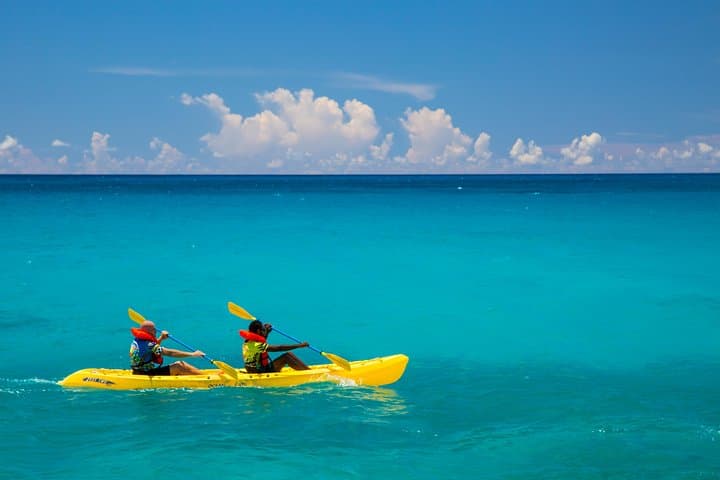
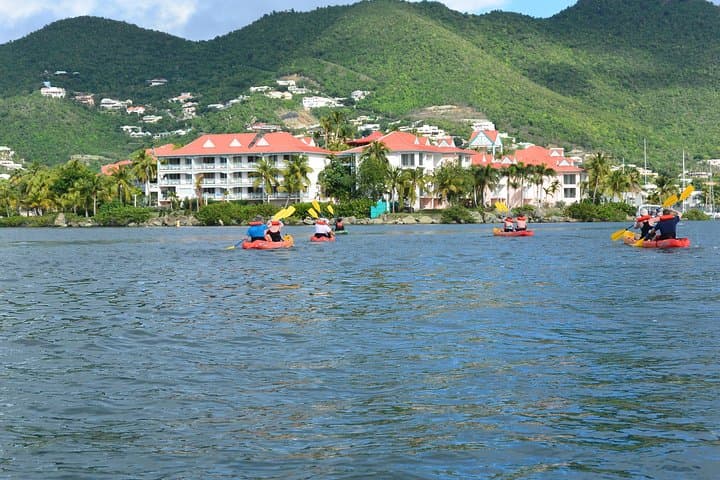
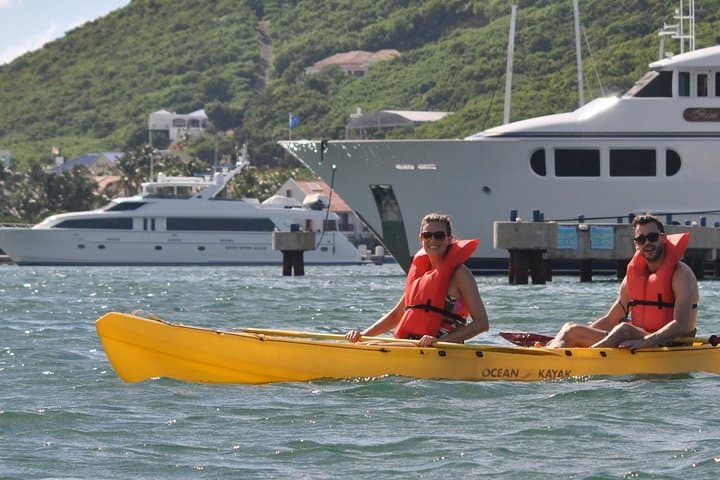
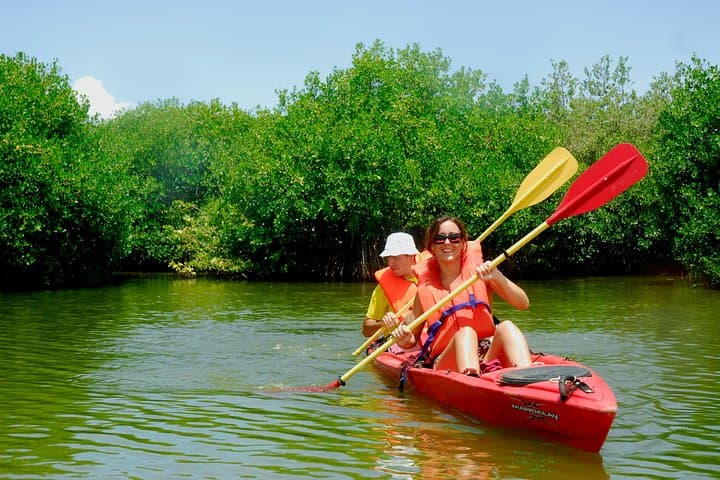
The paddle begins on warm sand at Kim Sha Beach—sit-on-top hulls rocking gently as guides tighten straps and point toward the wide, brackish sweep of Simpson Bay Lagoon. At a leisurely cadence you push off into the largest saltwater lagoon in the Antilles, the water slick under your blade and mega-yachts frowning in the distance like slow-moving castles. The guide steers a course past mangrove fingers and across the informal line where Dutch and French waters meet, narrating the island’s split personality as island life drifts by: Dutch marinas, French cafés and a history written at the water’s edge.
The paddle begins on warm sand at Kim Sha Beach—sit-on-top hulls rocking gently as guides tighten straps and point toward the wide, brackish sweep of Simpson Bay Lagoon. At a leisurely cadence you push off into the largest saltwater lagoon in the Antilles, the water slick under your blade and mega-yachts frowning in the distance like slow-moving castles. The guide steers a course past mangrove fingers and across the informal line where Dutch and French waters meet, narrating the island’s split personality as island life drifts by: Dutch marinas, French cafés and a history written at the water’s edge.
Geology here is simple and readable: shallow lagoon basins ringed by reefs and mangrove roots that trap sand and sediment, forming the calm paddling channels. Culturally the lagoon is a working playground—yachts winter in shelter while local fishermen and mangrove birds mark quieter rhythms. Guides often explain the Treaty of Concordia that divided the island and how centuries of human activity shaped shorelines and canals.
Practical details are straightforward: the trip runs about 2½ hours, includes a brief on-beach lesson, and uses stable sit-on-top kayaks with life jackets provided. Expect gentle paddling with a short ecology stop to learn about mangrove nurseries and lagoon health. Bring reef-safe sunscreen, a reusable water bottle, and footwear that stays on your feet. Plan for calmer conditions in early morning or late afternoon; winds and boat traffic pick up midday. After the return to Kim Sha, the group usually cools off with a swim and a complimentary beverage—an easy, informative way to read this island from the water.