THE ADVENTURE COLLECTIVE® · Independent discovery and booking for outdoor travel

Paddle glassy Patagonian lakes beneath snow-fluted peaks on a half-day kayak tour from Bariloche. Choose Lake Moreno at Llao-Llao for hotel cove launches or Lake Gutiérrez for quieter bays and mountain-backed vistas.
Paddle glassy Patagonian lakes beneath snow-fluted peaks on a half-day kayak tour from Bariloche. Choose Lake Moreno at Llao-Llao for hotel cove launches or Lake Gutiérrez for quieter bays and mountain-backed vistas.
The first paddle stroke slices a sheet of glass—crystal water that reflects a sky the color of cooled steel—and for a moment the mountains hold their breath. On a half-day outing from San Carlos de Bariloche, guides launch double kayaks onto either Lake Moreno at Llao-Llao or Lake Gutiérrez, and the city’s hum falls away to a soundtrack of wind, birds and the soft slap of paddles.
Verified experiences and guided adventures in the surrounding area.
Operated by Tangol · San Carlos de Bariloche, Río Negro
The first paddle stroke slices a sheet of glass—crystal water that reflects a sky the color of cooled steel—and for a moment the mountains hold their breath. On a half-day outing from San Carlos de Bariloche, guides launch double kayaks onto either Lake Moreno at Llao-Llao or Lake Gutiérrez, and the city’s hum falls away to a soundtrack of wind, birds and the soft slap of paddles.
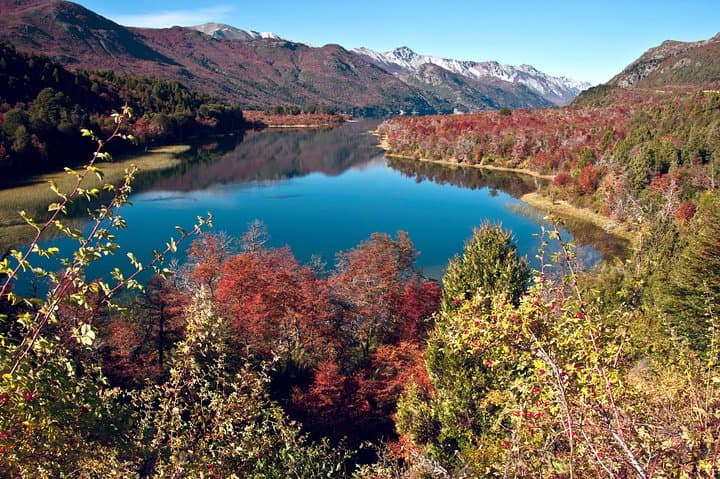
These lakes occupy hollows carved by the Patagonian ice sheets and fed by melted snow running off the steep flanks of Cerro López and Mount D’Agostini. The shoreline alternates between dense Nothofagus forest and granite boulder beaches, and the Llao-Llao Hotel—an alpine manor of local stone and wood—stands like an old waypoint above Lake Moreno, its private cove a convenient launch for guests.
Geology here is honest: striated rock faces, U-shaped valleys, and moraine ribs left by retreating glaciers. Culturally, the region bears Mapuche influence and a settler history of timber and alpine tourism that shaped Bariloche into the gateway town it is today; locally, guides will point out native flora and speak about trout introductions that changed the lake ecology a century ago.
The tour is designed for a broad range of paddlers. With professional guides, life jackets and full kayak equipment provided, the outing focuses on relaxed exploration—stopping at quiet coves, studying lakeside birdlife, and photographing the mountains from water level. Snacks are included, and most itineraries include hotel pickup and drop-off from centrally located lodging.
Practical notes: total outing time is about five hours door-to-door, with roughly 2–3 hours of on-water time depending on the chosen lake and conditions. Afternoon wind can build quickly on these lakes—many groups plan morning departures for flatter water. Minimum group size and age restrictions apply, so confirm details when you book. The operator requires at least two people per booking and enforces a no-refund, all-sales-final policy; they may cancel in bad weather.
Prepare with layered clothing, a waterproof shell, and shoes you don’t mind getting wet. Bring sunscreen, a dry bag or waterproof phone case for photos, and a reusable water bottle—the air is dry and sun exposure is high even when temperatures feel cool. For photographers, launch points and small headlands give classic compositions: hotel and mountain reflections on Moreno, or the serrated silhouette of D’Agostini seen from Gutierrez.
This is not an endurance test but an invitation: paddle at the pace of the lake, let the currents and wind test your timing, and watch the Patagonian Andes keep their slow, patient company.
easy.
5 hours (approx.).
Light aerobic fitness adequate; participants should be comfortable sitting and paddling for 2–3 hours.
No—this tour is suitable for beginners and includes safety instruction and guided paddling; basic comfort in a sit-in kayak is helpful.
Children aged 14 or younger are not permitted on this tour; age requirements are enforced by the operator.
Expect approximately 2–3 hours of paddling within a 5-hour total tour window including transfers and preparation.
Yes—life jackets and full kayak equipment are provided by the operator.
Yes—pickup and drop-off are included for selected centrally located Bariloche hotels; if you’re outside the pickup zone you’ll be given a nearby meeting point.
All sales are final with no refunds; the operator may cancel for bad weather—confirm details and emergency contacts prior to travel.
These basins were shaped by Pleistocene glaciation; later settlers developed alpine tourism around Bariloche, making lakeside hotels and trails common features.
Nahuel Huapi National Park manages the area—stay on designated launch points, avoid introducing non-native species, and pack out all trash to protect fragile shoreline ecology.
Tangol operates guided outdoor trips and adventures with an emphasis on safety, stewardship, and memorable experiences.
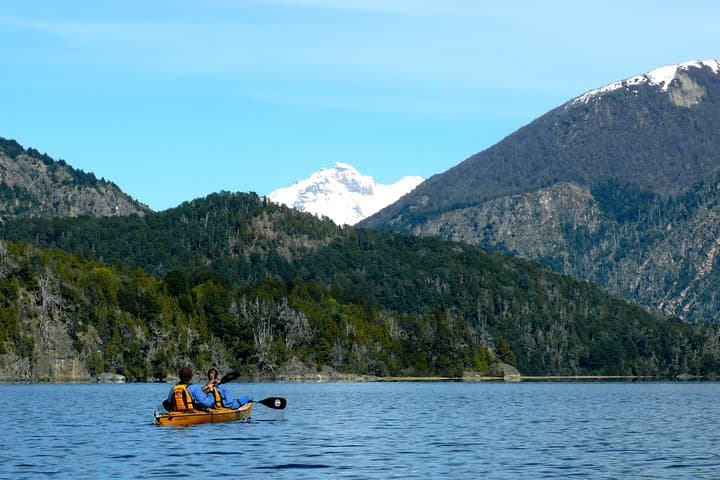
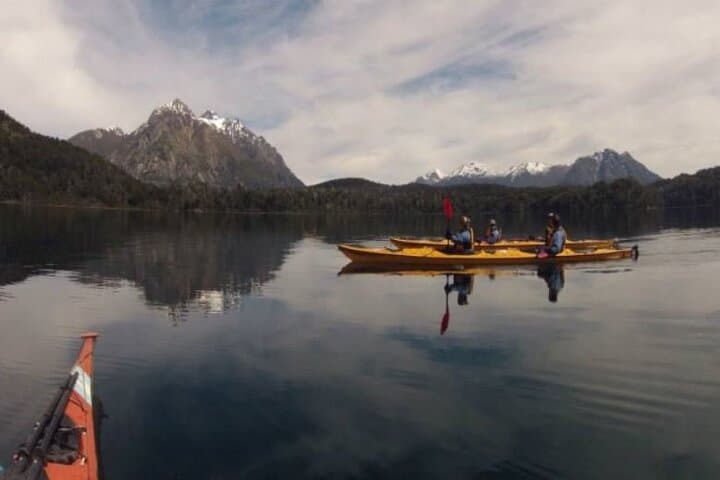
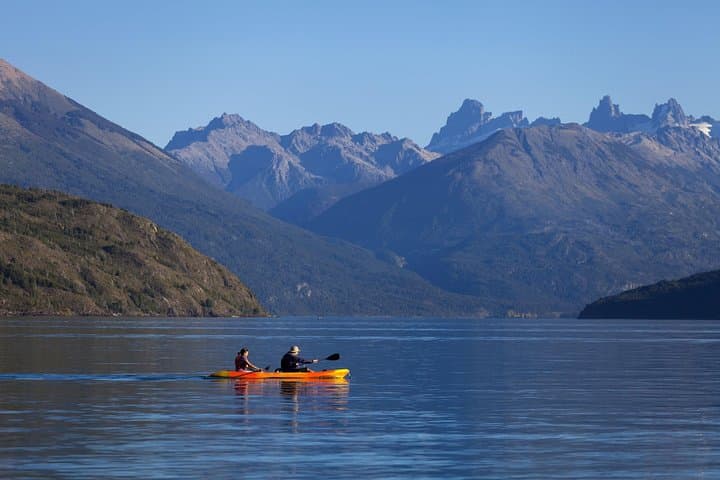
The first paddle stroke slices a sheet of glass—crystal water that reflects a sky the color of cooled steel—and for a moment the mountains hold their breath. On a half-day outing from San Carlos de Bariloche, guides launch double kayaks onto either Lake Moreno at Llao-Llao or Lake Gutiérrez, and the city’s hum falls away to a soundtrack of wind, birds and the soft slap of paddles.
The first paddle stroke slices a sheet of glass—crystal water that reflects a sky the color of cooled steel—and for a moment the mountains hold their breath. On a half-day outing from San Carlos de Bariloche, guides launch double kayaks onto either Lake Moreno at Llao-Llao or Lake Gutiérrez, and the city’s hum falls away to a soundtrack of wind, birds and the soft slap of paddles.
These lakes occupy hollows carved by the Patagonian ice sheets and fed by melted snow running off the steep flanks of Cerro López and Mount D’Agostini. The shoreline alternates between dense Nothofagus forest and granite boulder beaches, and the Llao-Llao Hotel—an alpine manor of local stone and wood—stands like an old waypoint above Lake Moreno, its private cove a convenient launch for guests.
Geology here is honest: striated rock faces, U-shaped valleys, and moraine ribs left by retreating glaciers. Culturally, the region bears Mapuche influence and a settler history of timber and alpine tourism that shaped Bariloche into the gateway town it is today; locally, guides will point out native flora and speak about trout introductions that changed the lake ecology a century ago.
The tour is designed for a broad range of paddlers. With professional guides, life jackets and full kayak equipment provided, the outing focuses on relaxed exploration—stopping at quiet coves, studying lakeside birdlife, and photographing the mountains from water level. Snacks are included, and most itineraries include hotel pickup and drop-off from centrally located lodging.
Practical notes: total outing time is about five hours door-to-door, with roughly 2–3 hours of on-water time depending on the chosen lake and conditions. Afternoon wind can build quickly on these lakes—many groups plan morning departures for flatter water. Minimum group size and age restrictions apply, so confirm details when you book. The operator requires at least two people per booking and enforces a no-refund, all-sales-final policy; they may cancel in bad weather.
Prepare with layered clothing, a waterproof shell, and shoes you don’t mind getting wet. Bring sunscreen, a dry bag or waterproof phone case for photos, and a reusable water bottle—the air is dry and sun exposure is high even when temperatures feel cool. For photographers, launch points and small headlands give classic compositions: hotel and mountain reflections on Moreno, or the serrated silhouette of D’Agostini seen from Gutierrez.
This is not an endurance test but an invitation: paddle at the pace of the lake, let the currents and wind test your timing, and watch the Patagonian Andes keep their slow, patient company.