THE ADVENTURE COLLECTIVE® · Independent discovery and booking for outdoor travel

Climb into an open‑air H‑1 Hummer and watch Joshua Tree unfold from Keys View to balanced-rock formations. This guided, 3–5 hour tour pairs big panoramas with short optional walks and a practical primer on the park’s geology and human history.
Climb into an open‑air H‑1 Hummer and watch Joshua Tree unfold from Keys View to balanced-rock formations. This guided, 3–5 hour tour pairs big panoramas with short optional walks and a practical primer on the park’s geology and human history.
You climb into a bright yellow H‑1 Hummer with dust still on its tires and the desert pressing out in every direction. The engine rumbles and the open air carries a dry, resinous scent — creosote and joshua-tree needles — while the guide taps the brake and points toward a ridge that will throw the valley at you in one long, clear view. By the time the vehicle slows at Keys View, the temperature has dropped 20–30 degrees and the horizon relaxes into layers: the Coachella Valley, a smear of salt at the Salton Sea, and, on very clear days, the high shoulders of Baja California. The wind seems to want to keep moving; even the joshua trees gesture as if to urge you onward.
Verified experiences and guided adventures in the surrounding area.
Operated by Outdoor Adventures, Inc. · Joshua Tree, California
You climb into a bright yellow H‑1 Hummer with dust still on its tires and the desert pressing out in every direction. The engine rumbles and the open air carries a dry, resinous scent — creosote and joshua-tree needles — while the guide taps the brake and points toward a ridge that will throw the valley at you in one long, clear view. By the time the vehicle slows at Keys View, the temperature has dropped 20–30 degrees and the horizon relaxes into layers: the Coachella Valley, a smear of salt at the Salton Sea, and, on very clear days, the high shoulders of Baja California. The wind seems to want to keep moving; even the joshua trees gesture as if to urge you onward.
This tour threads together geology and human history with the efficiency of a map unfolding. The massive, rounded monzogranite formations underfoot are the park’s bones — rock pushed, cooled and sculpted by millennia of shifting plates and wind-driven sand. The road follows an escarpment marked by the San Andreas Fault; the guide will show you the fault’s straight tear in the landscape and explain how it shaped both the terrain and local water patterns.
Native peoples, including the Serrano and Cahuilla, lived here in intimate rhythms with scarce water and seasonal blooms; later settlers used these same landmarks for mining and ranching. Today Joshua Tree is also a creative refuge: the towns at the park’s edge hum with galleries, small music venues and a calmer rhythm that values sunsets and cool evenings.
The Hummer tour balances motion and walking. Stops include a panoramic Keys View overlook, an optional mile-long meander through classic monzogranite and joshua-tree stands, and a well-photographed balanced-rock loop. Guides are National Park–approved and trained in local geology and history, offering a compact but substantive primer on why these forms look the way they do.
Practical edge: the operator offers pickup from Palm Desert in an air‑conditioned shuttle, or meet at the Joshua Tree Welcome Center for a discounted start. Tours run about three to five hours depending on shuttle timing; expect some short, optional walks on uneven, rocky trails. New park rules require every adult passenger to have a pedestrian pass or annual park pass purchased in advance — the company cannot buy this for you. Wear layered clothing (it’s much cooler at higher elevations), sturdy closed-toe shoes, sunscreen and carry water even if bottled water is provided.
This trip is ideal for travelers who want a curated desert experience without a long backcountry hike: accessible driving gets you to big vistas and intimate rock formations, while a knowledgeable guide converts vistas into stories about fault lines, Ice Age survivors and the fragile desert ecosystem you’re passing through.
moderate.
3–5 hours.
Moderate fitness for short, optional mile and half‑mile walks on uneven terrain; mostly seated time in the Hummer.
Yes — new rules require a PEDESTRIAN PASS per adult for backcountry access; buy it on recreation.gov before your tour.
Options include pickup from Palm Desert (air‑conditioned shuttle) or meet at the Joshua Tree Welcome Center near the town of Joshua Tree.
Walks are optional and short: roughly a mile for one stop and a half‑mile loop at another, on uneven terrain.
Not recommended for pregnant travelers and those with serious spinal problems; children are allowed but follow guide safety instructions.
Layered clothing (it can be 20–30°F cooler on ridges), closed‑toe shoes, sun protection and a light jacket for early mornings or evenings.
You may spot desert animals like jackrabbits, coyotes and birds of prey, but sightings are occasional and usually distant.
The landscape follows the San Andreas Fault and preserves monzogranite outcrops that record tectonic uplift; indigenous Serrano and Cahuilla peoples have long cultural ties to the region.
Joshua Tree is fragile: stick to established trails, pack out trash, and avoid climbing on cryptobiotic soil to protect desert ecosystems.
Outdoor Adventures, Inc. operates guided outdoor trips and adventures with an emphasis on safety, stewardship, and memorable experiences.
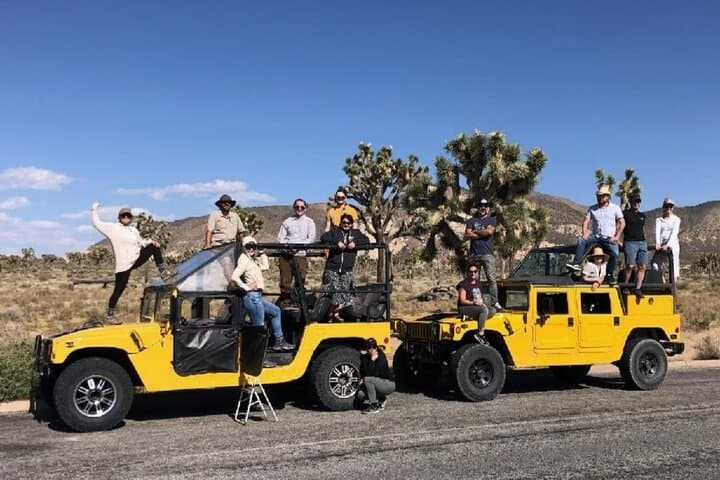
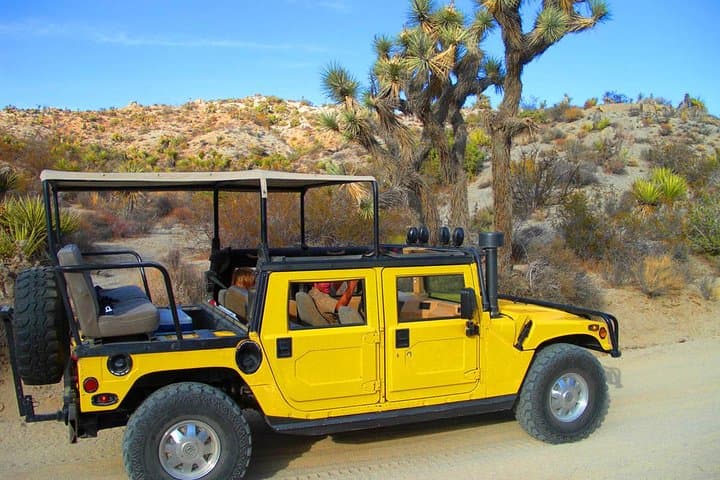
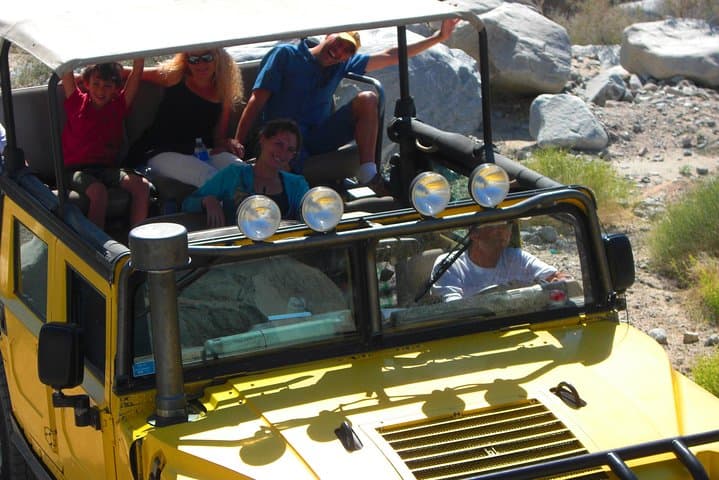

You climb into a bright yellow H‑1 Hummer with dust still on its tires and the desert pressing out in every direction. The engine rumbles and the open air carries a dry, resinous scent — creosote and joshua-tree needles — while the guide taps the brake and points toward a ridge that will throw the valley at you in one long, clear view. By the time the vehicle slows at Keys View, the temperature has dropped 20–30 degrees and the horizon relaxes into layers: the Coachella Valley, a smear of salt at the Salton Sea, and, on very clear days, the high shoulders of Baja California. The wind seems to want to keep moving; even the joshua trees gesture as if to urge you onward.
You climb into a bright yellow H‑1 Hummer with dust still on its tires and the desert pressing out in every direction. The engine rumbles and the open air carries a dry, resinous scent — creosote and joshua-tree needles — while the guide taps the brake and points toward a ridge that will throw the valley at you in one long, clear view. By the time the vehicle slows at Keys View, the temperature has dropped 20–30 degrees and the horizon relaxes into layers: the Coachella Valley, a smear of salt at the Salton Sea, and, on very clear days, the high shoulders of Baja California. The wind seems to want to keep moving; even the joshua trees gesture as if to urge you onward.
This tour threads together geology and human history with the efficiency of a map unfolding. The massive, rounded monzogranite formations underfoot are the park’s bones — rock pushed, cooled and sculpted by millennia of shifting plates and wind-driven sand. The road follows an escarpment marked by the San Andreas Fault; the guide will show you the fault’s straight tear in the landscape and explain how it shaped both the terrain and local water patterns.
Native peoples, including the Serrano and Cahuilla, lived here in intimate rhythms with scarce water and seasonal blooms; later settlers used these same landmarks for mining and ranching. Today Joshua Tree is also a creative refuge: the towns at the park’s edge hum with galleries, small music venues and a calmer rhythm that values sunsets and cool evenings.
The Hummer tour balances motion and walking. Stops include a panoramic Keys View overlook, an optional mile-long meander through classic monzogranite and joshua-tree stands, and a well-photographed balanced-rock loop. Guides are National Park–approved and trained in local geology and history, offering a compact but substantive primer on why these forms look the way they do.
Practical edge: the operator offers pickup from Palm Desert in an air‑conditioned shuttle, or meet at the Joshua Tree Welcome Center for a discounted start. Tours run about three to five hours depending on shuttle timing; expect some short, optional walks on uneven, rocky trails. New park rules require every adult passenger to have a pedestrian pass or annual park pass purchased in advance — the company cannot buy this for you. Wear layered clothing (it’s much cooler at higher elevations), sturdy closed-toe shoes, sunscreen and carry water even if bottled water is provided.
This trip is ideal for travelers who want a curated desert experience without a long backcountry hike: accessible driving gets you to big vistas and intimate rock formations, while a knowledgeable guide converts vistas into stories about fault lines, Ice Age survivors and the fragile desert ecosystem you’re passing through.