THE ADVENTURE COLLECTIVE® · Independent discovery and booking for outdoor travel

Strap into a hydroflight jetpack and rise above Nichupté Lagoon in Cancun — 20–30 minutes of guided flying with certified instructors, lifejackets, and headset coaching. Read on for what to expect, safety notes, and practical tips to plan your flight.
Strap into a hydroflight jetpack and rise above Nichupté Lagoon in Cancun — 20–30 minutes of guided flying with certified instructors, lifejackets, and headset coaching. Read on for what to expect, safety notes, and practical tips to plan your flight.
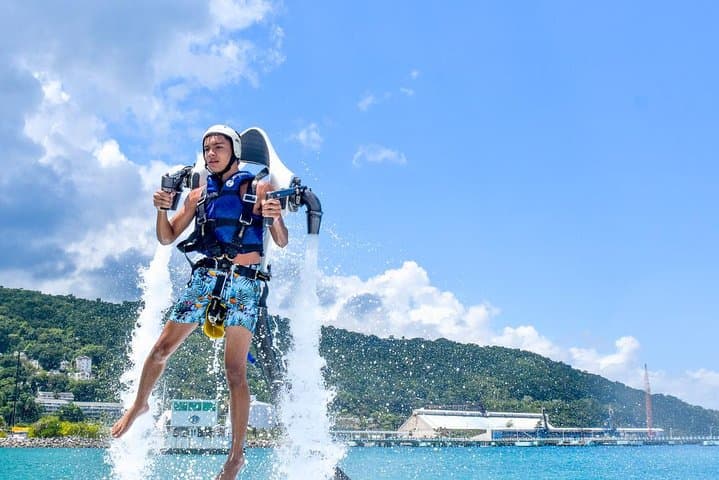
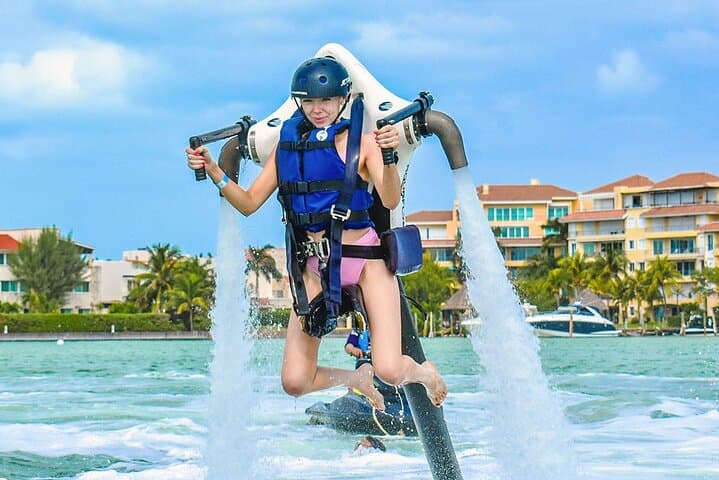
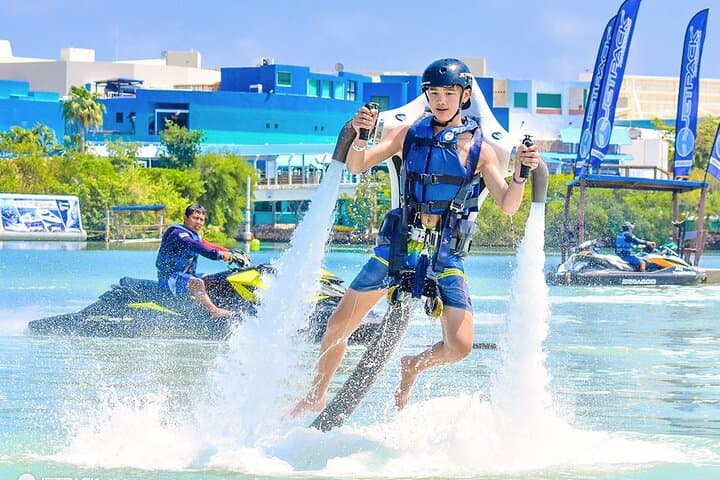
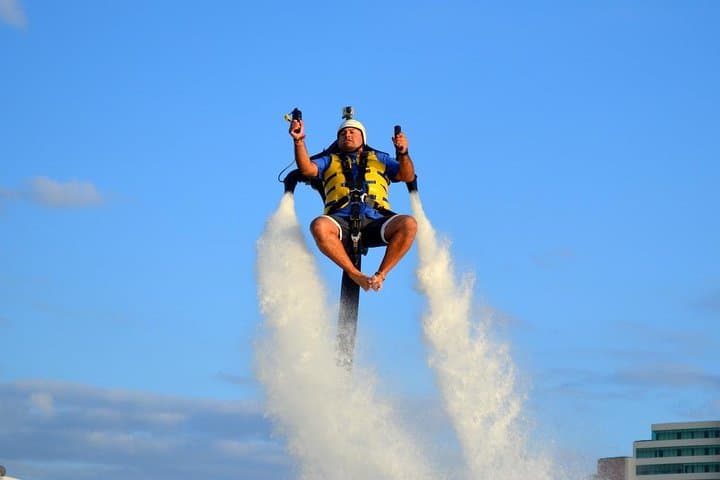
The first time you lift, the lagoon rearranges itself beneath you — a patchwork of glassy water, mangrove crowns, and the faint white line of the Caribbean beyond. The instructor’s calm voice comes through a headset as two jets of water push you up, and for a handful of seconds the world simplifies to thrust, balance, and the rush of air across your face.
Verified experiences and guided adventures in the surrounding area.
Operated by Holbox and Bacalar Tour · Cancun, Quintana Roo
The first time you lift, the lagoon rearranges itself beneath you — a patchwork of glassy water, mangrove crowns, and the faint white line of the Caribbean beyond. The instructor’s calm voice comes through a headset as two jets of water push you up, and for a handful of seconds the world simplifies to thrust, balance, and the rush of air across your face.
This is the hydroflight jetpack offered from a marina on Blvd. Kukulcán (km 13.5) in Cancun’s Hotel Zone. The machine borrows power from a connected jet-ski and uses that force to propel you as high as 9 meters (30 feet), letting you carve arcs over Nichupté Lagoon and practice dolphin or “Superman” postures under close guidance.
The lagoon itself tells a longer story. Formed as a shallow coastal estuary behind the barrier island, Nichupté’s mangroves and channels have sheltered fishing communities since pre-Columbian times; Maya routes once threaded these waters to the mainland. Today the lagoon is a working ecosystem where salt flats, mangroves, and resort development meet — geology and urbanism pressed up against each other.
Local operators balance thrill with routine: certified instructors, lifejackets and helmets, and one-on-one coaching through a headset are standard. The activity is short — 20–30 minutes of actual flying within a 30-minute booking window — but the intensity makes it feel longer. Safety protocols are strict: weight limits apply (minimum ~100 lb, maximum ~285 lb), and people with heart or spinal issues, and pregnant travelers, are asked not to participate.
For visitors, the logistics are simple but worth planning. Arrive 30–45 minutes early at the marina near the Puerto Santo restaurant to complete check-in and quick safety briefing. Bring ID, your confirmed booking, and the weight/height info you provided when booking. Cameras, phones and drones are not allowed during the run — instructors and staff ensure your session is focused and secure.
Timing matters. Early mornings mean calmer water and softer winds, which is better for learning tricks and getting higher lift. Afternoon sea breezes kick up chop and can make controls twitchier. Wear a secure swimsuit, water shoes or neoprene booties, and apply reef-safe sunscreen ahead of the briefing. Hydrate, but avoid heavy meals right before flight.
At the end of the 30 minutes you’ll want to replay the feeling: a short, precise adrenaline shot that leaves you eager for more, and with a clear understanding of how human skill, modern gear, and a fragile lagoon combine to create one of Cancun’s most unmistakable adventures.
challenging.
30 minutes (experience) — allow 45–60 minutes total.
Expect brisk upper-body balance and core engagement; good baseline fitness recommended
Flights run 20–30 minutes as described; allow 45–60 minutes for check-in, briefing and gearing up.
The activity typically requires a minimum weight of about 100 pounds and a maximum near 285 pounds; age limits are enforced for safety — check with the operator when booking.
No — for safety and to avoid injury, phones, cameras and drones are not allowed during the flight; staff usually record or photograph on request.
Participants must wear lifejackets and be supervised, but basic swimming comfort is recommended; disclose any concerns before booking.
Operators offer standard cancellation policies; for this tour you can cancel up to 24 hours for a full refund — day-of weather cancellations are handled case-by-case.
No prior experience is required; certified instructors coach passengers via headset through each phase of flight.
Nichupté Lagoon has long been a navigation and fishing corridor used since Maya times; modern development transformed parts of the shoreline into the Hotel Zone in the 20th century.
The lagoon’s mangroves are fragile—choose operators that follow no-wake and wildlife-disturbance guidelines, and use reef-safe sunscreen to reduce ecological impact.
Holbox and Bacalar Tour operates guided outdoor trips and adventures with an emphasis on safety, stewardship, and memorable experiences.
The first time you lift, the lagoon rearranges itself beneath you — a patchwork of glassy water, mangrove crowns, and the faint white line of the Caribbean beyond. The instructor’s calm voice comes through a headset as two jets of water push you up, and for a handful of seconds the world simplifies to thrust, balance, and the rush of air across your face.
The first time you lift, the lagoon rearranges itself beneath you — a patchwork of glassy water, mangrove crowns, and the faint white line of the Caribbean beyond. The instructor’s calm voice comes through a headset as two jets of water push you up, and for a handful of seconds the world simplifies to thrust, balance, and the rush of air across your face.
This is the hydroflight jetpack offered from a marina on Blvd. Kukulcán (km 13.5) in Cancun’s Hotel Zone. The machine borrows power from a connected jet-ski and uses that force to propel you as high as 9 meters (30 feet), letting you carve arcs over Nichupté Lagoon and practice dolphin or “Superman” postures under close guidance.
The lagoon itself tells a longer story. Formed as a shallow coastal estuary behind the barrier island, Nichupté’s mangroves and channels have sheltered fishing communities since pre-Columbian times; Maya routes once threaded these waters to the mainland. Today the lagoon is a working ecosystem where salt flats, mangroves, and resort development meet — geology and urbanism pressed up against each other.
Local operators balance thrill with routine: certified instructors, lifejackets and helmets, and one-on-one coaching through a headset are standard. The activity is short — 20–30 minutes of actual flying within a 30-minute booking window — but the intensity makes it feel longer. Safety protocols are strict: weight limits apply (minimum ~100 lb, maximum ~285 lb), and people with heart or spinal issues, and pregnant travelers, are asked not to participate.
For visitors, the logistics are simple but worth planning. Arrive 30–45 minutes early at the marina near the Puerto Santo restaurant to complete check-in and quick safety briefing. Bring ID, your confirmed booking, and the weight/height info you provided when booking. Cameras, phones and drones are not allowed during the run — instructors and staff ensure your session is focused and secure.
Timing matters. Early mornings mean calmer water and softer winds, which is better for learning tricks and getting higher lift. Afternoon sea breezes kick up chop and can make controls twitchier. Wear a secure swimsuit, water shoes or neoprene booties, and apply reef-safe sunscreen ahead of the briefing. Hydrate, but avoid heavy meals right before flight.
At the end of the 30 minutes you’ll want to replay the feeling: a short, precise adrenaline shot that leaves you eager for more, and with a clear understanding of how human skill, modern gear, and a fragile lagoon combine to create one of Cancun’s most unmistakable adventures.