THE ADVENTURE COLLECTIVE® · Independent discovery and booking for outdoor travel

Swap the coast for crag and pine on an eight-hour jeep circuit from Paphos that threads Troodos’ highest peaks, Byzantine gold, a Venetian stone bridge and a thundering waterfall. Expect short walks, wine tasting and a swim at Aphrodite’s Rock.
Swap the coast for crag and pine on an eight-hour jeep circuit from Paphos that threads Troodos’ highest peaks, Byzantine gold, a Venetian stone bridge and a thundering waterfall. Expect short walks, wine tasting and a swim at Aphrodite’s Rock.
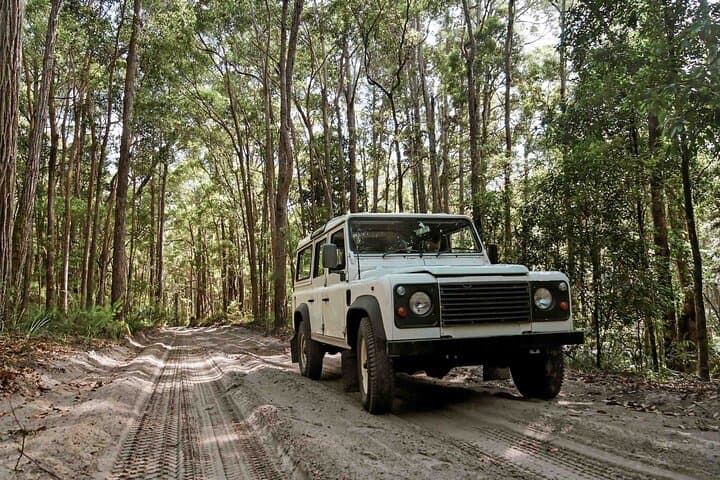
The jeep grinds from the coastal flatlands into a rising forest—pines crowd the windows, a high wind testing the vehicle’s temper as the driver threads a ribbon of switchback toward the Troodos spine. By midmorning the Mediterranean light has softened; the air is cooler, scented with resin and wild lavender. On this full-day run from Paphos, Cyprus’s inland geology and centuries of human history are revealed one stop at a time: a dam that holds migratory birds, a stone bridge that remembers Venetian boots, a monastery whose gold-leaf icons draw pilgrims, and a waterfall that still shouts its old name—Hantara, the water-noise.
Verified experiences and guided adventures in the surrounding area.
Operated by ConstrucTOUR Travel Agency · Paphos, Paphos District
The jeep grinds from the coastal flatlands into a rising forest—pines crowd the windows, a high wind testing the vehicle’s temper as the driver threads a ribbon of switchback toward the Troodos spine. By midmorning the Mediterranean light has softened; the air is cooler, scented with resin and wild lavender. On this full-day run from Paphos, Cyprus’s inland geology and centuries of human history are revealed one stop at a time: a dam that holds migratory birds, a stone bridge that remembers Venetian boots, a monastery whose gold-leaf icons draw pilgrims, and a waterfall that still shouts its old name—Hantara, the water-noise.
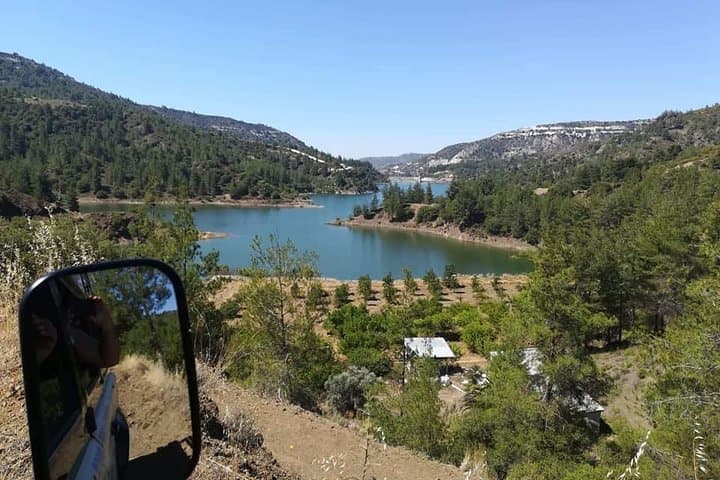
Troodos is not a single thing but a folded range of ophiolite—ancient ocean floor uplifted and exposed—so the landscape alternates between dark volcanic rock and weathered softer beds where streams have cut lanes through the forest. Asprokremmos Dam, the second-largest in Cyprus, forms a broad, flat reservoir important for birds and for local water supply; the shallow shores are a quiet counterpoint to the bustle of the coast. A short drive later the jeep drops you beside Chelefos, one of the island’s largest surviving stone bridges from the Venetian era, its arches spanning the Diarizos and offering a perfect composition for a photo and a closer look at masonry where human craft meets persistent river erosion.
At Hantara waterfall the group descends a short, fragrant trail to a viewing pool where water falls eight meters over outcropping rock, the sound filling the canyon. Kykkos Monastery, founded in the 11th century and richly adorned, is a study in Byzantine wealth and island devotion; its icon of the Virgin Mary and the monastery’s role in Cypriot history are explained by local guides during the stop. The route also winds through mountain villages where wineries pour local varieties—commandaria and xinisteri among them—and finally returns to the coast with a cooling dip possible at Aphrodite’s Rock, the legendary birth site of the goddess.
Practical edge: the tour is about eight hours with moderate time on and off the jeep, minimal hiking but several short stair-and-path descents. Roads are paved but narrow; motion sensitivity can be an issue. Bring layered clothing for temperature swings (coast to nearly 2,000 m in season), sturdy shoes for uneven approaches, swimwear for the seaside stop, and cash for local purchases. Photography rewards the morning and late-afternoon light; wildlife sightings are most likely near the dam.
This is a day built for variety—history, geology, culture, and a little wildness—accessible from Paphos with instant confirmation and all fees included, best for travelers who want to trade the hotel pool for a fuller sense of Cyprus’s interior in one compact, well-paced loop.
moderate.
8 hours.
Suitable for average fitness; requires short walks on uneven ground and getting in/out of a jeep multiple times.
The tour runs about eight hours and includes transport in an air-conditioned jeep, all taxes and a wine tasting; food and museum admissions may be extra.
Yes — pickup is offered from many Paphos-area hotels; confirm your pickup point when booking.
No long hikes; expect short walks (5–30 minutes) at each stop over uneven terrain and staircases.
Yes, weather permitting there is time for a swim—bring swimwear and a towel; currents can be strong near the rocks.
It’s family-friendly but not recommended for those with serious mobility limits due to steps and uneven surfaces; infants require their own seat arrangements.
The operator may cancel for bad weather with full refund if conditions are unsafe; dress in layers and carry a rain jacket during shoulder seasons.
Kykkos Monastery dates to the late 11th century and has long been a center of Orthodox pilgrimage; the island’s stone bridges reflect Venetian attempts to improve inland transport in the 16th–17th centuries.
Asprokremmos and the mountain forests are important for endemic species and migratory birds; stay on marked paths and avoid disturbing nesting birds or trampling sensitive herbaceous cover.
ConstrucTOUR Travel Agency operates guided outdoor trips and adventures with an emphasis on safety, stewardship, and memorable experiences.
The jeep grinds from the coastal flatlands into a rising forest—pines crowd the windows, a high wind testing the vehicle’s temper as the driver threads a ribbon of switchback toward the Troodos spine. By midmorning the Mediterranean light has softened; the air is cooler, scented with resin and wild lavender. On this full-day run from Paphos, Cyprus’s inland geology and centuries of human history are revealed one stop at a time: a dam that holds migratory birds, a stone bridge that remembers Venetian boots, a monastery whose gold-leaf icons draw pilgrims, and a waterfall that still shouts its old name—Hantara, the water-noise.
The jeep grinds from the coastal flatlands into a rising forest—pines crowd the windows, a high wind testing the vehicle’s temper as the driver threads a ribbon of switchback toward the Troodos spine. By midmorning the Mediterranean light has softened; the air is cooler, scented with resin and wild lavender. On this full-day run from Paphos, Cyprus’s inland geology and centuries of human history are revealed one stop at a time: a dam that holds migratory birds, a stone bridge that remembers Venetian boots, a monastery whose gold-leaf icons draw pilgrims, and a waterfall that still shouts its old name—Hantara, the water-noise.
Troodos is not a single thing but a folded range of ophiolite—ancient ocean floor uplifted and exposed—so the landscape alternates between dark volcanic rock and weathered softer beds where streams have cut lanes through the forest. Asprokremmos Dam, the second-largest in Cyprus, forms a broad, flat reservoir important for birds and for local water supply; the shallow shores are a quiet counterpoint to the bustle of the coast. A short drive later the jeep drops you beside Chelefos, one of the island’s largest surviving stone bridges from the Venetian era, its arches spanning the Diarizos and offering a perfect composition for a photo and a closer look at masonry where human craft meets persistent river erosion.
At Hantara waterfall the group descends a short, fragrant trail to a viewing pool where water falls eight meters over outcropping rock, the sound filling the canyon. Kykkos Monastery, founded in the 11th century and richly adorned, is a study in Byzantine wealth and island devotion; its icon of the Virgin Mary and the monastery’s role in Cypriot history are explained by local guides during the stop. The route also winds through mountain villages where wineries pour local varieties—commandaria and xinisteri among them—and finally returns to the coast with a cooling dip possible at Aphrodite’s Rock, the legendary birth site of the goddess.
Practical edge: the tour is about eight hours with moderate time on and off the jeep, minimal hiking but several short stair-and-path descents. Roads are paved but narrow; motion sensitivity can be an issue. Bring layered clothing for temperature swings (coast to nearly 2,000 m in season), sturdy shoes for uneven approaches, swimwear for the seaside stop, and cash for local purchases. Photography rewards the morning and late-afternoon light; wildlife sightings are most likely near the dam.
This is a day built for variety—history, geology, culture, and a little wildness—accessible from Paphos with instant confirmation and all fees included, best for travelers who want to trade the hotel pool for a fuller sense of Cyprus’s interior in one compact, well-paced loop.