THE ADVENTURE COLLECTIVE® · Independent discovery and booking for outdoor travel

A full‑day guided hike to the 1,700‑meter summit of Jebel Al Hash delivers panoramic desert views, Bedouin hospitality, and varied terrain—expect loose sand, short scrambles, and a traditional lunch. Perfect for adventurous day‑hikers based in Aqaba or Rum village.
A full‑day guided hike to the 1,700‑meter summit of Jebel Al Hash delivers panoramic desert views, Bedouin hospitality, and varied terrain—expect loose sand, short scrambles, and a traditional lunch. Perfect for adventurous day‑hikers based in Aqaba or Rum village.
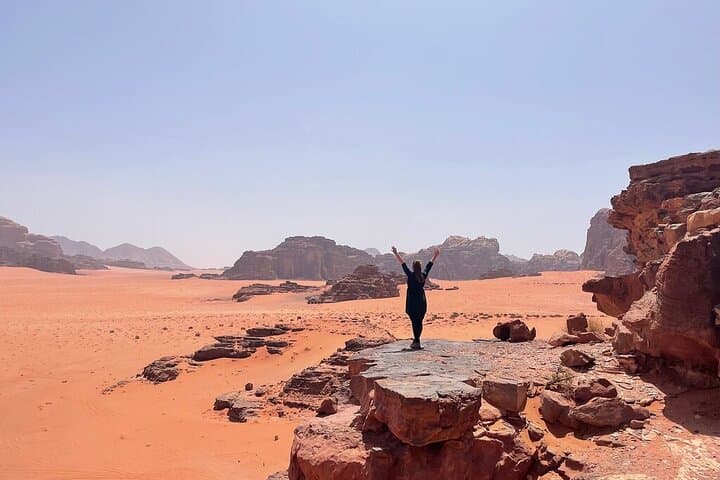
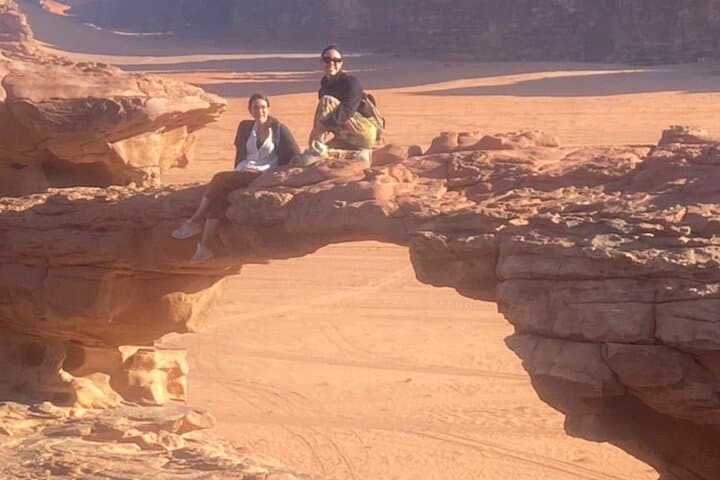
You step out of the shade of Wadi Rum Rest House into a wind that smells of iron and heat; the sandstone faces already seem to be angling their color toward whatever the sun will do next. The trail climbs old washouts and carved ledges, sometimes narrowing into a stair of fractured stone. At each turn the valley opens wider — a rust sea of dunes and fins — and in the distance the Saudi border sits low, almost domesticated beneath the sweep of the sky. By the time you shoulder the last scramble to the 1,700‑meter crest of Jebel Al Hash, the desert feels like an engine that has been coaxed into silence: you can hear the grains of sand settling.
Verified experiences and guided adventures in the surrounding area.
Operated by Wadi Rum Calm · Wadi Rum Village, Aqaba Governorate
You step out of the shade of Wadi Rum Rest House into a wind that smells of iron and heat; the sandstone faces already seem to be angling their color toward whatever the sun will do next. The trail climbs old washouts and carved ledges, sometimes narrowing into a stair of fractured stone. At each turn the valley opens wider — a rust sea of dunes and fins — and in the distance the Saudi border sits low, almost domesticated beneath the sweep of the sky. By the time you shoulder the last scramble to the 1,700‑meter crest of Jebel Al Hash, the desert feels like an engine that has been coaxed into silence: you can hear the grains of sand settling.
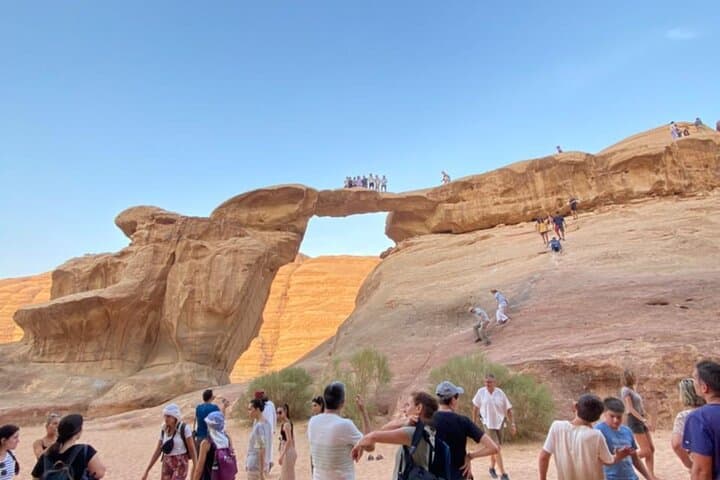
Geology here is blunt and honest. Wadi Rum’s quartzite and sandstone were laid down in vast coastal plains and then uplifted and abraded for millions of years; wind has been the sculptor, water the occasional editor. Human history is layered on top — Nabatean petroglyphs and caravan tracks, then the stories of Lawrence and the network of Bedouin camps that still anchor guidance and hospitality in the valley. A traditional lunch served on the hike gives context: flatbread, stewed lamb, and mint tea that tastes like an ethic of welcome.
The route to Al Hash is a full‑day outing — expect roughly 8–12 km round trip with approximately 700–1,000 m of elevation gain depending on the approach, and a mix of loose sand, packed trail, and short scrambling sections. Trails are not always obvious; local guides read the landscape in ways a GPS can’t. That’s part of the appeal: you’re moving through a lived, storied place rather than across a polished trail.
Practical edge: start early to avoid the midday desert heat, carry at least 2–3 liters of water, and wear ankle‑supporting boots for the rocky sections. Sun protection is non‑negotiable; a breathable wind layer is useful for the higher ridge where the wind sharpens. The meeting point is Wadi Rum Rest House in Rum village — a practical hub with parking and a café — and transfers to and from the village are usually included.
Culturally, walk with curiosity and respect. Bedouin guides often share rock art sites and local lore; tipping modestly and asking before photographing people is appreciated. Environmentally, the desert crust is fragile: stick to established paths where possible, pack out waste, and avoid unnecessary disturbance to vegetation and archaeological sites.
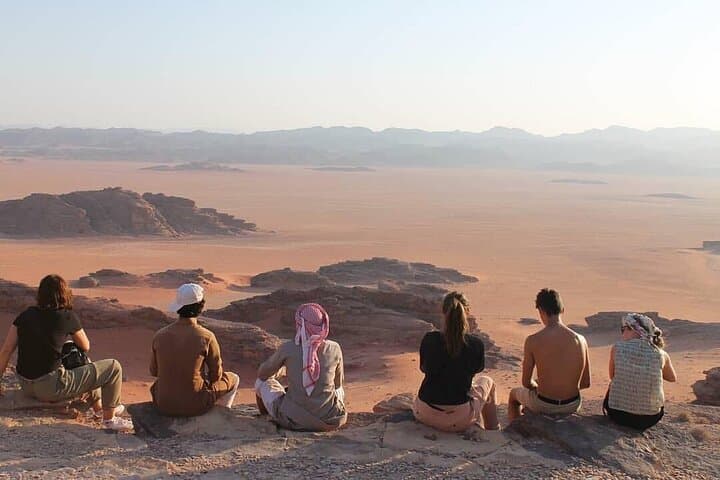
Reaching the summit delivers a view that pulls the horizon taut — dunes, ridgelines, and the faint tilt toward Saudi Arabia. It’s the kind of vista that answers why people travel here: not just for a beautiful frame, but to feel how landscape can alter the rhythm of a single day.
moderate.
8 hours.
Moderate cardiovascular fitness with the ability to hike 8–12 km and manage sustained elevation gain; experience with uneven terrain helpful.
Moderate fitness is required: be comfortable hiking several hours with 700–1,000 m of elevation gain and some scrambling on uneven ground.
Most bookings include guide services, bottled water, a traditional lunch, and transfers to/from Wadi Rum village as noted in the itinerary.
The meeting point is Wadi Rum Rest House in Rum village — the first building on the right when entering the village; meeting time is typically early morning as confirmed by the operator.
Facilities are limited: expect basic amenities at the rest house and camps; on the trail plan for primitive conditions and bring hand sanitizer and toilet paper.
The hike is described as suitable for a range of fitness levels, but children and travelers with mobility or spine issues should consult the operator — some scrambling may be required.
The tour operator handles local permissions; independent travelers should note that Wadi Rum is managed and access may require coordination with village authorities and guides.
Wadi Rum has been a corridor for human travel for millennia — Nabatean inscriptions and Bedouin routes trace a long history of movement across these sandstone plates, later reframed by 20th‑century Arab Revolt lore.
The desert’s biological soil crust and archaeological sites are fragile; keep to established tracks, pack out waste, and support local guides who steward routes.
Wadi Rum Calm operates guided outdoor trips and adventures with an emphasis on safety, stewardship, and memorable experiences.
You step out of the shade of Wadi Rum Rest House into a wind that smells of iron and heat; the sandstone faces already seem to be angling their color toward whatever the sun will do next. The trail climbs old washouts and carved ledges, sometimes narrowing into a stair of fractured stone. At each turn the valley opens wider — a rust sea of dunes and fins — and in the distance the Saudi border sits low, almost domesticated beneath the sweep of the sky. By the time you shoulder the last scramble to the 1,700‑meter crest of Jebel Al Hash, the desert feels like an engine that has been coaxed into silence: you can hear the grains of sand settling.
You step out of the shade of Wadi Rum Rest House into a wind that smells of iron and heat; the sandstone faces already seem to be angling their color toward whatever the sun will do next. The trail climbs old washouts and carved ledges, sometimes narrowing into a stair of fractured stone. At each turn the valley opens wider — a rust sea of dunes and fins — and in the distance the Saudi border sits low, almost domesticated beneath the sweep of the sky. By the time you shoulder the last scramble to the 1,700‑meter crest of Jebel Al Hash, the desert feels like an engine that has been coaxed into silence: you can hear the grains of sand settling.
Geology here is blunt and honest. Wadi Rum’s quartzite and sandstone were laid down in vast coastal plains and then uplifted and abraded for millions of years; wind has been the sculptor, water the occasional editor. Human history is layered on top — Nabatean petroglyphs and caravan tracks, then the stories of Lawrence and the network of Bedouin camps that still anchor guidance and hospitality in the valley. A traditional lunch served on the hike gives context: flatbread, stewed lamb, and mint tea that tastes like an ethic of welcome.
The route to Al Hash is a full‑day outing — expect roughly 8–12 km round trip with approximately 700–1,000 m of elevation gain depending on the approach, and a mix of loose sand, packed trail, and short scrambling sections. Trails are not always obvious; local guides read the landscape in ways a GPS can’t. That’s part of the appeal: you’re moving through a lived, storied place rather than across a polished trail.
Practical edge: start early to avoid the midday desert heat, carry at least 2–3 liters of water, and wear ankle‑supporting boots for the rocky sections. Sun protection is non‑negotiable; a breathable wind layer is useful for the higher ridge where the wind sharpens. The meeting point is Wadi Rum Rest House in Rum village — a practical hub with parking and a café — and transfers to and from the village are usually included.
Culturally, walk with curiosity and respect. Bedouin guides often share rock art sites and local lore; tipping modestly and asking before photographing people is appreciated. Environmentally, the desert crust is fragile: stick to established paths where possible, pack out waste, and avoid unnecessary disturbance to vegetation and archaeological sites.
Reaching the summit delivers a view that pulls the horizon taut — dunes, ridgelines, and the faint tilt toward Saudi Arabia. It’s the kind of vista that answers why people travel here: not just for a beautiful frame, but to feel how landscape can alter the rhythm of a single day.