THE ADVENTURE COLLECTIVE® · Independent discovery and booking for outdoor travel

A three-hour private stroll through Interlaken's historic streets capped by a funicular ride to Harder Kulm. Expect lake views, local history, and a panoramic alpine finale—perfect for a focused introduction to the Jungfrau region.
A three-hour private stroll through Interlaken's historic streets capped by a funicular ride to Harder Kulm. Expect lake views, local history, and a panoramic alpine finale—perfect for a focused introduction to the Jungfrau region.
You step off the quiet street and the Aare announces itself with a bright, fast voice—cool water hurrying between two lakes, daring you to look away. The guide points across the bridge to Unterseen, and for the next three hours the rhythm of Interlaken shifts between town and viewpoint: cobbled squares and civic stories give way to a cable car that climbs until the mountain seems to offer its shoulders as a lookout.
Verified experiences and guided adventures in the surrounding area.
Operated by SwissTravelGuide.ch · Interlaken, Bern
You step off the quiet street and the Aare announces itself with a bright, fast voice—cool water hurrying between two lakes, daring you to look away. The guide points across the bridge to Unterseen, and for the next three hours the rhythm of Interlaken shifts between town and viewpoint: cobbled squares and civic stories give way to a cable car that climbs until the mountain seems to offer its shoulders as a lookout.
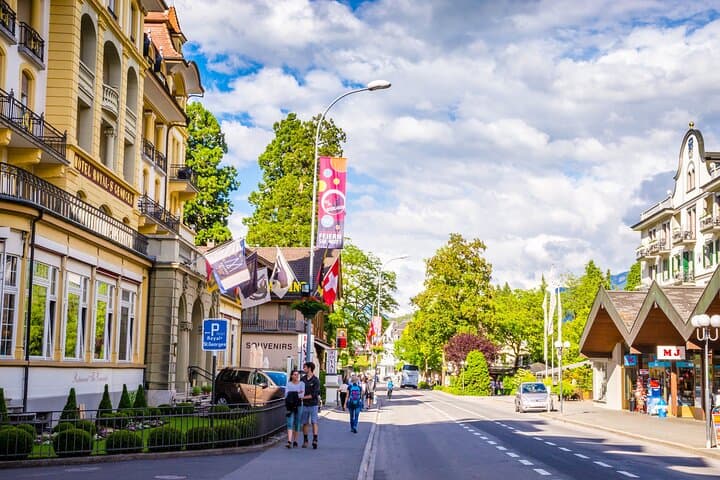
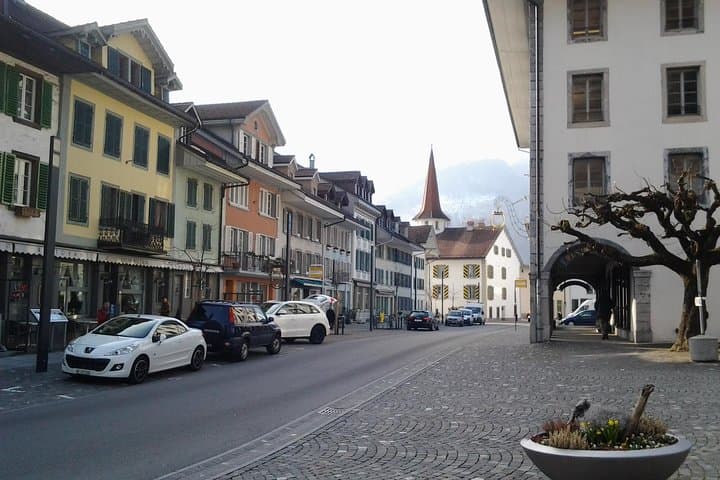
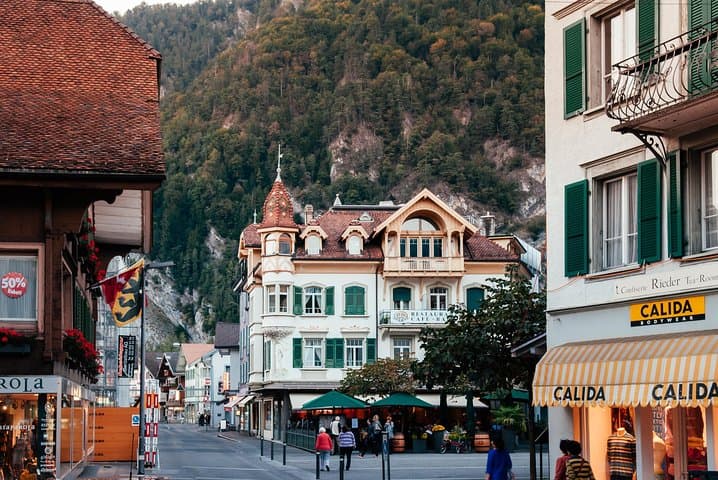
The walking portion reads like a compact history lesson. Unterseen, rebuilt under Bernese order after a 15th-century fire, still carries its Stadthausplatz and narrow lanes where the Reformation reshaped monastic landholdings. Back in Interlaken, the Höhenmatte opens as a flat green—an old meadow that functions as a modern stage for paragliders to land and local events to unfold. The Kursaal and the 19th-century country hotels offer glimpses of a town that grew alongside tourism: railways and hotels arrived in the 1800s and turned this crossroads of Lakes Thun and Brienz into a gateway to the high Alps.
Geology is visible in plain sight. The Bödeli—the spit between the two lakes—was formed by glacial till and meltwater, the reason Interlaken sits like a hinge between watery basins. From the Harder Kulm viewpoint the landscape arranges itself with blunt clarity: Lake Thun to the west, Lake Brienz to the east, and the Eiger, Mönch and Jungfrau stacked to the south, their faces worn by glaciers and time.
Culturally, the town is compact but layered: Swiss precision in transport and hospitality, local guides who balance concise facts with regional anecdotes, and an outdoor culture that treats paragliding and hiking as everyday options rather than extremes.
Practical guidance: the tour runs about three hours and includes local bus and the funicular to Harder Kulm—bring a charged phone and small local currency for incidental purchases. Wear sturdy walking shoes; cobbles and short uphill stretches at the viewpoint demand grip rather than glamour. Weather on the Bödeli can turn brisk; pack a lightweight shell even on summer afternoons. The tour is private, suitable for most fitness levels, wheelchair access possible with prior notice, and requires a minimum of two people per booking. For photos, aim for early morning or late afternoon to catch the low light on the Jungfrau massif and the reflective lakes.
Logistics at a glance: mobile ticketing accepted, pickup from many Interlaken hotels is available, and cancellation is permitted up to 24 hours before departure. Whether you come for landscape, history, or simply a concise alpine orientation, this three-hour loop delivers a clear, immediate sense of why Interlaken has been a travel crossroads for two centuries.
easy.
3 hours.
Basic urban walking fitness; able to walk short uphill sections and climb funicular steps if needed
Yes—transport fees for the local bus and cable car/funicular to Harder Kulm are included in the tour.
Infants and small children can ride in a stroller; children must be accompanied by an adult.
Wheelchair assistance is possible but please contact the operator before booking to arrange accommodations.
A minimum of two people per booking is required for this private tour.
Guides are local Swiss Travel Guide operators—confirm language preferences at booking to ensure availability.
Full refund available if you cancel at least 24 hours before the scheduled departure; tours may be canceled in bad weather.
Interlaken grew in the 19th century as rail and hotel networks opened the Jungfrau region to tourism; earlier, a medieval Augustinian monastery occupied central sites before the Reformation.
Visitors are asked to stay on trails in the Höhenmatte and summit areas to protect alpine flora; local operators support low-impact transit and waste management.
SwissTravelGuide.ch operates guided outdoor trips and adventures with an emphasis on safety, stewardship, and memorable experiences.
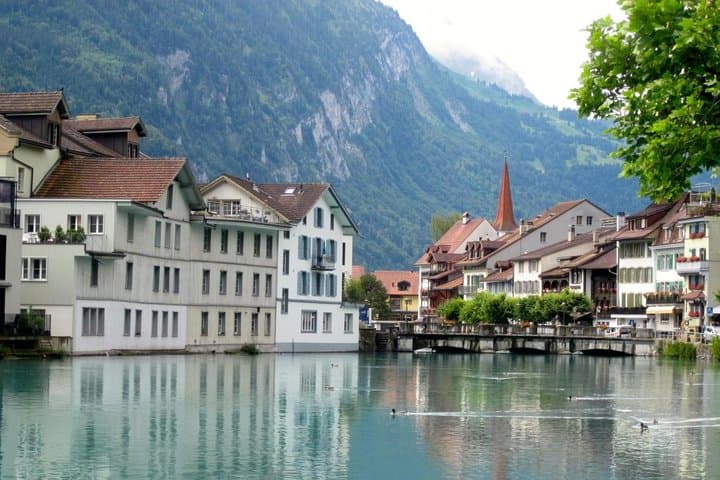
You step off the quiet street and the Aare announces itself with a bright, fast voice—cool water hurrying between two lakes, daring you to look away. The guide points across the bridge to Unterseen, and for the next three hours the rhythm of Interlaken shifts between town and viewpoint: cobbled squares and civic stories give way to a cable car that climbs until the mountain seems to offer its shoulders as a lookout.
You step off the quiet street and the Aare announces itself with a bright, fast voice—cool water hurrying between two lakes, daring you to look away. The guide points across the bridge to Unterseen, and for the next three hours the rhythm of Interlaken shifts between town and viewpoint: cobbled squares and civic stories give way to a cable car that climbs until the mountain seems to offer its shoulders as a lookout.
The walking portion reads like a compact history lesson. Unterseen, rebuilt under Bernese order after a 15th-century fire, still carries its Stadthausplatz and narrow lanes where the Reformation reshaped monastic landholdings. Back in Interlaken, the Höhenmatte opens as a flat green—an old meadow that functions as a modern stage for paragliders to land and local events to unfold. The Kursaal and the 19th-century country hotels offer glimpses of a town that grew alongside tourism: railways and hotels arrived in the 1800s and turned this crossroads of Lakes Thun and Brienz into a gateway to the high Alps.
Geology is visible in plain sight. The Bödeli—the spit between the two lakes—was formed by glacial till and meltwater, the reason Interlaken sits like a hinge between watery basins. From the Harder Kulm viewpoint the landscape arranges itself with blunt clarity: Lake Thun to the west, Lake Brienz to the east, and the Eiger, Mönch and Jungfrau stacked to the south, their faces worn by glaciers and time.
Culturally, the town is compact but layered: Swiss precision in transport and hospitality, local guides who balance concise facts with regional anecdotes, and an outdoor culture that treats paragliding and hiking as everyday options rather than extremes.
Practical guidance: the tour runs about three hours and includes local bus and the funicular to Harder Kulm—bring a charged phone and small local currency for incidental purchases. Wear sturdy walking shoes; cobbles and short uphill stretches at the viewpoint demand grip rather than glamour. Weather on the Bödeli can turn brisk; pack a lightweight shell even on summer afternoons. The tour is private, suitable for most fitness levels, wheelchair access possible with prior notice, and requires a minimum of two people per booking. For photos, aim for early morning or late afternoon to catch the low light on the Jungfrau massif and the reflective lakes.
Logistics at a glance: mobile ticketing accepted, pickup from many Interlaken hotels is available, and cancellation is permitted up to 24 hours before departure. Whether you come for landscape, history, or simply a concise alpine orientation, this three-hour loop delivers a clear, immediate sense of why Interlaken has been a travel crossroads for two centuries.