THE ADVENTURE COLLECTIVE® · Independent discovery and booking for outdoor travel

A focused 90‑minute walk through Marbella’s Old Town that pairs Moorish lanes and 16th‑century squares with a local olive‑oil tasting. Small groups and a licensed local guide make this a fast, flavorful introduction to the city’s history and daily life.
A focused 90‑minute walk through Marbella’s Old Town that pairs Moorish lanes and 16th‑century squares with a local olive‑oil tasting. Small groups and a licensed local guide make this a fast, flavorful introduction to the city’s history and daily life.
You meet at the Virgen del Rocío fountain in Alameda Park, a cool circle of stone and shadow where locals stop for an espresso and tourists exchange directions. From there the guide threads you into a compact maze of alleys that still carry the grain of eighth‑century Arab planning: narrow lanes that funnel the sea breeze inland, doorways framed by carved stone, and the sudden brightness of a small plaza planted with orange trees.
Verified experiences and guided adventures in the surrounding area.
Operated by Tour Marbella · Marbella, Andalusia
You meet at the Virgen del Rocío fountain in Alameda Park, a cool circle of stone and shadow where locals stop for an espresso and tourists exchange directions. From there the guide threads you into a compact maze of alleys that still carry the grain of eighth‑century Arab planning: narrow lanes that funnel the sea breeze inland, doorways framed by carved stone, and the sudden brightness of a small plaza planted with orange trees.
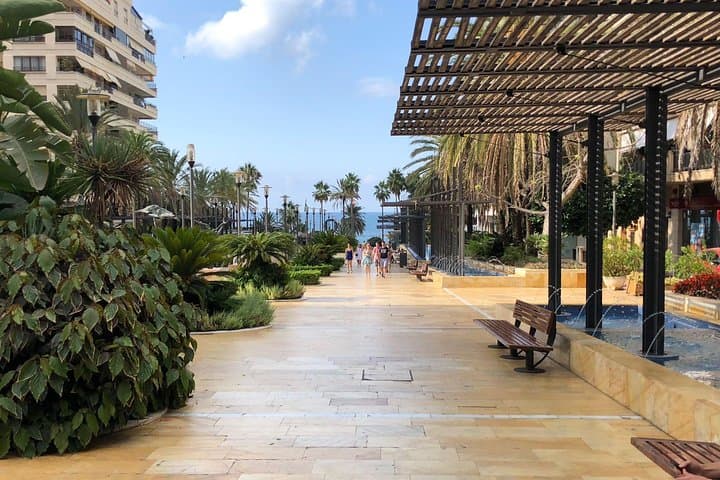
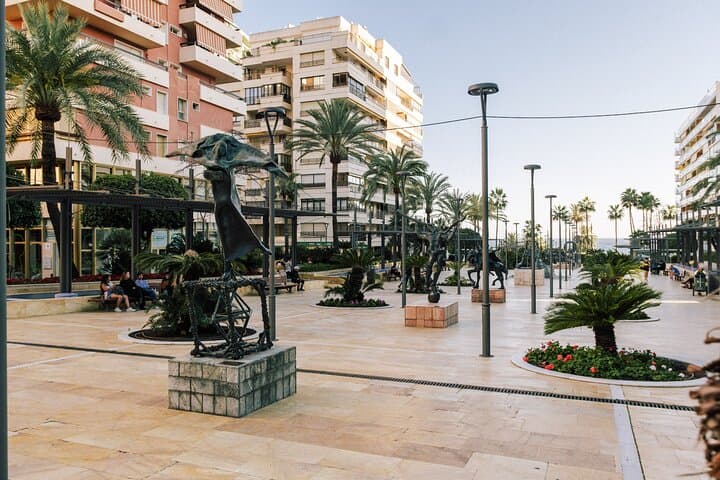
The walk is short—about 1–1.5 km of paved streets—but dense with history. Your guide points out the remains of medieval walls, the 16th‑century palace of a former city commander and a chapel whose ceiling woodwork survived centuries. Along Avenida del Mar the promenade opens and something modern appears: Salvador Dalí sculptures punctuating the route toward the beach, a reminder that Marbella's story keeps acquiring fresh chapters.
One of the clear pleasures is the Old Bazán Hospital, now home to the National Engraving Museum; when open, the guide takes you inside for a quick visit. The tour closes in Plaza de los Naranjos, the city’s 16th‑century square, where tiled façades and cafés shelter you under the citrus trees. If timing allows, you’ll sample three to six premium extra virgin olive oils at a local shop—an unmistakably Andalusian finish that links agriculture to daily life.
This is a rediscovery of contrasts: Moorish street patterns reworked after the Christian reconquest of 1485, Renaissance palaces set against the glazed modernity of the promenade. The route is wheelchair‑accessible and gentle on the legs, but the texture of the streets—cobbles, small steps—means sensible footwear pays off. Groups are small (up to 20) and the guide’s local knowledge brings practical flavor: where to get a strong café con leche, which tapas bars fill up after sunset, and which museum doors are usually open.
Practical details: the tour runs about 90 minutes, moves at an easy pace, and is best taken in the morning or late afternoon to avoid the high sun. Bring a reusable water bottle, try the olive oil tasting if available, and leave room in your schedule to linger in Plaza de los Naranjos afterward. For travelers curious about architecture, food, and the layers of Marbella’s past, this walk delivers concentrated context and a few very good tastes of Andalusia.
easy.
1.5 hours (90 minutes).
Suitable for most fitness levels; involves light walking on uneven surfaces.
Yes—the tour includes an olive oil tasting when the partner shop is open; it’s subject to availability and may be skipped if the shop is closed.
Meet at the Virgen del Rocío fountain in Alameda Park, a central and easy‑to‑find meeting point.
The tour is described as wheelchair accessible, but narrow streets and occasional cobbles mean some areas may require caution; contact the operator to confirm specific needs.
Guides are local and typically lead tours in English; other language options may be available—check the booking page or ask the operator.
Yes—stroller‑friendly routes and short walking distances make this suitable for families with children.
Group sizes are capped at around 20 guests to keep the experience personal and manageable.
Marbella’s Old Town retains its medieval Moorish street plan despite heavy rebuilding after the Christian reconquest of 1485; many plazas date to the 16th century.
Local shops and small museums rely on responsible tourism—avoid single‑use plastics and buy locally made products like olive oil to support the community.
Tour Marbella operates guided outdoor trips and adventures with an emphasis on safety, stewardship, and memorable experiences.
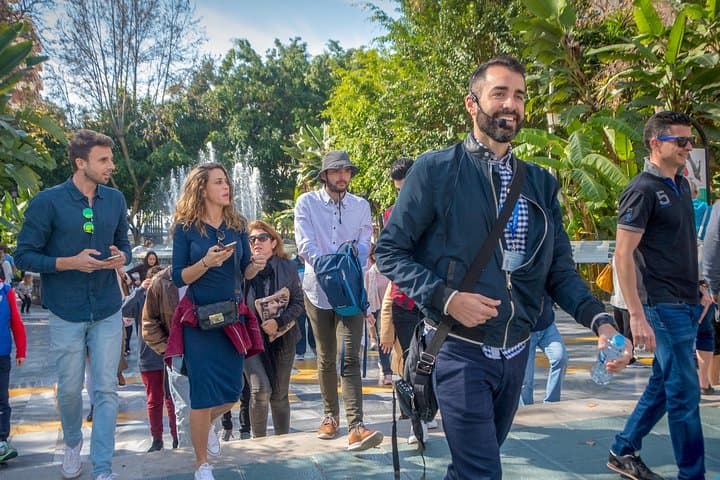
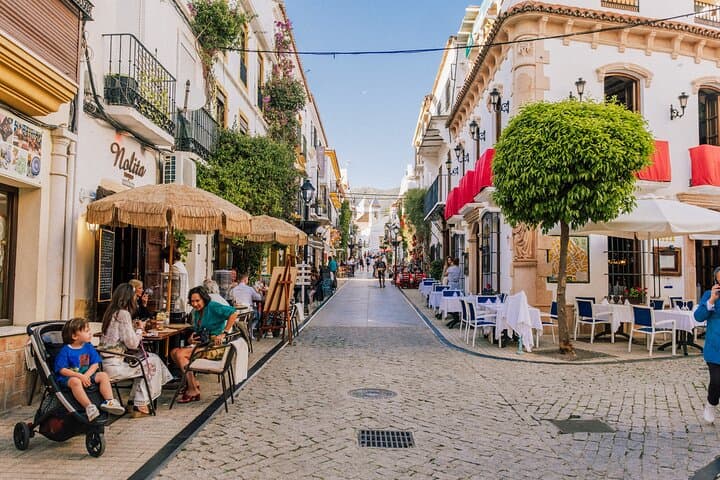
You meet at the Virgen del Rocío fountain in Alameda Park, a cool circle of stone and shadow where locals stop for an espresso and tourists exchange directions. From there the guide threads you into a compact maze of alleys that still carry the grain of eighth‑century Arab planning: narrow lanes that funnel the sea breeze inland, doorways framed by carved stone, and the sudden brightness of a small plaza planted with orange trees.
You meet at the Virgen del Rocío fountain in Alameda Park, a cool circle of stone and shadow where locals stop for an espresso and tourists exchange directions. From there the guide threads you into a compact maze of alleys that still carry the grain of eighth‑century Arab planning: narrow lanes that funnel the sea breeze inland, doorways framed by carved stone, and the sudden brightness of a small plaza planted with orange trees.
The walk is short—about 1–1.5 km of paved streets—but dense with history. Your guide points out the remains of medieval walls, the 16th‑century palace of a former city commander and a chapel whose ceiling woodwork survived centuries. Along Avenida del Mar the promenade opens and something modern appears: Salvador Dalí sculptures punctuating the route toward the beach, a reminder that Marbella's story keeps acquiring fresh chapters.
One of the clear pleasures is the Old Bazán Hospital, now home to the National Engraving Museum; when open, the guide takes you inside for a quick visit. The tour closes in Plaza de los Naranjos, the city’s 16th‑century square, where tiled façades and cafés shelter you under the citrus trees. If timing allows, you’ll sample three to six premium extra virgin olive oils at a local shop—an unmistakably Andalusian finish that links agriculture to daily life.
This is a rediscovery of contrasts: Moorish street patterns reworked after the Christian reconquest of 1485, Renaissance palaces set against the glazed modernity of the promenade. The route is wheelchair‑accessible and gentle on the legs, but the texture of the streets—cobbles, small steps—means sensible footwear pays off. Groups are small (up to 20) and the guide’s local knowledge brings practical flavor: where to get a strong café con leche, which tapas bars fill up after sunset, and which museum doors are usually open.
Practical details: the tour runs about 90 minutes, moves at an easy pace, and is best taken in the morning or late afternoon to avoid the high sun. Bring a reusable water bottle, try the olive oil tasting if available, and leave room in your schedule to linger in Plaza de los Naranjos afterward. For travelers curious about architecture, food, and the layers of Marbella’s past, this walk delivers concentrated context and a few very good tastes of Andalusia.