THE ADVENTURE COLLECTIVE® · Independent discovery and booking for outdoor travel

Step from a 4x4 onto the ancient blue of Vatnajökull and walk into a naturally formed ice cave. This guided Skaftafell tour pairs accessible glacier hiking with a rare chance to explore photogenic blue ice in safety.
Step from a 4x4 onto the ancient blue of Vatnajökull and walk into a naturally formed ice cave. This guided Skaftafell tour pairs accessible glacier hiking with a rare chance to explore photogenic blue ice in safety.
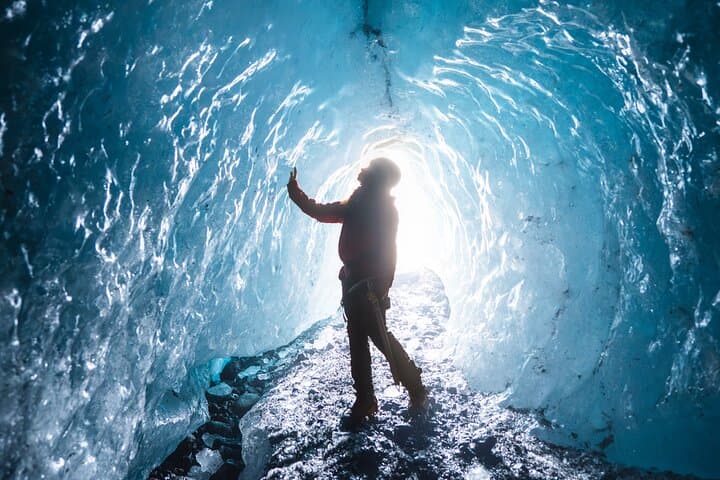
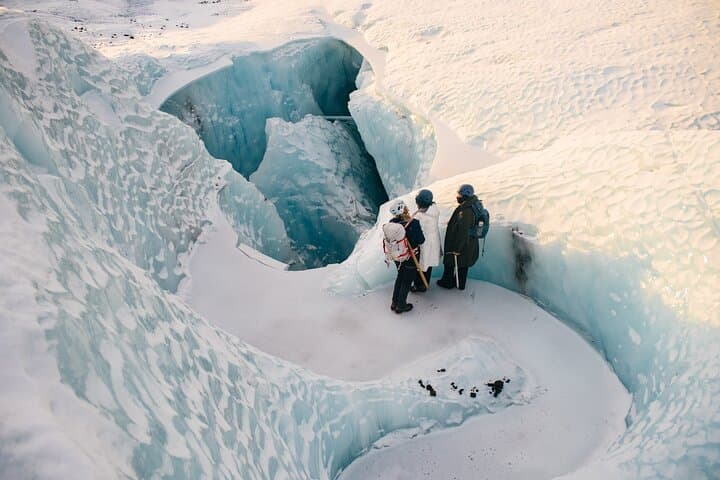
A cold wind cuts across the parking lot at Skaftafell and, a few minutes later, you are bumping along a gravel track in a 4x4 toward the glacier's jagged edge. The vehicle thumps, tires coughing up dust and volcanic gravel, then falls silent as the mass of Vatnajökull fills the horizon. Underfoot the ice is not white but an impossible, deep blue; light filters through compacted layers and the cave ahead seems to glow from within. Your guide checks crampons and harness, then points at a ribbon of crevasses that run like stitches across the ice. You step on, the metal teeth bite in, and the glacier takes you forward.
Verified experiences and guided adventures in the surrounding area.
Operated by Arctic Adventures · Skaftafell, Southern Region
A cold wind cuts across the parking lot at Skaftafell and, a few minutes later, you are bumping along a gravel track in a 4x4 toward the glacier's jagged edge. The vehicle thumps, tires coughing up dust and volcanic gravel, then falls silent as the mass of Vatnajökull fills the horizon. Underfoot the ice is not white but an impossible, deep blue; light filters through compacted layers and the cave ahead seems to glow from within. Your guide checks crampons and harness, then points at a ribbon of crevasses that run like stitches across the ice. You step on, the metal teeth bite in, and the glacier takes you forward.
Vatnajökull is Europe’s largest ice cap and an archive of geological memory. Outlet glaciers such as Fallsjökull have sculpted the valleys below with periodic surges and melt events known locally as jökulhlaups. The blue ice caves you visit are temporary cathedrals: carved by meltwater, compressed by millennia of snowfall, and revealed only when winter and spring conspire to expose their sculpted interiors. Skaftafell itself was once a separate national park before becoming part of Vatnajökull National Park, a landscape long shaped by Icelandic farmers, explorers, and the raw mechanics of fire and ice.
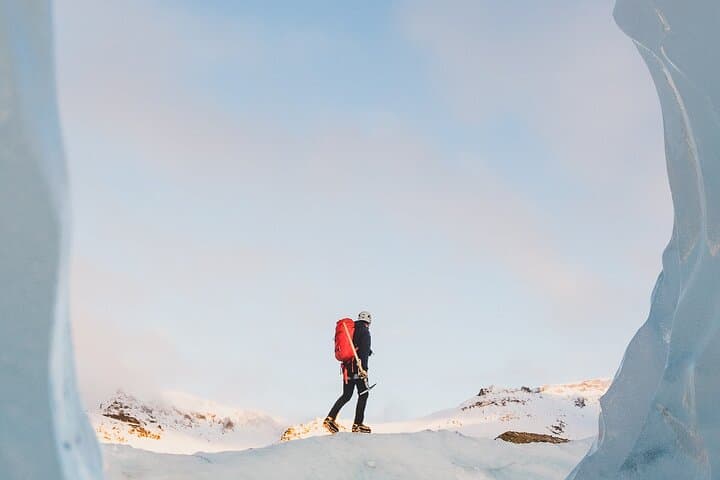
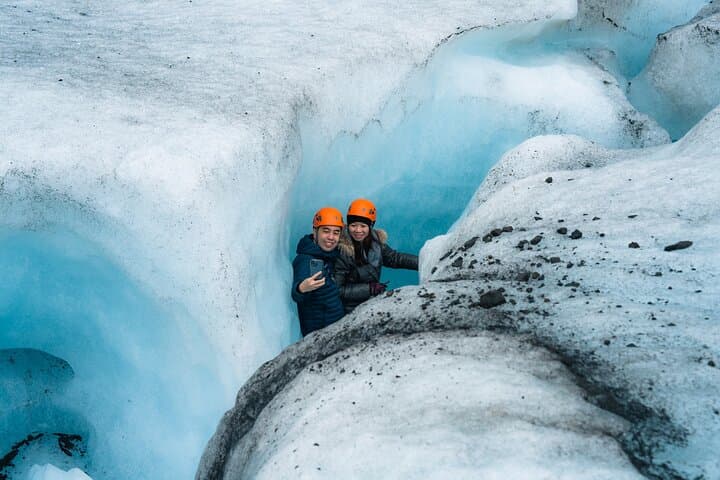
The hike is a study in contrasts. There are sweeping glacier vistas that make time feel slow, and narrow passages where your headlamp throws hard-edged shadows on ice walls. The guide narrates simply—explaining crevasse safety, pointing out entrained ash layers that mark past eruptions, and noting how the glacier breathes, advancing and retreating in fits and lulls. Photography opportunities are abundant, but the best shots require quick work and an eye for scale: a lone walker against an ice cliff, a rib of blue with volcanic sand streaks, the cave mouth framed by broken seracs.
Practicals matter here. The tour is about four hours total with roughly 1.5–2 hours on the glacier, covering about 3 km on uneven terrain at an easy pace. Specialized glacier equipment is provided, but hikers must bring sturdy ankle-supporting boots (rentals available). Check road conditions at road.is and safetravel.is before driving; Skaftafell is approximately a 4.5-hour drive from Reykjavik in good weather. Note that crampon fit is limited to EU sizes 35–50, and the operator may cancel for safety if conditions are poor.
For an active traveler seeking a close encounter with moving ice, this guided hike delivers both spectacle and a clear safety-first structure. Dress in layers, carry a small pack with water and snacks, and leave time to stand quietly in the cave to let the blue settle in; glaciers have a way of reframing how you measure distance and time.
easy.
4 hours.
Suitable for people in normal physical condition comfortable walking uneven terrain for 1.5–2 hours; not technical but requires balance and basic stamina.
Meet at the Arctic Adventures Booking Hut in Skaftafell National Park; arrive 10–15 minutes early.
Expect about 1.5–2 hours on the glacier and roughly 3 km of walking on uneven terrain.
No prior experience required; guides teach crampon use and basic glacier safety.
Yes. Specialized crampons are provided but are limited to EU shoe sizes 35–50; sizes outside that range cannot be accommodated.
Minimum age is 8 years old.
Operators may cancel for safety and will notify you; check your email before driving and consult road.is for travel conditions.
The Vatnajökull area has long been shaped by eruptions and glacial floods; local farmers adapted to sudden landscape changes and the park preserves both geological and cultural history.
Glacier landscapes are sensitive; stay on marked routes, follow guide instructions, and avoid leaving any waste. Climate-driven retreat affects cave formation and visitor access.
Arctic Adventures operates guided outdoor trips and adventures with an emphasis on safety, stewardship, and memorable experiences.
A cold wind cuts across the parking lot at Skaftafell and, a few minutes later, you are bumping along a gravel track in a 4x4 toward the glacier's jagged edge. The vehicle thumps, tires coughing up dust and volcanic gravel, then falls silent as the mass of Vatnajökull fills the horizon. Underfoot the ice is not white but an impossible, deep blue; light filters through compacted layers and the cave ahead seems to glow from within. Your guide checks crampons and harness, then points at a ribbon of crevasses that run like stitches across the ice. You step on, the metal teeth bite in, and the glacier takes you forward.
A cold wind cuts across the parking lot at Skaftafell and, a few minutes later, you are bumping along a gravel track in a 4x4 toward the glacier's jagged edge. The vehicle thumps, tires coughing up dust and volcanic gravel, then falls silent as the mass of Vatnajökull fills the horizon. Underfoot the ice is not white but an impossible, deep blue; light filters through compacted layers and the cave ahead seems to glow from within. Your guide checks crampons and harness, then points at a ribbon of crevasses that run like stitches across the ice. You step on, the metal teeth bite in, and the glacier takes you forward.
Vatnajökull is Europe’s largest ice cap and an archive of geological memory. Outlet glaciers such as Fallsjökull have sculpted the valleys below with periodic surges and melt events known locally as jökulhlaups. The blue ice caves you visit are temporary cathedrals: carved by meltwater, compressed by millennia of snowfall, and revealed only when winter and spring conspire to expose their sculpted interiors. Skaftafell itself was once a separate national park before becoming part of Vatnajökull National Park, a landscape long shaped by Icelandic farmers, explorers, and the raw mechanics of fire and ice.
The hike is a study in contrasts. There are sweeping glacier vistas that make time feel slow, and narrow passages where your headlamp throws hard-edged shadows on ice walls. The guide narrates simply—explaining crevasse safety, pointing out entrained ash layers that mark past eruptions, and noting how the glacier breathes, advancing and retreating in fits and lulls. Photography opportunities are abundant, but the best shots require quick work and an eye for scale: a lone walker against an ice cliff, a rib of blue with volcanic sand streaks, the cave mouth framed by broken seracs.
Practicals matter here. The tour is about four hours total with roughly 1.5–2 hours on the glacier, covering about 3 km on uneven terrain at an easy pace. Specialized glacier equipment is provided, but hikers must bring sturdy ankle-supporting boots (rentals available). Check road conditions at road.is and safetravel.is before driving; Skaftafell is approximately a 4.5-hour drive from Reykjavik in good weather. Note that crampon fit is limited to EU sizes 35–50, and the operator may cancel for safety if conditions are poor.
For an active traveler seeking a close encounter with moving ice, this guided hike delivers both spectacle and a clear safety-first structure. Dress in layers, carry a small pack with water and snacks, and leave time to stand quietly in the cave to let the blue settle in; glaciers have a way of reframing how you measure distance and time.