THE ADVENTURE COLLECTIVE® · Independent discovery and booking for outdoor travel

Experience the buzz of freefall without the plane: two guided wind-tunnel flights in Dubai give beginners a safe, coached introduction to body-flight. Read on for what to expect, health notes, and how to prepare.
Experience the buzz of freefall without the plane: two guided wind-tunnel flights in Dubai give beginners a safe, coached introduction to body-flight. Read on for what to expect, health notes, and how to prepare.
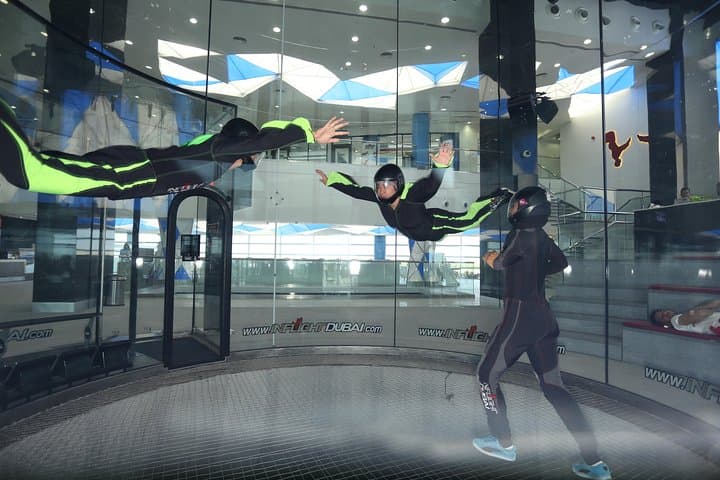
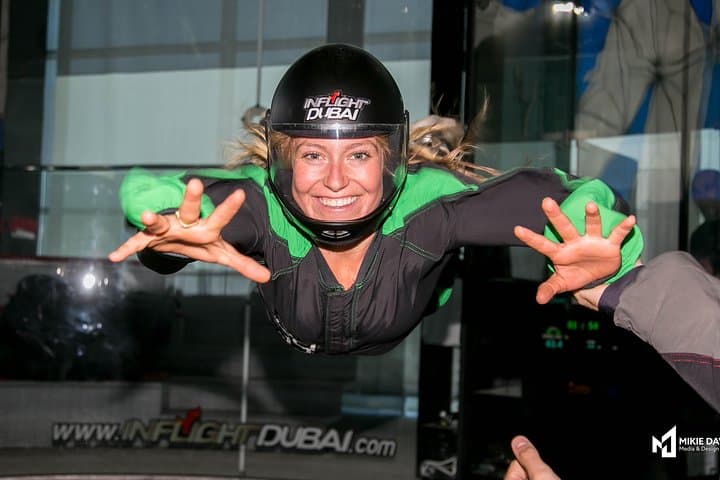
The wind greets you first — a focused, mechanical gust that fills the glass cylinder and makes the idea of falling feel strangely organized.
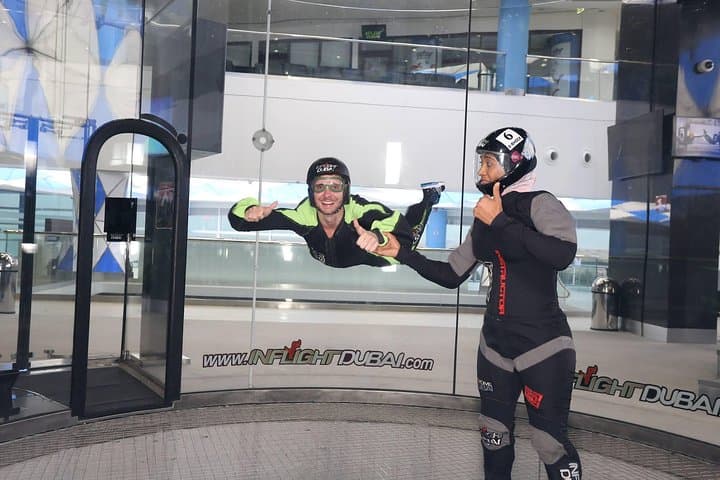
Step through the doors of a Dubai wind tunnel and the city’s skyline becomes background static; inside, gusts map to body language and every subtle wrist angle has a consequence. The session opens with a safety briefing and a short video, then a guided practice on body control before two flights that mimic the rush of freefall without altitude.
Dubai’s appetite for engineered experiences grew alongside its skyscrapers and reclaimed shorelines; indoor skydiving fits that arc, a controlled piece of flight carved out of modern entertainment infrastructure. Geologically, you’re still in a young coastal plain beside the Persian Gulf — sand and wind have shaped the emirate’s culture of mobility and spectacle — but here the flight is made by turbines, not thermals.
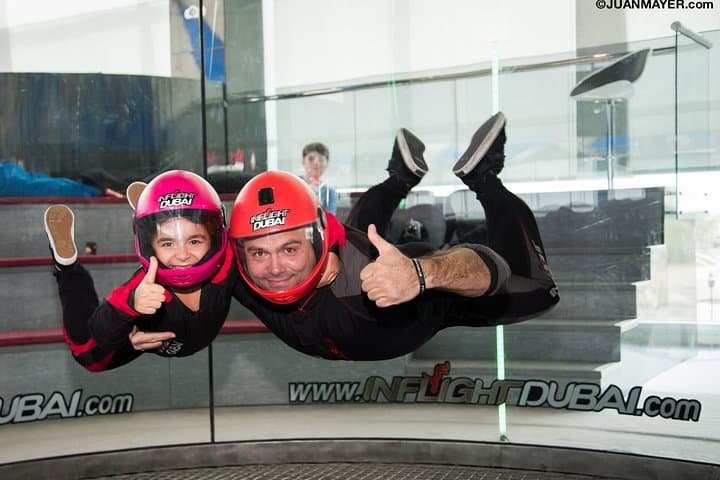
Culturally, the tunnel draws families, corporate groups and repeat flyers refining technique under instructor guidance. Expect clear safety protocols: helmets, flight suits and a short debrief with a certificate.
Practically, plan to arrive 45 minutes early for check-in, wear lace-up sports shoes and leave jewelry in a locker. The training covers body posture, hand signals and exits; instructors tailor coaching to beginners and return flyers alike. Health restrictions (pregnancy, serious back or heart issues) and weight limits are enforced for safety. After two flights you’ll have a feel for terminal velocity without the logistics of a plane or drop zone — a compact, high-adrenaline taste of flight in the heart of Dubai.
Verified experiences and guided adventures in the surrounding area.
Operated by Inflight Dubai · Dubai, Dubai
The wind greets you first — a focused, mechanical gust that fills the glass cylinder and makes the idea of falling feel strangely organized.
Step through the doors of a Dubai wind tunnel and the city’s skyline becomes background static; inside, gusts map to body language and every subtle wrist angle has a consequence. The session opens with a safety briefing and a short video, then a guided practice on body control before two flights that mimic the rush of freefall without altitude.
Dubai’s appetite for engineered experiences grew alongside its skyscrapers and reclaimed shorelines; indoor skydiving fits that arc, a controlled piece of flight carved out of modern entertainment infrastructure. Geologically, you’re still in a young coastal plain beside the Persian Gulf — sand and wind have shaped the emirate’s culture of mobility and spectacle — but here the flight is made by turbines, not thermals.
Culturally, the tunnel draws families, corporate groups and repeat flyers refining technique under instructor guidance. Expect clear safety protocols: helmets, flight suits and a short debrief with a certificate.
Practically, plan to arrive 45 minutes early for check-in, wear lace-up sports shoes and leave jewelry in a locker. The training covers body posture, hand signals and exits; instructors tailor coaching to beginners and return flyers alike. Health restrictions (pregnancy, serious back or heart issues) and weight limits are enforced for safety. After two flights you’ll have a feel for terminal velocity without the logistics of a plane or drop zone — a compact, high-adrenaline taste of flight in the heart of Dubai.
easy.
1.5 hours.
Suitable for most people with basic mobility; no advanced fitness required but core control helps.
Minimum age varies by operator; many accept children aged 3–4 with guardian approval and special junior instructions — check at booking.
Yes — most facilities have an upper weight limit for safe flight and instructor control; provide accurate weight when booking.
No — indoor skydiving is not recommended for pregnant participants due to the forces and safety restraints involved.
Each wind-tunnel flight is typically 60–90 seconds of sustained airtime; the full session including briefing and gearing takes about 90 minutes.
Indoor skydiving matches Dubai’s modern leisure expansion: engineered attractions proliferated as the emirate diversified tourism beyond oil and commerce.
Wind tunnels consume significant energy; choose operators that report efficiency measures and follow local waste-reduction practices, and avoid single-use plastics when at the facility.
Inflight Dubai operates guided outdoor trips and adventures with an emphasis on safety, stewardship, and memorable experiences.
The wind greets you first — a focused, mechanical gust that fills the glass cylinder and makes the idea of falling feel strangely organized.
Step through the doors of a Dubai wind tunnel and the city’s skyline becomes background static; inside, gusts map to body language and every subtle wrist angle has a consequence. The session opens with a safety briefing and a short video, then a guided practice on body control before two flights that mimic the rush of freefall without altitude.
Dubai’s appetite for engineered experiences grew alongside its skyscrapers and reclaimed shorelines; indoor skydiving fits that arc, a controlled piece of flight carved out of modern entertainment infrastructure. Geologically, you’re still in a young coastal plain beside the Persian Gulf — sand and wind have shaped the emirate’s culture of mobility and spectacle — but here the flight is made by turbines, not thermals.
Culturally, the tunnel draws families, corporate groups and repeat flyers refining technique under instructor guidance. Expect clear safety protocols: helmets, flight suits and a short debrief with a certificate.
Practically, plan to arrive 45 minutes early for check-in, wear lace-up sports shoes and leave jewelry in a locker. The training covers body posture, hand signals and exits; instructors tailor coaching to beginners and return flyers alike. Health restrictions (pregnancy, serious back or heart issues) and weight limits are enforced for safety. After two flights you’ll have a feel for terminal velocity without the logistics of a plane or drop zone — a compact, high-adrenaline taste of flight in the heart of Dubai.
The wind greets you first — a focused, mechanical gust that fills the glass cylinder and makes the idea of falling feel strangely organized.
Step through the doors of a Dubai wind tunnel and the city’s skyline becomes background static; inside, gusts map to body language and every subtle wrist angle has a consequence. The session opens with a safety briefing and a short video, then a guided practice on body control before two flights that mimic the rush of freefall without altitude.
Dubai’s appetite for engineered experiences grew alongside its skyscrapers and reclaimed shorelines; indoor skydiving fits that arc, a controlled piece of flight carved out of modern entertainment infrastructure. Geologically, you’re still in a young coastal plain beside the Persian Gulf — sand and wind have shaped the emirate’s culture of mobility and spectacle — but here the flight is made by turbines, not thermals.
Culturally, the tunnel draws families, corporate groups and repeat flyers refining technique under instructor guidance. Expect clear safety protocols: helmets, flight suits and a short debrief with a certificate.
Practically, plan to arrive 45 minutes early for check-in, wear lace-up sports shoes and leave jewelry in a locker. The training covers body posture, hand signals and exits; instructors tailor coaching to beginners and return flyers alike. Health restrictions (pregnancy, serious back or heart issues) and weight limits are enforced for safety. After two flights you’ll have a feel for terminal velocity without the logistics of a plane or drop zone — a compact, high-adrenaline taste of flight in the heart of Dubai.