THE ADVENTURE COLLECTIVE® · Independent discovery and booking for outdoor travel

Scramble the eastern face of Table Mountain via the India Venster route — a steep, hands-on ascent that rewards steady legs with sweeping views of Cape Town and the Atlantic. This guided hike includes transfers, gear, and local interpretation of geology, flora, and history.
Scramble the eastern face of Table Mountain via the India Venster route — a steep, hands-on ascent that rewards steady legs with sweeping views of Cape Town and the Atlantic. This guided hike includes transfers, gear, and local interpretation of geology, flora, and history.
You leave the city with the ocean shrinking at your shoulder and Table Mountain rising like a blunt, ancient wall ahead. The van drops you where the trail narrows, and the rock underfoot changes from dusty granite to weathered slabs that have been stepped on for millennia. The India Venster route climbs the eastern face with hands-on scrambling, ledges that peer over Camps Bay, and a summit that suddenly opens the city like a map spread beneath you.
Verified experiences and guided adventures in the surrounding area.
Operated by Mother City Hikers · Cape Town, Western Cape
You leave the city with the ocean shrinking at your shoulder and Table Mountain rising like a blunt, ancient wall ahead. The van drops you where the trail narrows, and the rock underfoot changes from dusty granite to weathered slabs that have been stepped on for millennia. The India Venster route climbs the eastern face with hands-on scrambling, ledges that peer over Camps Bay, and a summit that suddenly opens the city like a map spread beneath you.
This is a hike that reads Cape Town’s history in stone. Table Mountain’s sandstone is part of a 600-million-year story; the cliffs were a landmark for Khoikhoi and San peoples and later for sailors navigating the Cape. Geologically the table is a tilted sandstone plateau sitting on older granites — hard-backed and erosion-sculpted — which produce the slabs and chimneys India Venster is known for. Culturally the route skirts suburbs that grew during colonial and modern eras; your guide will point out signs of indigenous fynbos harvesting and the mountain’s role as a communal beacon.
On the way up, fynbos brushes the trail with low, aromatic shrubs, and wind does the talking — the infamous Cape Doctor can either push you along or shut the route with a tablecloth of cloud. Dassies (rock hyrax) sun themselves on ledges; kestrels and Cape sugarbirds quarter the slopes when flowers are in bloom. The operator includes bottled water, snacks, raincoats, hiking poles and a qualified mountain guide, so the focus is on moving steadily and reading the rock.
Practical side: expect roughly 4 hours total, with steep scrambling and about 600–700 meters of ascent to the plateau depending on your exact start point. Fitness must be high — continuous steep sections and exposed ledges require steady legs and no fear of heights. Start early to beat wind and heat, and plan for rapid weather change: a calm blue morning can be swallowed by cloud within an hour.
Footwear with sticky rubber and ankle support matters as much as your water supply; 1–2 liters per person is a sensible baseline, more in summer. Layering is essential: breathable base, insulating mid-layer, and a shell for wind and mist. Because the route is guided and transfers are included, focus on energy and attention: listen to your guide on route-finding, use hands when asked, and step deliberately on worn holds.
Booking notes: pickups from city-center hotels are standard, a minimum of two people is required per booking, children must be accompanied, and cancellations are typically allowed up to 24 hours prior. When the wind is up or cloud banks roll in, guides may choose an alternate route or reschedule — the mountain calls the shots.
challenging.
4 hours.
High — you should be comfortable with sustained steep climbs, scrambling, and exposure.
You need a high level of fitness—expect sustained steep climbs and scrambling; regular hikers who can climb continuously for 2–3 hours will be comfortable.
Yes, but children must be accompanied by an adult and operators may set age restrictions depending on group ability.
Guides monitor conditions; if the route is unsafe due to wind or cloud the operator offers an alternative route, reschedule, or full refund.
Yes — the trip includes a fully qualified mountain guide and hotel pickup/drop-off from central Cape Town and the Atlantic Seaboard.
No formal experience is required, but you should be comfortable with hands-on scrambling and exposure; guides provide coaching on technique.
Absolutely — but keep packs secure and pause in safe spots; avoid photographing while moving on exposed ledges.
Table Mountain was an important landmark for indigenous Khoikhoi and San, later becoming a navigational marker for sailors rounding the Cape; routes like India Venster follow natural chimneys used for centuries.
The mountain’s fynbos is fire-adapted but vulnerable to invasive plants and trampling—stick to trails, pack out litter, and respect fire restrictions.
Mother City Hikers operates guided outdoor trips and adventures with an emphasis on safety, stewardship, and memorable experiences.
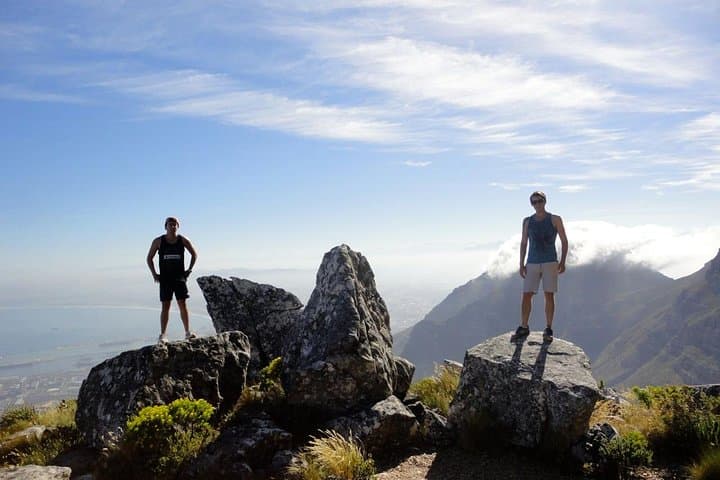
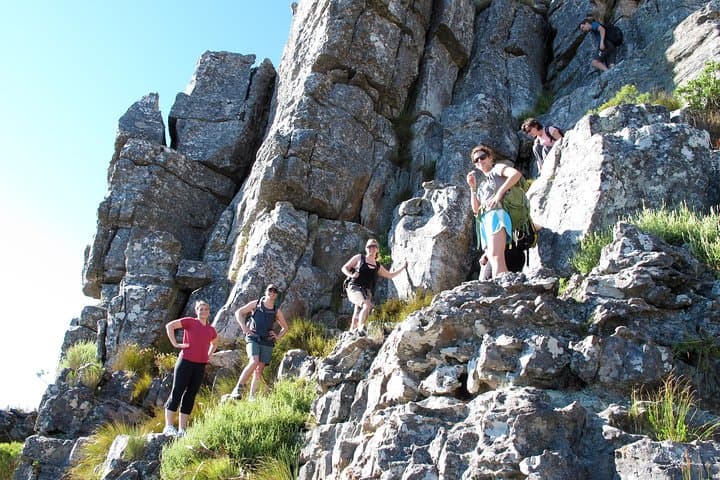
You leave the city with the ocean shrinking at your shoulder and Table Mountain rising like a blunt, ancient wall ahead. The van drops you where the trail narrows, and the rock underfoot changes from dusty granite to weathered slabs that have been stepped on for millennia. The India Venster route climbs the eastern face with hands-on scrambling, ledges that peer over Camps Bay, and a summit that suddenly opens the city like a map spread beneath you.
You leave the city with the ocean shrinking at your shoulder and Table Mountain rising like a blunt, ancient wall ahead. The van drops you where the trail narrows, and the rock underfoot changes from dusty granite to weathered slabs that have been stepped on for millennia. The India Venster route climbs the eastern face with hands-on scrambling, ledges that peer over Camps Bay, and a summit that suddenly opens the city like a map spread beneath you.
This is a hike that reads Cape Town’s history in stone. Table Mountain’s sandstone is part of a 600-million-year story; the cliffs were a landmark for Khoikhoi and San peoples and later for sailors navigating the Cape. Geologically the table is a tilted sandstone plateau sitting on older granites — hard-backed and erosion-sculpted — which produce the slabs and chimneys India Venster is known for. Culturally the route skirts suburbs that grew during colonial and modern eras; your guide will point out signs of indigenous fynbos harvesting and the mountain’s role as a communal beacon.
On the way up, fynbos brushes the trail with low, aromatic shrubs, and wind does the talking — the infamous Cape Doctor can either push you along or shut the route with a tablecloth of cloud. Dassies (rock hyrax) sun themselves on ledges; kestrels and Cape sugarbirds quarter the slopes when flowers are in bloom. The operator includes bottled water, snacks, raincoats, hiking poles and a qualified mountain guide, so the focus is on moving steadily and reading the rock.
Practical side: expect roughly 4 hours total, with steep scrambling and about 600–700 meters of ascent to the plateau depending on your exact start point. Fitness must be high — continuous steep sections and exposed ledges require steady legs and no fear of heights. Start early to beat wind and heat, and plan for rapid weather change: a calm blue morning can be swallowed by cloud within an hour.
Footwear with sticky rubber and ankle support matters as much as your water supply; 1–2 liters per person is a sensible baseline, more in summer. Layering is essential: breathable base, insulating mid-layer, and a shell for wind and mist. Because the route is guided and transfers are included, focus on energy and attention: listen to your guide on route-finding, use hands when asked, and step deliberately on worn holds.
Booking notes: pickups from city-center hotels are standard, a minimum of two people is required per booking, children must be accompanied, and cancellations are typically allowed up to 24 hours prior. When the wind is up or cloud banks roll in, guides may choose an alternate route or reschedule — the mountain calls the shots.