THE ADVENTURE COLLECTIVE® · Independent discovery and booking for outdoor travel

A compact, high-reward scramble up Table Mountain, the India Venster morning hike threads rock buttresses, fixed chains and fynbos-strewn ledges to deliver one of Cape Town’s sharpest views. Small groups, a registered guide and hands-on climbing make this a challenging—and unforgettable—way to reach the summit.
A compact, high-reward scramble up Table Mountain, the India Venster morning hike threads rock buttresses, fixed chains and fynbos-strewn ledges to deliver one of Cape Town’s sharpest views. Small groups, a registered guide and hands-on climbing make this a challenging—and unforgettable—way to reach the summit.
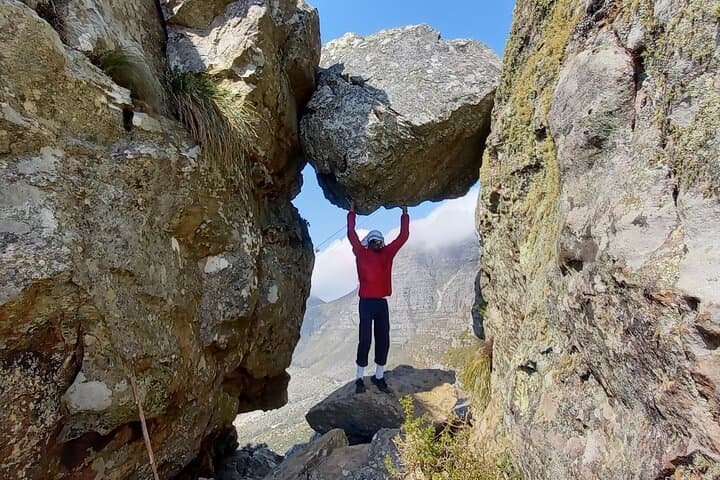
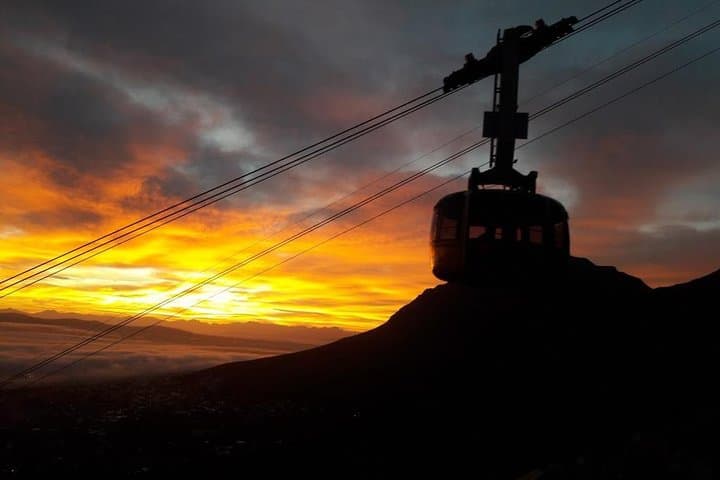
The climb begins before the city fully exhales—cool Atlantic light brushing Camps Bay as small groups meet at the Table Mountain lower cable car station. Footfalls start soft on the contour path and then the route dives into the raw, vertical geometry of India Venster: a ravine carved between two buttresses that frame a rock “window” with the ocean beyond. The trail tightens, steps become holds, and the mountain obliges with views that feel deliberately theatrical.
Verified experiences and guided adventures in the surrounding area.
Operated by Table Mountain hiking tours · Cape Town, Western Cape
The climb begins before the city fully exhales—cool Atlantic light brushing Camps Bay as small groups meet at the Table Mountain lower cable car station. Footfalls start soft on the contour path and then the route dives into the raw, vertical geometry of India Venster: a ravine carved between two buttresses that frame a rock “window” with the ocean beyond. The trail tightens, steps become holds, and the mountain obliges with views that feel deliberately theatrical.
Table Mountain is more than a postcard peak. Geologically it’s an ancient sandstone tabletop—firmer than the slopes below, more brittle than it looks—formed over millions of years and standing guard over Cape Town. The route threads through the Cape Floristic Region, a floral kingdom unique to this peninsula: proteas and ericas crown rock crevices and the fynbos smells sharp in the morning air. Cultural history is never far off—this massif was a landmark for Khoikhoi communities and later sailors rounding the Cape, a place where local and imported species (Himalayan tahr introduced in the early 20th century) now share cliff ledges.
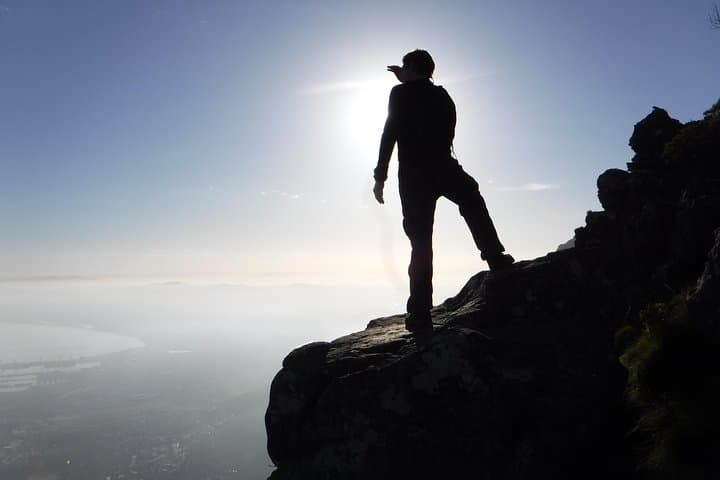
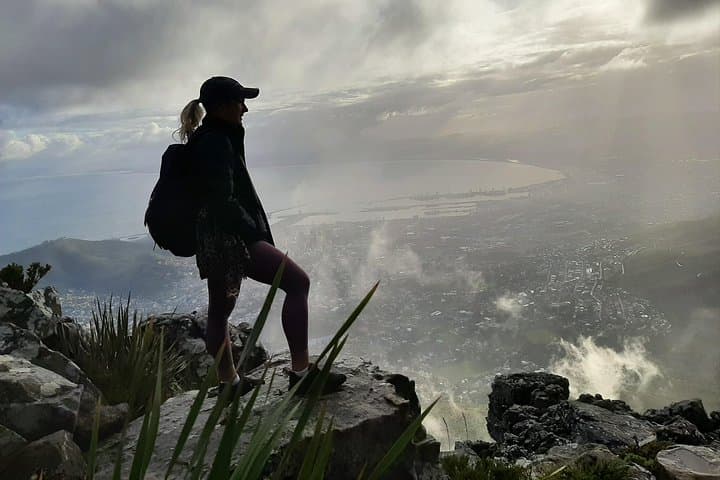
The hike itself is direct and physical. Expect about 4 hours on trail, roughly 5–6 km round-trip with approximately 600–750 m of elevation gain. Terrain alternates contour paths, loose shale, steep gullies and hands-on scrambling. Engineers have bolted staples and chains into the rock where exposure gets real; these make the upper scramble accessible but demand attention and steady footing. The final approach to the top opens onto “The Ledge” and then the plateau—often windy, sometimes cold even on a Cape summer morning—where the city and the ocean flatten into a composed panorama.
Practicalities matter here: start early to avoid the midday wind, carry 1.5–2 liters of water, and wear sturdy shoes with good grip. The tour meets at the lower cable car station and includes a registered guide, first aid kit, and photos; groups are small (max 4) for a more personal pace. Fitness-wise, be prepared for sustained climbing and exposure—this is a challenging hike best suited to experienced walkers comfortable with basic scrambling. Check the cableway status and weather before you go—the route is weather-dependent and the cable car may be closed for maintenance, in which case expect a down-hike. Respect the fragile fynbos by staying on established paths and pack out any waste.
For travelers who want a tight, dramatic ascent with payoff views, India Venster delivers: it’s a route where rock, sea and Cape history press close, and the mountain makes itself felt—sometimes cool and coy, sometimes shouting with wind—until you stand above it all.
challenging.
4 hours.
High—regular hikers who are comfortable with sustained uphill trekking and short exposed scrambles.
Meet at the Table Mountain lower cable car station ticket office—your guide will be waiting there as listed in your booking confirmation.
Often yes for descent when operational, but the route is planned as a full hike if the cableway is closed for maintenance or weather.
Participants should have a high level of fitness; expect continuous uphill walking and hands-on scrambling over 4 hours with ~600–750 m of ascent.
No ropes or harnesses are needed; the route uses fixed staples and chains. Basic scrambling experience and no serious fear of heights are required.
This tour is not recommended for young children due to exposure and the physical demands; operators typically require adult-level fitness and no fear of heights.
The hike is weather-dependent; if conditions are unsafe you’ll be offered an alternative date or a full refund per the cancellation policy.
Table Mountain served as a navigational landmark for Khoikhoi people and passing sailors; its plateau was later a site of botanical study that revealed the unique Cape Floristic Region.
The mountain’s fynbos is highly endemic and fire-adapted; hikers should stick to trails to limit soil erosion and avoid transporting seeds of invasive plants.
Table Mountain hiking tours operates guided outdoor trips and adventures with an emphasis on safety, stewardship, and memorable experiences.
The climb begins before the city fully exhales—cool Atlantic light brushing Camps Bay as small groups meet at the Table Mountain lower cable car station. Footfalls start soft on the contour path and then the route dives into the raw, vertical geometry of India Venster: a ravine carved between two buttresses that frame a rock “window” with the ocean beyond. The trail tightens, steps become holds, and the mountain obliges with views that feel deliberately theatrical.
The climb begins before the city fully exhales—cool Atlantic light brushing Camps Bay as small groups meet at the Table Mountain lower cable car station. Footfalls start soft on the contour path and then the route dives into the raw, vertical geometry of India Venster: a ravine carved between two buttresses that frame a rock “window” with the ocean beyond. The trail tightens, steps become holds, and the mountain obliges with views that feel deliberately theatrical.
Table Mountain is more than a postcard peak. Geologically it’s an ancient sandstone tabletop—firmer than the slopes below, more brittle than it looks—formed over millions of years and standing guard over Cape Town. The route threads through the Cape Floristic Region, a floral kingdom unique to this peninsula: proteas and ericas crown rock crevices and the fynbos smells sharp in the morning air. Cultural history is never far off—this massif was a landmark for Khoikhoi communities and later sailors rounding the Cape, a place where local and imported species (Himalayan tahr introduced in the early 20th century) now share cliff ledges.
The hike itself is direct and physical. Expect about 4 hours on trail, roughly 5–6 km round-trip with approximately 600–750 m of elevation gain. Terrain alternates contour paths, loose shale, steep gullies and hands-on scrambling. Engineers have bolted staples and chains into the rock where exposure gets real; these make the upper scramble accessible but demand attention and steady footing. The final approach to the top opens onto “The Ledge” and then the plateau—often windy, sometimes cold even on a Cape summer morning—where the city and the ocean flatten into a composed panorama.
Practicalities matter here: start early to avoid the midday wind, carry 1.5–2 liters of water, and wear sturdy shoes with good grip. The tour meets at the lower cable car station and includes a registered guide, first aid kit, and photos; groups are small (max 4) for a more personal pace. Fitness-wise, be prepared for sustained climbing and exposure—this is a challenging hike best suited to experienced walkers comfortable with basic scrambling. Check the cableway status and weather before you go—the route is weather-dependent and the cable car may be closed for maintenance, in which case expect a down-hike. Respect the fragile fynbos by staying on established paths and pack out any waste.
For travelers who want a tight, dramatic ascent with payoff views, India Venster delivers: it’s a route where rock, sea and Cape history press close, and the mountain makes itself felt—sometimes cool and coy, sometimes shouting with wind—until you stand above it all.