THE ADVENTURE COLLECTIVE® · Independent discovery and booking for outdoor travel

Walk a narrow limestone gorge where history and geology converge, then end the day at a farm-to-table taverna. This private, family-friendly hike through Imbros Gorge pairs steady trail time with local stories and Cretan flavors.
Walk a narrow limestone gorge where history and geology converge, then end the day at a farm-to-table taverna. This private, family-friendly hike through Imbros Gorge pairs steady trail time with local stories and Cretan flavors.
A low, dry wind threads through the limestone ribs of Imbros Gorge and the first steps into the cleft feel like stepping into a different light. Vertical walls narrow until the sky becomes a bright strip overhead; stones underfoot click and settle as the group follows a local guide who points out the scrubby herbs and the fossilized seams in the rock. Children tug ahead to spy a lizard sunning itself on a boulder; older walkers slow to take in the view where the ravine opens toward terraced hills and the blue of the Libyan Sea far below.
Verified experiences and guided adventures in the surrounding area.
Operated by Wonderers · Imbros, Crete
A low, dry wind threads through the limestone ribs of Imbros Gorge and the first steps into the cleft feel like stepping into a different light. Vertical walls narrow until the sky becomes a bright strip overhead; stones underfoot click and settle as the group follows a local guide who points out the scrubby herbs and the fossilized seams in the rock. Children tug ahead to spy a lizard sunning itself on a boulder; older walkers slow to take in the view where the ravine opens toward terraced hills and the blue of the Libyan Sea far below.
Imbros is not the island’s largest canyon, but it packs a concentrated history. Formed by water cutting through Miocene limestone, the gorge has been both route and refuge for shepherds, refugees and soldiers across Venetian, Ottoman and modern eras. Villages like Imbros and the high Askifou plateau that bookend the trail preserve that continuity: stone chapels, low dry-stone walls and olive groves that still produce oil for local tables.
Geology shows in every step — compacted marine beds tilt and fracture, creating the narrow, shaded slots that make Imbros cooler than the surrounding scrub. Culturally, the hike ends the way many Cretan days do: at a family-run taverna where slow-cooked lamb, village salad and raki translate local landscape into flavor.
Practical details: the private tour runs about 6–8 hours with hotel pickup available from Chania and nearby coastal towns. The walking route is roughly 8–9 kilometers total with modest elevation change; terrain is uneven rock, packed earth, and a few loose scree sections. The route is suitable for families and fit beginners, though it does require steady footing and occasional narrow passages where single-file travel is safer. Guides include entrance fees, bottled water and snacks; a full meal at the taverna concludes the outing.
Timing matters. Start early in summer to avoid afternoon heat; in shoulder seasons the gorge holds warmth at midday but mornings can be crisp. Wear sturdy footwear with ankle support; trekking poles help on descents. Respect local signage and grazing lands — sheep and shepherd dogs are common, and local livelihoods depend on the plateau’s pastures.
For travelers wanting a compact, rewarding canyon experience, Imbros offers rock, history and hospitality in a single day. The private format makes it especially good for families or groups who want to move at their own pace and finish with a real taste of Cretan table culture.
moderate.
6–8 hours.
Good for moderately fit walkers who can handle uneven terrain and several hours on foot; families with older children will find it accessible.
Expect about 8–9 km total over mostly moderate terrain with some narrow sections; pace is relaxed on private tours but you should be comfortable walking 4–6 hours with breaks.
Yes — the tour is family-friendly and offers kid-oriented activities, but children should be able to walk on uneven surfaces or be carried in a child carrier for some sections.
Closed-toe hiking shoes, breathable layers, sun protection and a small daypack for water and snacks.
Private transportation from Chania-area hotels or ports is available and included as stated in the tour details.
Yes — the private guide will set the pace for your group and can shorten on-trail time or extend taverna time as needed.
Pets are generally not recommended due to shepherd dogs and livestock on the route; check with the operator beforehand for exceptions.
Imbros Gorge has long been a local transit route between inland plateaus and southern ports; its stone walls show ancient marine deposits lifted by tectonic forces.
Trail maintenance is community based; stay on the path to reduce erosion, pack out waste, and support local kitchens to keep the route sustainable.
Wonderers operates guided outdoor trips and adventures with an emphasis on safety, stewardship, and memorable experiences.
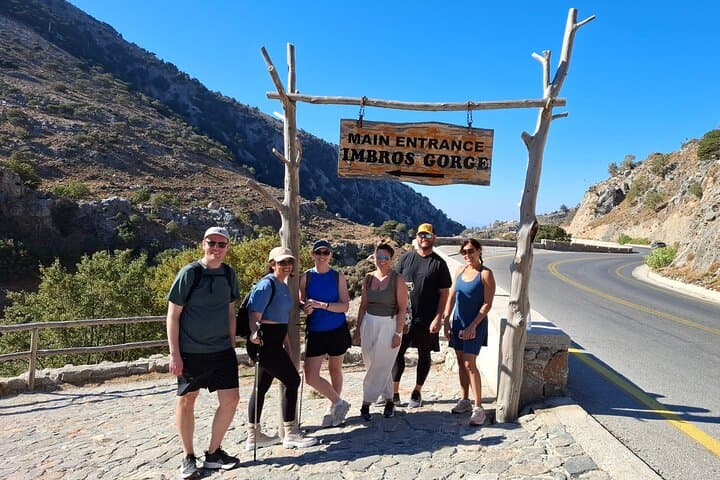
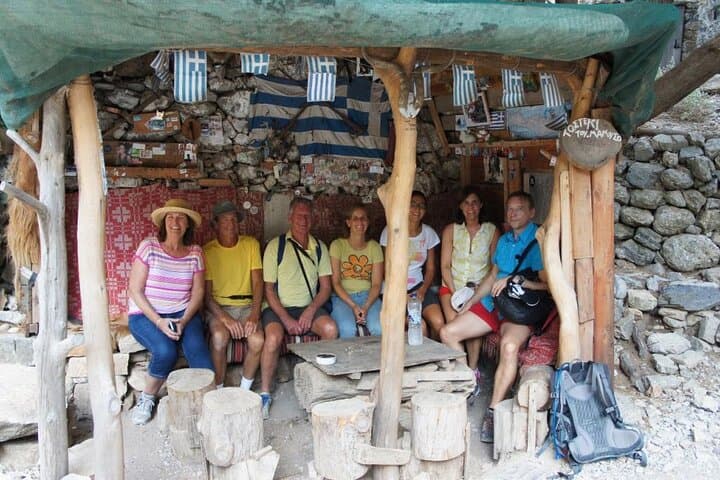
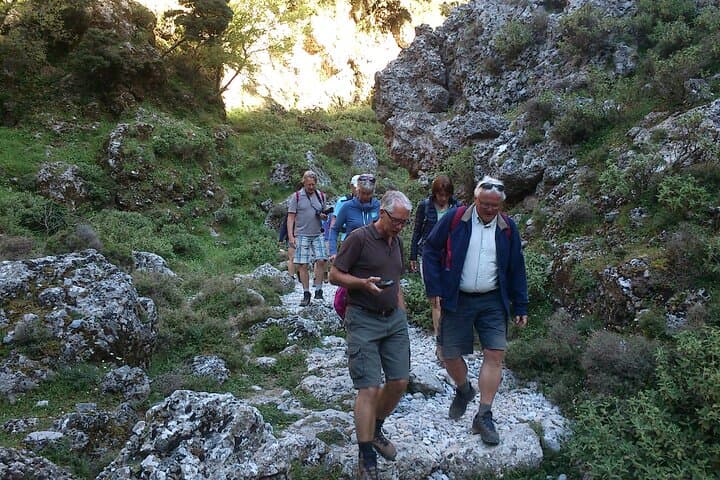
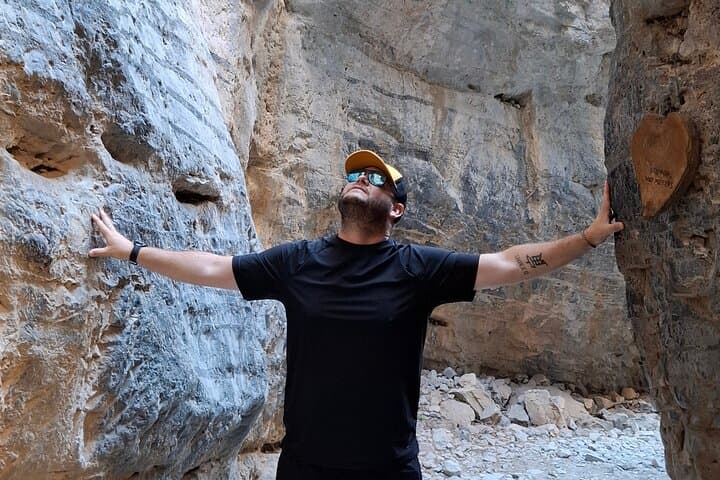
A low, dry wind threads through the limestone ribs of Imbros Gorge and the first steps into the cleft feel like stepping into a different light. Vertical walls narrow until the sky becomes a bright strip overhead; stones underfoot click and settle as the group follows a local guide who points out the scrubby herbs and the fossilized seams in the rock. Children tug ahead to spy a lizard sunning itself on a boulder; older walkers slow to take in the view where the ravine opens toward terraced hills and the blue of the Libyan Sea far below.
A low, dry wind threads through the limestone ribs of Imbros Gorge and the first steps into the cleft feel like stepping into a different light. Vertical walls narrow until the sky becomes a bright strip overhead; stones underfoot click and settle as the group follows a local guide who points out the scrubby herbs and the fossilized seams in the rock. Children tug ahead to spy a lizard sunning itself on a boulder; older walkers slow to take in the view where the ravine opens toward terraced hills and the blue of the Libyan Sea far below.
Imbros is not the island’s largest canyon, but it packs a concentrated history. Formed by water cutting through Miocene limestone, the gorge has been both route and refuge for shepherds, refugees and soldiers across Venetian, Ottoman and modern eras. Villages like Imbros and the high Askifou plateau that bookend the trail preserve that continuity: stone chapels, low dry-stone walls and olive groves that still produce oil for local tables.
Geology shows in every step — compacted marine beds tilt and fracture, creating the narrow, shaded slots that make Imbros cooler than the surrounding scrub. Culturally, the hike ends the way many Cretan days do: at a family-run taverna where slow-cooked lamb, village salad and raki translate local landscape into flavor.
Practical details: the private tour runs about 6–8 hours with hotel pickup available from Chania and nearby coastal towns. The walking route is roughly 8–9 kilometers total with modest elevation change; terrain is uneven rock, packed earth, and a few loose scree sections. The route is suitable for families and fit beginners, though it does require steady footing and occasional narrow passages where single-file travel is safer. Guides include entrance fees, bottled water and snacks; a full meal at the taverna concludes the outing.
Timing matters. Start early in summer to avoid afternoon heat; in shoulder seasons the gorge holds warmth at midday but mornings can be crisp. Wear sturdy footwear with ankle support; trekking poles help on descents. Respect local signage and grazing lands — sheep and shepherd dogs are common, and local livelihoods depend on the plateau’s pastures.
For travelers wanting a compact, rewarding canyon experience, Imbros offers rock, history and hospitality in a single day. The private format makes it especially good for families or groups who want to move at their own pace and finish with a real taste of Cretan table culture.