THE ADVENTURE COLLECTIVE® · Independent discovery and booking for outdoor travel

Choose Imbros Gorge for a shorter, less technical alternative to Samaria: an 8-km private hike through narrow limestone walls, wildflower meadows, and a finishing swim in the Libyan Sea. Ideal for travelers wanting a cultural, guided day trip from Chania.
Choose Imbros Gorge for a shorter, less technical alternative to Samaria: an 8-km private hike through narrow limestone walls, wildflower meadows, and a finishing swim in the Libyan Sea. Ideal for travelers wanting a cultural, guided day trip from Chania.
The path narrows and the world compresses: limestone walls lean in, wildflowers cling to crevices, and the sun threads down in strips. You step from a meadow into the throat of Imbros Gorge and the rhythm of the hike changes—slow, careful foot placement where the slot tightens to just 1.6 meters, then longer, confident strides along pebbled terraces. Over roughly 8 kilometers and about 400 meters of descent, the gorge moves you from high, scrubby slopes to the blue calm of the Libyan Sea.
Verified experiences and guided adventures in the surrounding area.
Operated by GS TOURS CHANIA LTD · Imbros, Crete
The path narrows and the world compresses: limestone walls lean in, wildflowers cling to crevices, and the sun threads down in strips. You step from a meadow into the throat of Imbros Gorge and the rhythm of the hike changes—slow, careful foot placement where the slot tightens to just 1.6 meters, then longer, confident strides along pebbled terraces. Over roughly 8 kilometers and about 400 meters of descent, the gorge moves you from high, scrubby slopes to the blue calm of the Libyan Sea.
Imbros runs parallel to the more famous Samaria but carries a quieter history. Local tradition says the name came from two brothers from Imbros island who settled here; older paths through the gorge once linked Chania to Chora Sfakion and were used for trade, refuge, and, during World War II, the evacuation of British soldiers. Geologically, the gorge is carved from Cretan limestone—weathered channels, occasional scree, and narrow slots form where intermittent streams have attacked weak bedding planes for millennia.
On a private tour, a local mountain guide walks the line between interpreter and companion. They point out endemic plants—Cretan rockrose, dwarf juniper—and explain how the amphitheaters of rock were used by shepherds and partisans. The trail’s first half hour eases you in across flower-speckled slopes before the corridor pinches; here the canyon feels like an old gate, closing behind you.
The route ends at Komitades, where a small café and the Libyan Sea await. The tour typically includes a transfer for the return swim and lunch in Chora Sfakion—salt air and grilled fish are a direct counterpoint to the dusty trail. Practicality matters: the hike is shorter and less technical than Samaria but still demands steady shoes, water, and attention where footing is loose.
Plan an early start in summer to avoid heat; shoulder seasons give wildflower displays and softer light. The private format adds flexibility—ask your guide for walking poles if you want them, and factor in about 2–3 hours on the trail inside an 8-hour door-to-door excursion from Chania. For first-time visitors, the gorge is a balanced day: cultural context, manageable challenge, and a sea dip that rewards the descent.
If you want the closest authentic picture of Cretan gorges without the crowds and strain of a full-day scramble, Imbros delivers—compact, storied, and finished with a swim that feels earned.
moderate.
2–3 hours (hike); 8 hours total tour including transfers.
Requires moderate fitness—comfortable walking for a few hours and some scrambling over uneven terrain
The trail is about 8 kilometers and typically takes 2–3 hours to hike, depending on pace and how often you stop.
Many families and fit older adults manage Imbros, but it requires steady footing; the private tour offers flexibility and stops as needed.
No technical climbing is required; the route narrows in places to about 1.6 meters and has uneven, sometimes rocky footing.
Most private tours include hotel pickup in Chania, a licensed English-speaking mountain guide, private transport, bottled water, and a return stop for swimming and lunch.
This tour is not recommended for travelers with serious back or cardiovascular problems due to uneven terrain and the length of the hike.
Spring and fall offer cooler temperatures and wildflowers; summer is busy and hot so early starts are best; winter can be wet and occasionally closed after heavy rain.
Imbros was an ancient communication and transit route between Chania and Sfakia and served as an evacuation corridor during WWII.
Trails are fragile; stick to the path to protect endemic flora and pack out waste—local guides emphasize low-impact travel to preserve the gorge.
GS TOURS CHANIA LTD operates guided outdoor trips and adventures with an emphasis on safety, stewardship, and memorable experiences.
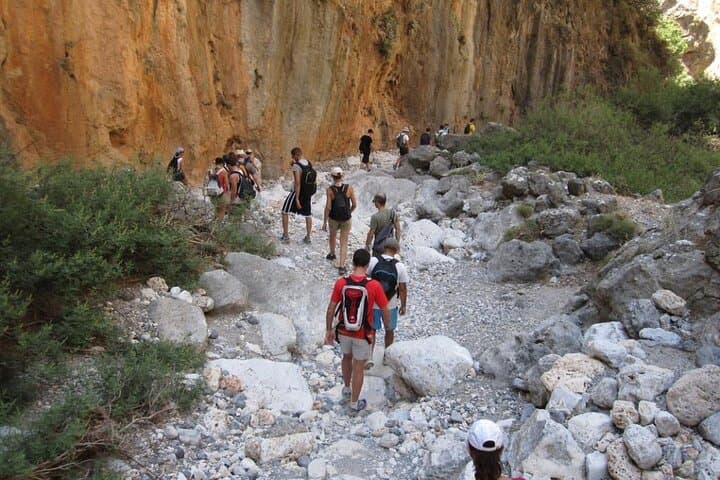
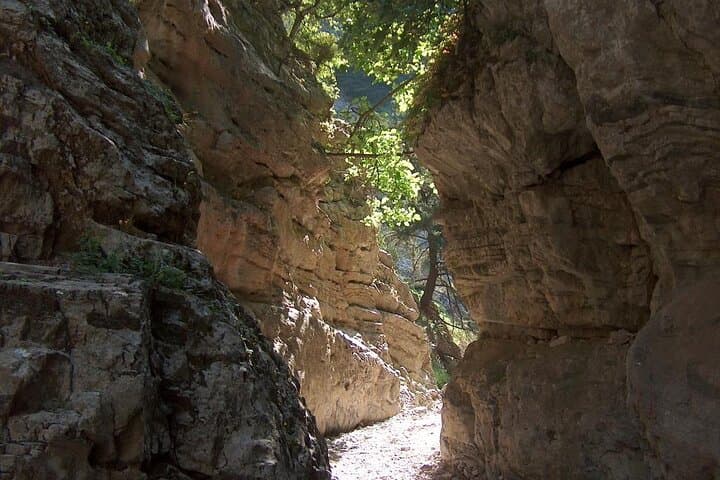
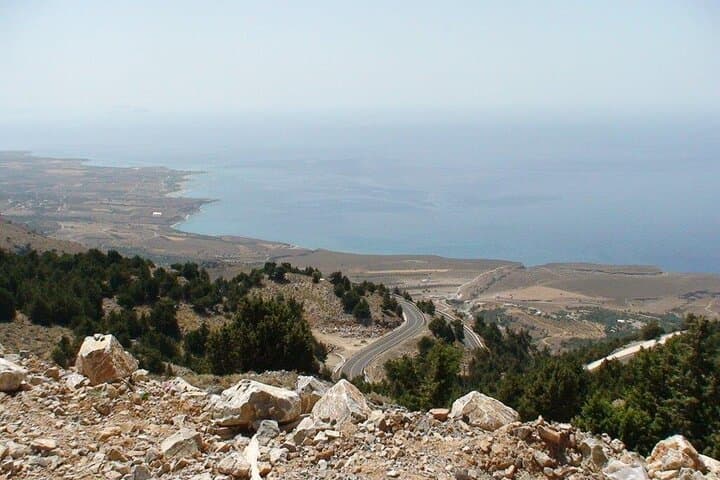
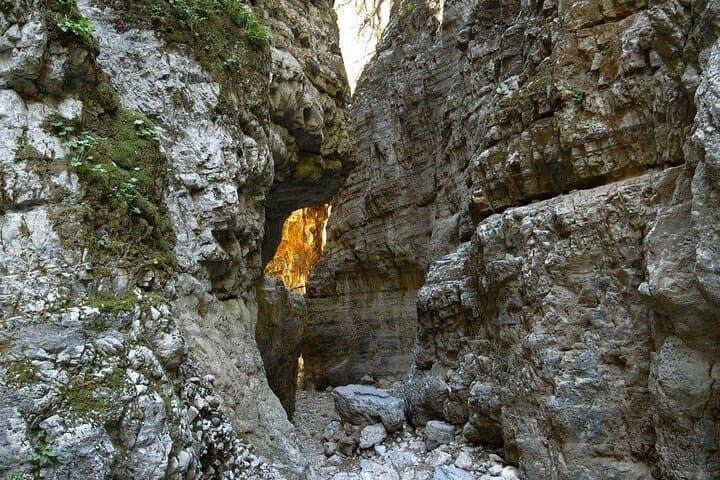
The path narrows and the world compresses: limestone walls lean in, wildflowers cling to crevices, and the sun threads down in strips. You step from a meadow into the throat of Imbros Gorge and the rhythm of the hike changes—slow, careful foot placement where the slot tightens to just 1.6 meters, then longer, confident strides along pebbled terraces. Over roughly 8 kilometers and about 400 meters of descent, the gorge moves you from high, scrubby slopes to the blue calm of the Libyan Sea.
The path narrows and the world compresses: limestone walls lean in, wildflowers cling to crevices, and the sun threads down in strips. You step from a meadow into the throat of Imbros Gorge and the rhythm of the hike changes—slow, careful foot placement where the slot tightens to just 1.6 meters, then longer, confident strides along pebbled terraces. Over roughly 8 kilometers and about 400 meters of descent, the gorge moves you from high, scrubby slopes to the blue calm of the Libyan Sea.
Imbros runs parallel to the more famous Samaria but carries a quieter history. Local tradition says the name came from two brothers from Imbros island who settled here; older paths through the gorge once linked Chania to Chora Sfakion and were used for trade, refuge, and, during World War II, the evacuation of British soldiers. Geologically, the gorge is carved from Cretan limestone—weathered channels, occasional scree, and narrow slots form where intermittent streams have attacked weak bedding planes for millennia.
On a private tour, a local mountain guide walks the line between interpreter and companion. They point out endemic plants—Cretan rockrose, dwarf juniper—and explain how the amphitheaters of rock were used by shepherds and partisans. The trail’s first half hour eases you in across flower-speckled slopes before the corridor pinches; here the canyon feels like an old gate, closing behind you.
The route ends at Komitades, where a small café and the Libyan Sea await. The tour typically includes a transfer for the return swim and lunch in Chora Sfakion—salt air and grilled fish are a direct counterpoint to the dusty trail. Practicality matters: the hike is shorter and less technical than Samaria but still demands steady shoes, water, and attention where footing is loose.
Plan an early start in summer to avoid heat; shoulder seasons give wildflower displays and softer light. The private format adds flexibility—ask your guide for walking poles if you want them, and factor in about 2–3 hours on the trail inside an 8-hour door-to-door excursion from Chania. For first-time visitors, the gorge is a balanced day: cultural context, manageable challenge, and a sea dip that rewards the descent.
If you want the closest authentic picture of Cretan gorges without the crowds and strain of a full-day scramble, Imbros delivers—compact, storied, and finished with a swim that feels earned.