THE ADVENTURE COLLECTIVE® · Independent discovery and booking for outdoor travel

Walk the historic, less-crowded Imbros Gorge with a private guide, then cool off with a swim at Frangokastelo and a family-taverna lunch. This full-day outing blends easy adventure, WWII history, and authentic Cretan hospitality.
Walk the historic, less-crowded Imbros Gorge with a private guide, then cool off with a swim at Frangokastelo and a family-taverna lunch. This full-day outing blends easy adventure, WWII history, and authentic Cretan hospitality.
You start on a warm slope of sun-baked rock, the first steps crunching on loose scree while the canyon ahead narrows from an open throat into a shaded corridor. Wind lifts the aromatic breath of thyme and oregano from low scrub; sheer limestone walls stand like old maps of water’s work, streaked in rust and chalk. The guide checks your boots, gestures down the ridge, and the gorge seems to accept you—quiet, watchful, patient.
Verified experiences and guided adventures in the surrounding area.
Operated by Your Guide Crete · Komitades, Crete
You start on a warm slope of sun-baked rock, the first steps crunching on loose scree while the canyon ahead narrows from an open throat into a shaded corridor. Wind lifts the aromatic breath of thyme and oregano from low scrub; sheer limestone walls stand like old maps of water’s work, streaked in rust and chalk. The guide checks your boots, gestures down the ridge, and the gorge seems to accept you—quiet, watchful, patient.
Imbros is a short, honest gorge: roughly 8 km of descending trail that most groups cover in about 2.5 hours on the way to Komitades. Compared with Samaria’s crowds, Imbros feels like a local secret—its stones remember paths used by shepherds, by Venetian traders, and, more recently, by Allied soldiers in World War II escaping inland. Geologically, the gorge is a carved channel in Cretan limestone, a place where winter torrents once rushed, leaving narrow slots and rubbing smooth the cliff faces you pass within arm’s reach.
Culturally the route is small-scale Crete: olive trees on terraces, dry-stone walls, and villages that still open taverna doors at midday. The private tour pairs that walk with a dip at Frangokastelo’s wide sand and pebble beach—water that can turn a startling Mediterranean blue—and a family-run taverna meal of grilled fish, dakos, and salads dressed with local oil. The day maps natural drama onto everyday island life.
Practicalities are simple but important. The descent is gentle but rocky; hiking shoes with good tread and trekking poles make the route safer and more comfortable. Bring at least 2 liters of water, sun protection, and a small daypack with swimwear and a towel — the sea waits at the end. The guide supplies local insight and walking sticks; transport and pick-up options are offered from nearby hotels. Expect about 3–4 hours total hiking and shoreline time, with the whole experience running roughly 3 hours 40 minutes as organized.
Timing matters: start early in high summer to avoid midday heat; in shoulder seasons, layers are wise—coastal wind can surprise. The experience is family-friendly for competent walkers but isn’t recommended for people with serious back or heart issues. Leave no trace: stay on the trail, don't remove plants or stones, and support local businesses—your lunch is as much part of the day as the gorge itself.
If you want a compact Crete day that blends geology, history, sea, and a sense of place—without the tourist crush—this guided Imbros hike to Frangokastelo delivers a clear, elemental slice of the island.
moderate.
3–4 hours.
Suitable for most people who can walk moderate downhill terrain for a few hours; basic endurance and stable footing required.
The guided route covers roughly 8 km and typically takes around 2.5 hours to walk downhill to Komitades, with additional time for beach and lunch.
Children who are steady on uneven ground and used to multi-hour walks can join, but guardians should consider sun exposure and the rocky terrain.
Yes, the tour offers pickup from many hotels in the region; confirm your pickup point during booking.
Yes—the itinerary includes a stop at Frangokastelo for swimming in clear, warm sea waters; pack swimwear and a towel.
Guides on this private tour are experienced local walkers who speak English and provide historical and natural commentary along the route.
Tours can be canceled due to bad weather with a full refund if canceled at least 24 hours before departure; the supplier monitors conditions closely.
Imbros’ path was used historically by shepherds and villagers and served as an escape route during World War II; nearby Frangokastelo is dominated by a 14th-century Venetian castle.
Stick to established trails, avoid removing native plants, and support local tavernas—small businesses fund conservation and maintain paths.
Your Guide Crete operates guided outdoor trips and adventures with an emphasis on safety, stewardship, and memorable experiences.
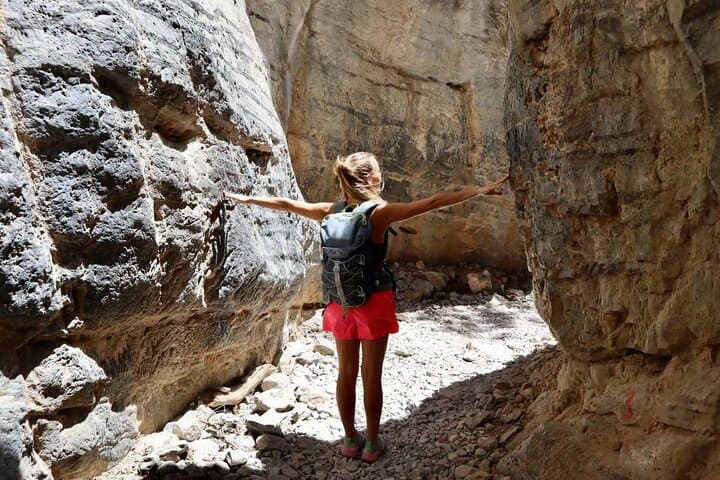
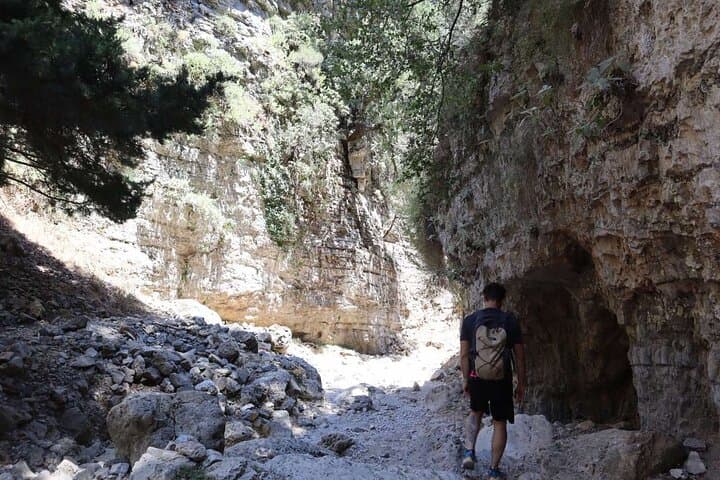
You start on a warm slope of sun-baked rock, the first steps crunching on loose scree while the canyon ahead narrows from an open throat into a shaded corridor. Wind lifts the aromatic breath of thyme and oregano from low scrub; sheer limestone walls stand like old maps of water’s work, streaked in rust and chalk. The guide checks your boots, gestures down the ridge, and the gorge seems to accept you—quiet, watchful, patient.
You start on a warm slope of sun-baked rock, the first steps crunching on loose scree while the canyon ahead narrows from an open throat into a shaded corridor. Wind lifts the aromatic breath of thyme and oregano from low scrub; sheer limestone walls stand like old maps of water’s work, streaked in rust and chalk. The guide checks your boots, gestures down the ridge, and the gorge seems to accept you—quiet, watchful, patient.
Imbros is a short, honest gorge: roughly 8 km of descending trail that most groups cover in about 2.5 hours on the way to Komitades. Compared with Samaria’s crowds, Imbros feels like a local secret—its stones remember paths used by shepherds, by Venetian traders, and, more recently, by Allied soldiers in World War II escaping inland. Geologically, the gorge is a carved channel in Cretan limestone, a place where winter torrents once rushed, leaving narrow slots and rubbing smooth the cliff faces you pass within arm’s reach.
Culturally the route is small-scale Crete: olive trees on terraces, dry-stone walls, and villages that still open taverna doors at midday. The private tour pairs that walk with a dip at Frangokastelo’s wide sand and pebble beach—water that can turn a startling Mediterranean blue—and a family-run taverna meal of grilled fish, dakos, and salads dressed with local oil. The day maps natural drama onto everyday island life.
Practicalities are simple but important. The descent is gentle but rocky; hiking shoes with good tread and trekking poles make the route safer and more comfortable. Bring at least 2 liters of water, sun protection, and a small daypack with swimwear and a towel — the sea waits at the end. The guide supplies local insight and walking sticks; transport and pick-up options are offered from nearby hotels. Expect about 3–4 hours total hiking and shoreline time, with the whole experience running roughly 3 hours 40 minutes as organized.
Timing matters: start early in high summer to avoid midday heat; in shoulder seasons, layers are wise—coastal wind can surprise. The experience is family-friendly for competent walkers but isn’t recommended for people with serious back or heart issues. Leave no trace: stay on the trail, don't remove plants or stones, and support local businesses—your lunch is as much part of the day as the gorge itself.
If you want a compact Crete day that blends geology, history, sea, and a sense of place—without the tourist crush—this guided Imbros hike to Frangokastelo delivers a clear, elemental slice of the island.