THE ADVENTURE COLLECTIVE® · Independent discovery and booking for outdoor travel

See Iceland’s must‑visit sights in a single day: Þingvellir rift, Strokkur’s eruptions, Gullfoss, Seljalandsfoss, Skógafoss and Reynisfjara’s black sand. This fast-paced private tour squeezes two classic itineraries into one efficient loop out of Reykjavík.
See Iceland’s must‑visit sights in a single day: Þingvellir rift, Strokkur’s eruptions, Gullfoss, Seljalandsfoss, Skógafoss and Reynisfjara’s black sand. This fast-paced private tour squeezes two classic itineraries into one efficient loop out of Reykjavík.
You step onto the mini-coach in Reykjavík before the city has fully woken, the diesel hum a steady metronome as the landscape opens—black lava fields giving way to moss-streaked ridges and suddenly the rift valley of Þingvellir appears like a raw cut through the earth. The guide points to Almannagjá: a cleft where the Eurasian and North American plates pull apart. You feel the planet move underfoot in a way that’s both geological and historical; this is where the Alþingi, the Viking-era assembly, met on a rock called Lögberg.
Verified experiences and guided adventures in the surrounding area.
Operated by Otto The Viking · Reykjavík, Capital Region
You step onto the mini-coach in Reykjavík before the city has fully woken, the diesel hum a steady metronome as the landscape opens—black lava fields giving way to moss-streaked ridges and suddenly the rift valley of Þingvellir appears like a raw cut through the earth. The guide points to Almannagjá: a cleft where the Eurasian and North American plates pull apart. You feel the planet move underfoot in a way that’s both geological and historical; this is where the Alþingi, the Viking-era assembly, met on a rock called Lögberg.
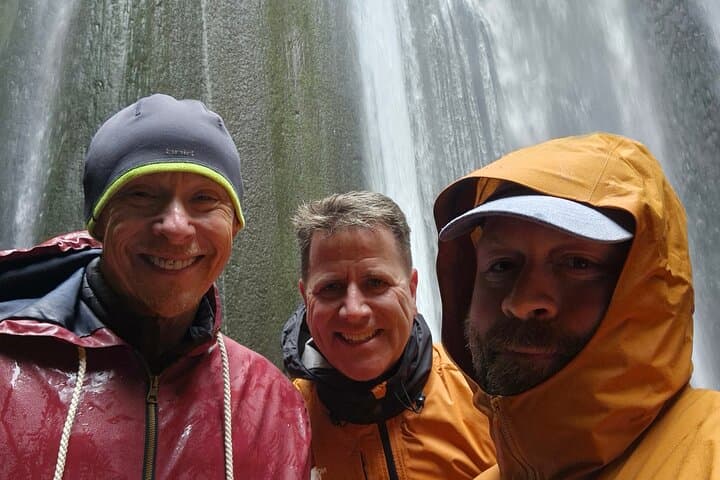
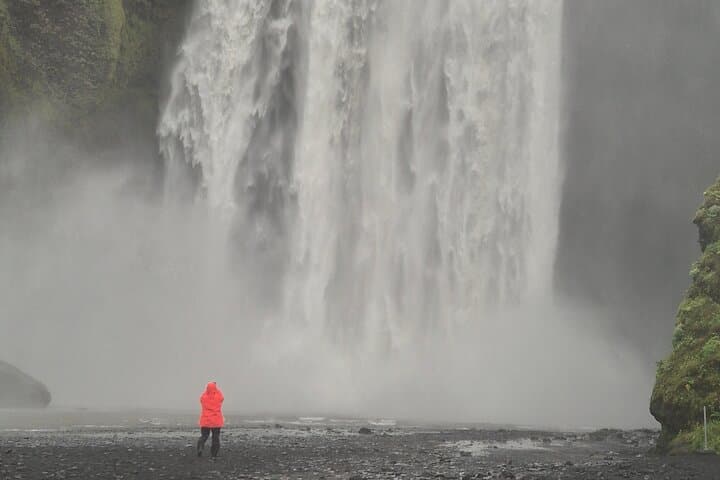
The day telescopes forward. At Geysir’s field, Strokkur counts down in steam and then erupts, a precise, almost theatrical column of boiling water. Gullfoss follows, a two-tiered cataract that throws spray into a permanent mist—sunlight can fracture it into rainbows if luck and timing align. The route then pushes south across the lowlands to Seljalandsfoss, where a narrow trail leads behind a sheet of falling water, and Skógafoss, whose curtain of white plunges from roughly 60 meters and demands a climb to the top for a broad coastal view.
The finale is Reynisfjara: a black-sand shore ringed with basalt columns and the sea stacks called Reynisdrangar. The ocean here has an obvious personality—pulling, testing, and with sneaker waves that command distance and respect. The tour is brisk by design, compressing what many do over two days into a 13‑hour loop, a practical choice for travelers short on time.
Geology is the day’s throughline—rift valleys, geothermal vents, glacial melt shaping cliffs and beaches—but culture threads in too: turf church histories, road-side greenhouses like Friðheimar where tomatoes grow in steam-heated rows, and small museums near Skógar that remind visitors of Iceland’s rural past.
Practical guidance: plan for long hours on the coach with multiple 15–30 minute walks at each stop and one steeper staircase ascent at Skógafoss (roughly a 60–80 m elevation gain). Wear waterproof, grippy footwear—paths behind waterfalls are wet and uneven. Bring a windproof layer and a waterproof shell; weather swings are rapid and touring is rain-or-shine. Charge your camera and keep a small daypack with snacks and a refillable bottle—stops include facilities but time is limited.
Timing matters for light and crowds: start early in summer for softer light and fewer buses; in winter, shorter daylight and road conditions mean a faster pace and earlier sunsets. Respect safety signs—especially at Reynisfjara—and stay on marked paths to protect fragile moss and avoid cliff edges. For travelers wanting a condensed primer on Iceland, this express route delivers geology, waterfalls, and coastal drama in one packed, unforgettable day.
moderate.
13 hours (full day).
Suitable for travelers with basic fitness who can manage several short walks and a stair climb of moderate steepness (roughly 60–80 m gain).
The tour is approximately 13 hours and typically departs from Reykjavík; private pickup from many central hotels and ports is offered—confirm your pickup point at booking.
Yes—most natural sites are included; Þingvellir and the falls are public sites with no extra entrance fee, but private museum entries or optional stops may cost extra.
Yes—there’s a maintained path that lets you walk behind the waterfall, but it’s wet and slippery so wear waterproof shoes and use caution.
Yes, but expect shorter daylight, faster itinerary pacing and possible adjustments for road or weather conditions; operators may cancel if conditions are unsafe.
There are restroom and cafe stops at several sites and along the route, but time is limited—bring snacks if you need them between stops.
Small bags and daypacks are fine; large checked luggage typically isn’t accommodated—confirm storage options with the operator if you have special requirements.
Þingvellir is the historic site of the Alþingi, one of the world’s oldest parliamentary institutions, founded in the 10th century by early Icelandic settlers.
The high visitor numbers stress fragile moss and coastal habitats—stay on marked paths, avoid trampling vegetation, and follow local guidance to minimize impact.
Otto The Viking operates guided outdoor trips and adventures with an emphasis on safety, stewardship, and memorable experiences.
You step onto the mini-coach in Reykjavík before the city has fully woken, the diesel hum a steady metronome as the landscape opens—black lava fields giving way to moss-streaked ridges and suddenly the rift valley of Þingvellir appears like a raw cut through the earth. The guide points to Almannagjá: a cleft where the Eurasian and North American plates pull apart. You feel the planet move underfoot in a way that’s both geological and historical; this is where the Alþingi, the Viking-era assembly, met on a rock called Lögberg.
You step onto the mini-coach in Reykjavík before the city has fully woken, the diesel hum a steady metronome as the landscape opens—black lava fields giving way to moss-streaked ridges and suddenly the rift valley of Þingvellir appears like a raw cut through the earth. The guide points to Almannagjá: a cleft where the Eurasian and North American plates pull apart. You feel the planet move underfoot in a way that’s both geological and historical; this is where the Alþingi, the Viking-era assembly, met on a rock called Lögberg.
The day telescopes forward. At Geysir’s field, Strokkur counts down in steam and then erupts, a precise, almost theatrical column of boiling water. Gullfoss follows, a two-tiered cataract that throws spray into a permanent mist—sunlight can fracture it into rainbows if luck and timing align. The route then pushes south across the lowlands to Seljalandsfoss, where a narrow trail leads behind a sheet of falling water, and Skógafoss, whose curtain of white plunges from roughly 60 meters and demands a climb to the top for a broad coastal view.
The finale is Reynisfjara: a black-sand shore ringed with basalt columns and the sea stacks called Reynisdrangar. The ocean here has an obvious personality—pulling, testing, and with sneaker waves that command distance and respect. The tour is brisk by design, compressing what many do over two days into a 13‑hour loop, a practical choice for travelers short on time.
Geology is the day’s throughline—rift valleys, geothermal vents, glacial melt shaping cliffs and beaches—but culture threads in too: turf church histories, road-side greenhouses like Friðheimar where tomatoes grow in steam-heated rows, and small museums near Skógar that remind visitors of Iceland’s rural past.
Practical guidance: plan for long hours on the coach with multiple 15–30 minute walks at each stop and one steeper staircase ascent at Skógafoss (roughly a 60–80 m elevation gain). Wear waterproof, grippy footwear—paths behind waterfalls are wet and uneven. Bring a windproof layer and a waterproof shell; weather swings are rapid and touring is rain-or-shine. Charge your camera and keep a small daypack with snacks and a refillable bottle—stops include facilities but time is limited.
Timing matters for light and crowds: start early in summer for softer light and fewer buses; in winter, shorter daylight and road conditions mean a faster pace and earlier sunsets. Respect safety signs—especially at Reynisfjara—and stay on marked paths to protect fragile moss and avoid cliff edges. For travelers wanting a condensed primer on Iceland, this express route delivers geology, waterfalls, and coastal drama in one packed, unforgettable day.