THE ADVENTURE COLLECTIVE® · Independent discovery and booking for outdoor travel

Swim a short distance into Santa Cruz Bay and watch the sea light up with each movement as microscopic plankton spark to life. This guided, 90-minute beach swim pairs local knowledge with safety gear to turn a quiet Huatulco night into a luminous show.
Swim a short distance into Santa Cruz Bay and watch the sea light up with each movement as microscopic plankton spark to life. This guided, 90-minute beach swim pairs local knowledge with safety gear to turn a quiet Huatulco night into a luminous show.
The beach goes black and then, with the first slow stroke, the ocean answers — a scatter of turquoise sparks chasing your fingertips like shaken starlight. On a moon-dark night in Bahías de Huatulco, the sea becomes an active pageant; every kick draws a comet-tail of bioluminescence, and the water seems to be thinking as it responds to your movement.
Verified experiences and guided adventures in the surrounding area.
Operated by Buen Viaje Oaxaca · Huatulco, Oaxaca
The beach goes black and then, with the first slow stroke, the ocean answers — a scatter of turquoise sparks chasing your fingertips like shaken starlight. On a moon-dark night in Bahías de Huatulco, the sea becomes an active pageant; every kick draws a comet-tail of bioluminescence, and the water seems to be thinking as it responds to your movement.
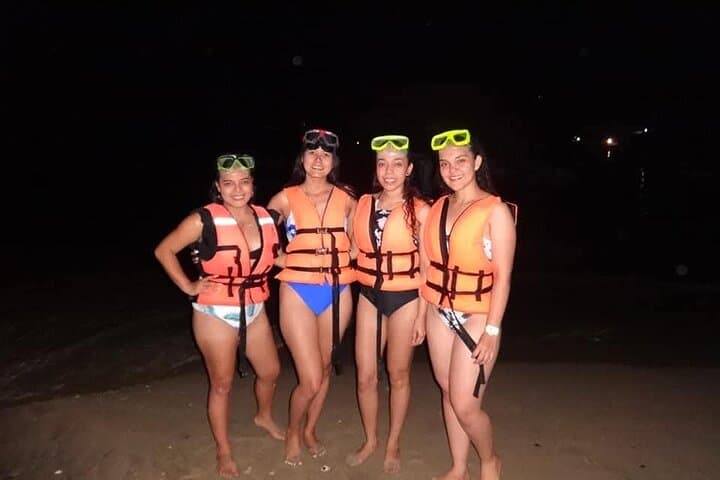
This is not a boat tour. The operator leads a short ride from hotels in the urban area to a quiet crescent on Santa Cruz Bay, then hands out life jackets and viewfinders, briefs the group, and guides you 20–30 meters offshore where the organisms concentrate. Expect roughly 40 minutes in the water within a 90-minute excursion.
Huatulco’s nine bays are the result of coastal uplift and the jagged interplay of Pacific storms and rocky headlands; their protected coves create pockets where microscopic plankton concentrate on still nights. The area became a focus of conservation in the late 20th century, and tourism here is intertwined with local fishing communities in La Crucecita and Santa María Huatulco — people who read the tides and guard the quiet beaches.
Bioluminescence stems from dinoflagellates and other microorganisms that emit light when disturbed. The effect is fragile: bright shoreline lights, sunscreens, and rough, windy seas can all dampen the show. Local guides with years of experience time excursions for calm conditions and explain the biology and safety while keeping the group small and controlled.
Practical guidance: choose a moonless night and plan to be out after 9 p.m. to maximize contrast. Wear a secure swimsuit or rash guard and a light top over your life jacket — nights can be breezy. Don’t apply lotions, insect repellent, or sunscreen before entering the water; these products reduce marine health and can kill the glow. Waterproof camera housings set to long exposure, or a phone with a dedicated astrophotography app, will capture streaks of light, but avoid flash photography — it wipes out the effect for everyone.
If you have heart conditions, severe anxiety, or are uncomfortable in open water, this swim may not be suitable. The operator provides life jackets and basic viewfinders; you’ll swim only a short distance but remain in the water long enough to feel the pulsing glow beneath you. A calm mindset and slow movements produce the most spectacular trails.
Beyond the swim, take time in the daytime to visit La Crucecita’s central plaza and the overlook at Tangolunda for a different view of the bays. At night, be mindful: this is a delicate coastal phenomenon. Leave no trace, follow your guide’s instructions, and you’ll return to shore with hands still glittering and an image of the sea that resists ordinary description.
easy.
1.5 hours.
Light fitness required; comfortable floating and basic swimming for roughly 40 minutes in calm open water.
You’ll swim approximately 20–30 meters from the beach to the ideal bioluminescent zone; life jackets are provided for flotation.
Children can participate if they are comfortable in open water and under parental supervision; infants must sit on an adult’s lap during transfers.
Yes — nearby artificial lights and camera flashes reduce visibility; guides choose darker spots and ask participants to avoid lights.
Yes, in a waterproof housing on long exposure or night mode; avoid flash and steady the device for best results.
Tours are canceled in rough seas or heavy rain for safety, with refunds available if canceled 24 hours prior to departure per the operator’s policy.
Not recommended for travelers with heart problems, severe anxiety, or conditions that make open-water swimming unsafe; declare any concerns when booking.
Huatulco’s nine bays were developed more recently than many Mexican resorts and were later incorporated into conservation efforts; the coastline supports small fishing communities with deep local knowledge of tides and marine life.
Guides emphasize low-impact visits: avoid sunscreens and trash, use designated entry points, and limit disturbance to the organisms that produce the glow.
Buen Viaje Oaxaca operates guided outdoor trips and adventures with an emphasis on safety, stewardship, and memorable experiences.

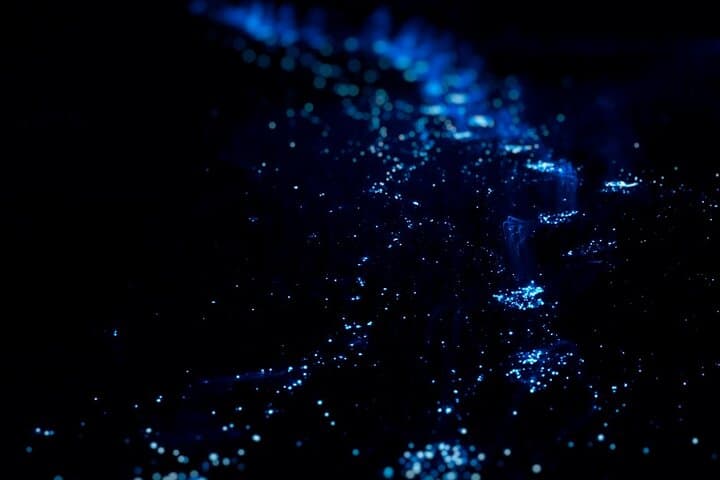
The beach goes black and then, with the first slow stroke, the ocean answers — a scatter of turquoise sparks chasing your fingertips like shaken starlight. On a moon-dark night in Bahías de Huatulco, the sea becomes an active pageant; every kick draws a comet-tail of bioluminescence, and the water seems to be thinking as it responds to your movement.
The beach goes black and then, with the first slow stroke, the ocean answers — a scatter of turquoise sparks chasing your fingertips like shaken starlight. On a moon-dark night in Bahías de Huatulco, the sea becomes an active pageant; every kick draws a comet-tail of bioluminescence, and the water seems to be thinking as it responds to your movement.
This is not a boat tour. The operator leads a short ride from hotels in the urban area to a quiet crescent on Santa Cruz Bay, then hands out life jackets and viewfinders, briefs the group, and guides you 20–30 meters offshore where the organisms concentrate. Expect roughly 40 minutes in the water within a 90-minute excursion.
Huatulco’s nine bays are the result of coastal uplift and the jagged interplay of Pacific storms and rocky headlands; their protected coves create pockets where microscopic plankton concentrate on still nights. The area became a focus of conservation in the late 20th century, and tourism here is intertwined with local fishing communities in La Crucecita and Santa María Huatulco — people who read the tides and guard the quiet beaches.
Bioluminescence stems from dinoflagellates and other microorganisms that emit light when disturbed. The effect is fragile: bright shoreline lights, sunscreens, and rough, windy seas can all dampen the show. Local guides with years of experience time excursions for calm conditions and explain the biology and safety while keeping the group small and controlled.
Practical guidance: choose a moonless night and plan to be out after 9 p.m. to maximize contrast. Wear a secure swimsuit or rash guard and a light top over your life jacket — nights can be breezy. Don’t apply lotions, insect repellent, or sunscreen before entering the water; these products reduce marine health and can kill the glow. Waterproof camera housings set to long exposure, or a phone with a dedicated astrophotography app, will capture streaks of light, but avoid flash photography — it wipes out the effect for everyone.
If you have heart conditions, severe anxiety, or are uncomfortable in open water, this swim may not be suitable. The operator provides life jackets and basic viewfinders; you’ll swim only a short distance but remain in the water long enough to feel the pulsing glow beneath you. A calm mindset and slow movements produce the most spectacular trails.
Beyond the swim, take time in the daytime to visit La Crucecita’s central plaza and the overlook at Tangolunda for a different view of the bays. At night, be mindful: this is a delicate coastal phenomenon. Leave no trace, follow your guide’s instructions, and you’ll return to shore with hands still glittering and an image of the sea that resists ordinary description.