THE ADVENTURE COLLECTIVE® · Independent discovery and booking for outdoor travel

Saddle up for an eight-day crossing of Central Mongolia’s volcanic basins, ancient capitals, and wild steppe. This horseback route links Khustai National Park, the Orkhon Valley, and the crater-ringed Eight Lakes—offering geology, nomadic hospitality, and sustained riding through one of Asia’s least-tamed landscapes.
Saddle up for an eight-day crossing of Central Mongolia’s volcanic basins, ancient capitals, and wild steppe. This horseback route links Khustai National Park, the Orkhon Valley, and the crater-ringed Eight Lakes—offering geology, nomadic hospitality, and sustained riding through one of Asia’s least-tamed landscapes.
The first morning out of Kharkhorin the steppe opens like a worn map—broad, wind-brushed, and rimmed by distant dark cones of extinct volcanoes. Saddles creak, horses breathe steam into the cold, and a thin ribbon of trail cuts through waist-high grass. After days on the Mongolian plateau you begin to feel the landscape as a series of shifts: grassy flats that urge a steady trot, volcanic scree that demands careful steps, and the sudden quiet of high alpine basins where eight crater lakes mirror the sky.
Verified experiences and guided adventures in the surrounding area.
The first morning out of Kharkhorin the steppe opens like a worn map—broad, wind-brushed, and rimmed by distant dark cones of extinct volcanoes. Saddles creak, horses breathe steam into the cold, and a thin ribbon of trail cuts through waist-high grass. After days on the Mongolian plateau you begin to feel the landscape as a series of shifts: grassy flats that urge a steady trot, volcanic scree that demands careful steps, and the sudden quiet of high alpine basins where eight crater lakes mirror the sky.
This eight-day horseback expedition threads together Central Mongolia’s landmark places: the rolling plains of Khustai National Park where Przewalski’s horses roam, the semi-Gobi’s dust-sweet air, and the Orkhon Valley—UNESCO-listed for its millennia of pastoral life and archaeological sites like Kharakhorum. The Eight Lakes themselves are geological children of fire and ice: volcanic craters filled with melt and rain, hemmed by lava ridges and high peaks that give each basin a compressed, wild character.
The route is as much cultural as it is natural. Riders make camp with nomadic families, learning the rhythm of gers, the careful choreography of setting up a kitchen, and how tea is poured for guests. Guides share oral histories of the Mongol Empire and points to the ruins that mark its reach. Wildness here is social as well as ecological—herds of sheep, a yak or two, and the distant watch of a nomad’s eagle.
Practical reality: expect 4–7 hours in the saddle most days, covering 15–35 km daily over rolling steppe, volcanic ridgelines, and river crossings. Elevation ranges roughly 1,300–2,000 meters; footing varies from packed soil to loose volcanic gravel. Weather is continental—sharp diurnal swings, bright sun, and sudden summer storms—so layers and sun protection are essentials.
Prepare for basic camping nights and occasional stays in gers; luggage is limited and portered by horse. Fitness-wise, you’ll need core stability and endurance for repeated mounting and long rides—riders with prior multi-day experience will acclimate faster. Hydrate proactively, respect horse handlers’ guidance, and reserve energy for final-day climbs to panoramic lake viewpoints.
Why go: this is a trip for travelers who want landscape that pushes and invites—rivers daring you to cross, extinct cones that stand like old watchtowers, and the intense clarity of steppe night skies. Logistically straightforward from Ulaanbaatar or Kharkhorin, the route rewards riders with a blend of geology, history, and hands-on nomadic life that feels authentically Mongolian.
moderate.
8 days (full trip).
Good baseline endurance and balance for repeated 4–7 hour riding days; ability to mount/dismount independently helpful.
You should have good cardiovascular endurance and core strength for multi-hour rides; prior multi-day riding experience helps but beginners who train beforehand can participate.
Basic horseback skills—controlling pace, mounting/dismounting, and sitting a trot—are required. Guides assist, but unfamiliar riders should disclose their experience before the trip.
Nights are a mix of camping and ger stays with nomadic families depending on the itinerary section; expect simple but warm ger accommodations on some nights.
Much of the route is remote; guides carry first-aid kits and satellite communication in many sections, but advanced medical care requires return to Kharkhorin or Ulaanbaatar.
Local meals center on meat, dairy, and simple vegetables; operators usually accommodate common dietary needs with advance notice—notify at booking.
Late May through early September offers the most stable weather and accessible trails, with wildflowers in June–July and clear skies in August.
The Orkhon Valley holds archaeological remains from the Xiongnu and Mongol empires; Kharakhorum served as the 13th-century capital before the empire’s expansion.
Conservation here balances grazing needs with protected areas; stick to designated campsites and avoid disturbing nesting sites to reduce impact.
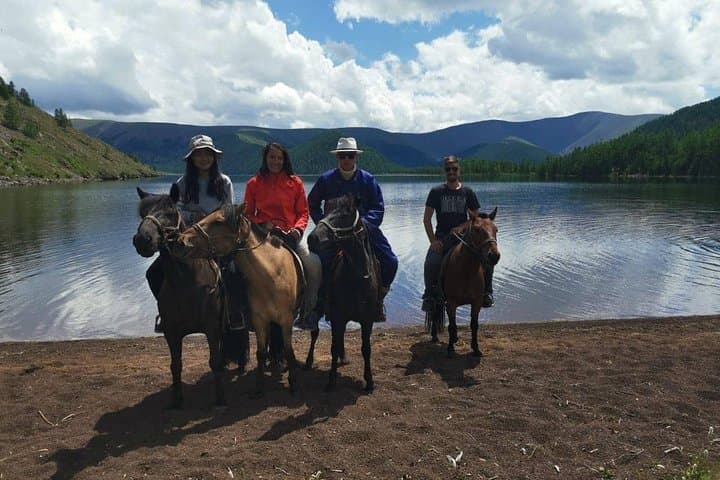
The first morning out of Kharkhorin the steppe opens like a worn map—broad, wind-brushed, and rimmed by distant dark cones of extinct volcanoes. Saddles creak, horses breathe steam into the cold, and a thin ribbon of trail cuts through waist-high grass. After days on the Mongolian plateau you begin to feel the landscape as a series of shifts: grassy flats that urge a steady trot, volcanic scree that demands careful steps, and the sudden quiet of high alpine basins where eight crater lakes mirror the sky.
The first morning out of Kharkhorin the steppe opens like a worn map—broad, wind-brushed, and rimmed by distant dark cones of extinct volcanoes. Saddles creak, horses breathe steam into the cold, and a thin ribbon of trail cuts through waist-high grass. After days on the Mongolian plateau you begin to feel the landscape as a series of shifts: grassy flats that urge a steady trot, volcanic scree that demands careful steps, and the sudden quiet of high alpine basins where eight crater lakes mirror the sky.
This eight-day horseback expedition threads together Central Mongolia’s landmark places: the rolling plains of Khustai National Park where Przewalski’s horses roam, the semi-Gobi’s dust-sweet air, and the Orkhon Valley—UNESCO-listed for its millennia of pastoral life and archaeological sites like Kharakhorum. The Eight Lakes themselves are geological children of fire and ice: volcanic craters filled with melt and rain, hemmed by lava ridges and high peaks that give each basin a compressed, wild character.
The route is as much cultural as it is natural. Riders make camp with nomadic families, learning the rhythm of gers, the careful choreography of setting up a kitchen, and how tea is poured for guests. Guides share oral histories of the Mongol Empire and points to the ruins that mark its reach. Wildness here is social as well as ecological—herds of sheep, a yak or two, and the distant watch of a nomad’s eagle.
Practical reality: expect 4–7 hours in the saddle most days, covering 15–35 km daily over rolling steppe, volcanic ridgelines, and river crossings. Elevation ranges roughly 1,300–2,000 meters; footing varies from packed soil to loose volcanic gravel. Weather is continental—sharp diurnal swings, bright sun, and sudden summer storms—so layers and sun protection are essentials.
Prepare for basic camping nights and occasional stays in gers; luggage is limited and portered by horse. Fitness-wise, you’ll need core stability and endurance for repeated mounting and long rides—riders with prior multi-day experience will acclimate faster. Hydrate proactively, respect horse handlers’ guidance, and reserve energy for final-day climbs to panoramic lake viewpoints.
Why go: this is a trip for travelers who want landscape that pushes and invites—rivers daring you to cross, extinct cones that stand like old watchtowers, and the intense clarity of steppe night skies. Logistically straightforward from Ulaanbaatar or Kharkhorin, the route rewards riders with a blend of geology, history, and hands-on nomadic life that feels authentically Mongolian.