THE ADVENTURE COLLECTIVE® · Independent discovery and booking for outdoor travel

Spend a half-day from Cafayate exploring the rust-red walls and wind-sculpted forms of Quebrada de las Conchas. Short, guided hikes take you to the Amphitheatre, Garganta del Diablo and a fossil-rich flat at La Yesera.
Spend a half-day from Cafayate exploring the rust-red walls and wind-sculpted forms of Quebrada de las Conchas. Short, guided hikes take you to the Amphitheatre, Garganta del Diablo and a fossil-rich flat at La Yesera.
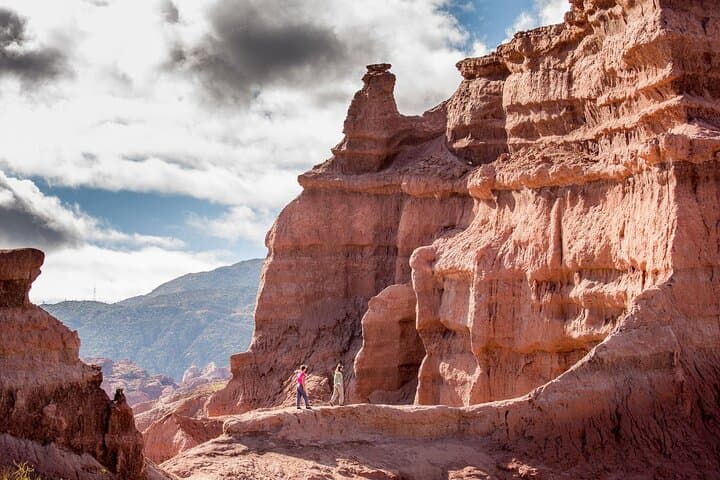
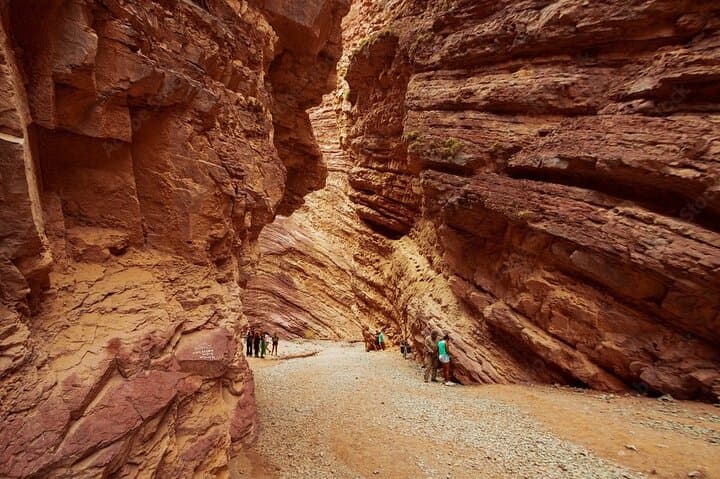
You climb into the van in Cafayate before dawn, the town’s low adobe roofs still cool and quiet, and the road unspools west toward a canyon that seems to have been painted by wind. In an hour the green of vineyard rows gives way to a corridor of red and ochre, where layered cliffs lean in close and the highway slices through sculpted stone. The tour pauses at the Amphitheatre — a round, earthen amphitheater that throws your voice back at you — and at Garganta del Diablo, a narrow slot where the canyon jaws compress into a throat of shadow and light.
Verified experiences and guided adventures in the surrounding area.
Operated by Tangol · Cafayate, Salta
You climb into the van in Cafayate before dawn, the town’s low adobe roofs still cool and quiet, and the road unspools west toward a canyon that seems to have been painted by wind. In an hour the green of vineyard rows gives way to a corridor of red and ochre, where layered cliffs lean in close and the highway slices through sculpted stone. The tour pauses at the Amphitheatre — a round, earthen amphitheater that throws your voice back at you — and at Garganta del Diablo, a narrow slot where the canyon jaws compress into a throat of shadow and light.
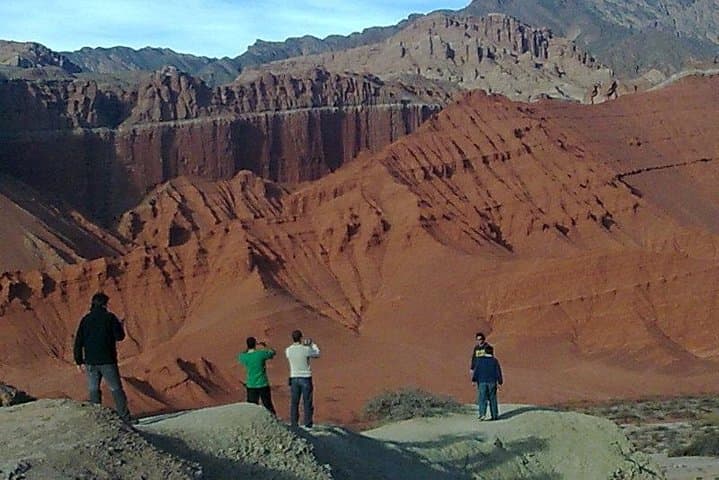
Quebrada de las Conchas is a geologist’s classroom exposed to the sky: Mesozoic and Cenozoic sediments laid down when this valley was a shallow sea have been tilted and stripped, leaving sandstone, siltstone and conglomerates in dramatic ribs and towers. La Punilla shows delicate honeycomb weathering; Los Castillos reads like a ruined fortress of red stone; La Yesera is a quiet flat where fossil fish have been found, proof that this arid landscape once held water.
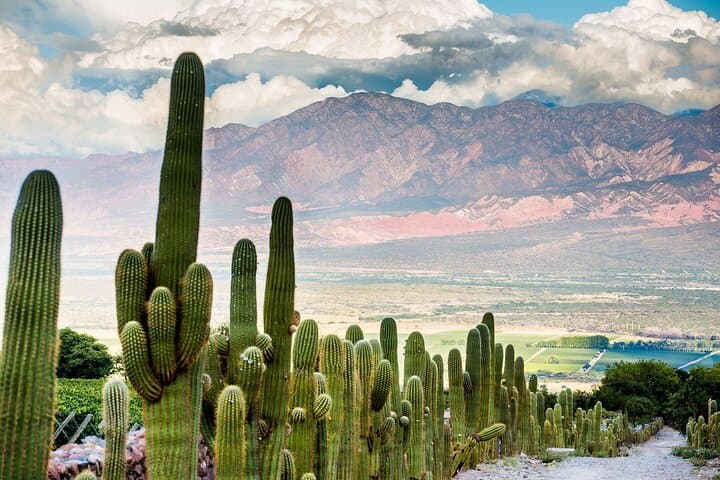
The human story here runs parallel. The Valles Calchaquíes have long been a corridor of indigenous cultures, and Spanish colonial routes later threaded through the same passes. Today the area is defined by small towns, goat-herding, and Cafayate’s white Torrontés vineyards — a local contrast to the rawness of the canyon, and a cultural stop worth planning into your afternoon.
The tour blends short guided hikes with vehicle transfers; expect two or three walking segments of 30–60 minutes each, spread across 4 hours total. Trails are mostly well-worn dirt and packed gravel with occasional loose scree; total walking distance is typically 3–5 km and cumulative elevation change is modest (roughly 100–250 m), but the sun and wind make the effort feel bigger. Guides point out fossil layers, erosion features and the microhabitats tucked into canyon crevices.
Practical tips: start early to avoid midday heat, carry at least 1.5 liters of water, wear sturdy trail shoes and sun protection, and bring a light layer — winds can be sharp in the shade. Photography rewards patience: late afternoon brings warm side-light across the formations, while morning offers long shadows and cooler tones.
If you have limited time in the Calchaquíes, this half-day trip presents a concentrated survey of the quebrada’s best features without demanding technical hiking skills. It’s an ideal introduction to the geology and landscape of northwest Argentina — tangible, tactile and easy to love — but treat the canyon with basic desert respect: pack out what you bring and leave the fossils in the ground.
easy.
4 hours.
Suitable for most people who can walk short sections on uneven ground; minimal sustained climbing required.
Walking segments are short — typically 30–60 minutes each — adding up to about 3–5 km total of easy to moderate footing.
Minimum age is 12 years, and children should be comfortable walking on uneven terrain; confirm with operator when booking.
Guides point out fossil-bearing strata, but removing fossils is prohibited; you can expect to see impressions and layers where fossil fish have been found.
Cafayate sits around 1,600–1,700 m; most visitors acclimate easily, but if you have altitude sensitivity plan a gentler first day.
Facilities are limited; use hotel or town restrooms before departure and be prepared for basic stops in the field.
Yes — selected central hotels are included in pickup and drop-off; if your hotel is outside the area a nearby meeting point will be arranged.
The Valles Calchaquíes were inhabited by pre-Hispanic communities and later threaded by colonial routes; stone layers in the quebrada record environmental shifts over millions of years.
The reserve is fragile: erosion is natural but human trampling can widen paths and damage fossil beds; follow guides’ instructions and carry out trash.
Tangol operates guided outdoor trips and adventures with an emphasis on safety, stewardship, and memorable experiences.
You climb into the van in Cafayate before dawn, the town’s low adobe roofs still cool and quiet, and the road unspools west toward a canyon that seems to have been painted by wind. In an hour the green of vineyard rows gives way to a corridor of red and ochre, where layered cliffs lean in close and the highway slices through sculpted stone. The tour pauses at the Amphitheatre — a round, earthen amphitheater that throws your voice back at you — and at Garganta del Diablo, a narrow slot where the canyon jaws compress into a throat of shadow and light.
You climb into the van in Cafayate before dawn, the town’s low adobe roofs still cool and quiet, and the road unspools west toward a canyon that seems to have been painted by wind. In an hour the green of vineyard rows gives way to a corridor of red and ochre, where layered cliffs lean in close and the highway slices through sculpted stone. The tour pauses at the Amphitheatre — a round, earthen amphitheater that throws your voice back at you — and at Garganta del Diablo, a narrow slot where the canyon jaws compress into a throat of shadow and light.
Quebrada de las Conchas is a geologist’s classroom exposed to the sky: Mesozoic and Cenozoic sediments laid down when this valley was a shallow sea have been tilted and stripped, leaving sandstone, siltstone and conglomerates in dramatic ribs and towers. La Punilla shows delicate honeycomb weathering; Los Castillos reads like a ruined fortress of red stone; La Yesera is a quiet flat where fossil fish have been found, proof that this arid landscape once held water.
The human story here runs parallel. The Valles Calchaquíes have long been a corridor of indigenous cultures, and Spanish colonial routes later threaded through the same passes. Today the area is defined by small towns, goat-herding, and Cafayate’s white Torrontés vineyards — a local contrast to the rawness of the canyon, and a cultural stop worth planning into your afternoon.
The tour blends short guided hikes with vehicle transfers; expect two or three walking segments of 30–60 minutes each, spread across 4 hours total. Trails are mostly well-worn dirt and packed gravel with occasional loose scree; total walking distance is typically 3–5 km and cumulative elevation change is modest (roughly 100–250 m), but the sun and wind make the effort feel bigger. Guides point out fossil layers, erosion features and the microhabitats tucked into canyon crevices.
Practical tips: start early to avoid midday heat, carry at least 1.5 liters of water, wear sturdy trail shoes and sun protection, and bring a light layer — winds can be sharp in the shade. Photography rewards patience: late afternoon brings warm side-light across the formations, while morning offers long shadows and cooler tones.
If you have limited time in the Calchaquíes, this half-day trip presents a concentrated survey of the quebrada’s best features without demanding technical hiking skills. It’s an ideal introduction to the geology and landscape of northwest Argentina — tangible, tactile and easy to love — but treat the canyon with basic desert respect: pack out what you bring and leave the fossils in the ground.