THE ADVENTURE COLLECTIVE® · Independent discovery and booking for outdoor travel

Spend a day chasing Rio’s best outlooks: climb to Pedra do Telagrafo for the famous edge shot, then head to Pedra Bonita for sweeping Tijuca Forest views and paragliders over São Conrado. This guided, private tour pairs short hikes with local flavors and air-conditioned transfers.
Spend a day chasing Rio’s best outlooks: climb to Pedra do Telagrafo for the famous edge shot, then head to Pedra Bonita for sweeping Tijuca Forest views and paragliders over São Conrado. This guided, private tour pairs short hikes with local flavors and air-conditioned transfers.
You arrive before the city fully wakes: sun slicing the horizon, Atlantic light gathering on São Conrado and the surf below. A short drive from the hotel drops you at the forest edge and the guide points up—two compact climbs await, each a different kind of reward. Pedra do Telagrafo offers the viral plate-photo and an uncanny perspective of Rio unfurling beneath your feet; Pedra Bonita opens to a broad sweep of Tijuca Forest, Pico da Tijuca and the bay, where paraglider dots drift like punctuation.
Verified experiences and guided adventures in the surrounding area.
Operated by Nattrip - Tourism, Ecotourism and Adventure in Rio de Janeiro · Rio de Janeiro, Rio de Janeiro
You arrive before the city fully wakes: sun slicing the horizon, Atlantic light gathering on São Conrado and the surf below. A short drive from the hotel drops you at the forest edge and the guide points up—two compact climbs await, each a different kind of reward. Pedra do Telagrafo offers the viral plate-photo and an uncanny perspective of Rio unfurling beneath your feet; Pedra Bonita opens to a broad sweep of Tijuca Forest, Pico da Tijuca and the bay, where paraglider dots drift like punctuation.
These outcrops are young cousins in a very old city. The Tijuca Massif is a remnant of ancient crystalline bedrock shaped by tectonics and millennia of erosion; the steep shoulders were left exposed as the surrounding softer material wore away. Culturally, these rocks have become icons of Rio’s outdoor life—weekend escapes for cariocas and a stage for the city’s food and leisure rituals, from beach afternoons to hillside churrasco. Guides often point out how the forest “breathes” in patches, thick with Atlantic Forest species that survived urban expansion.
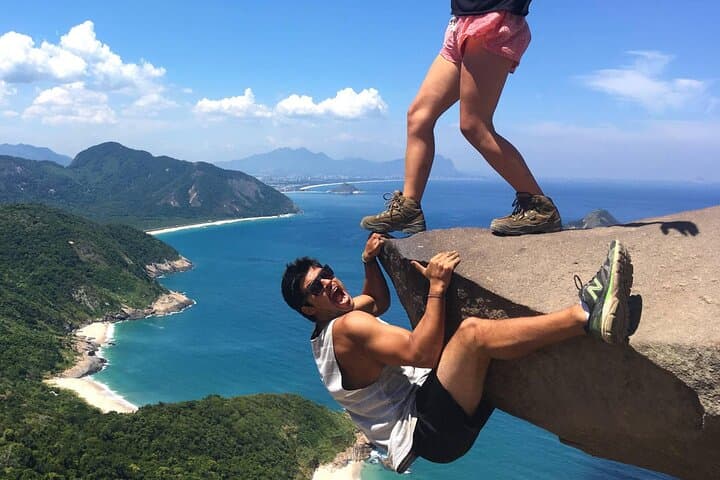
The hikes are straightforward but distinct. Pedra do Telagrafo: about 1.0 km round-trip with roughly 100–150 m of elevation gain on uneven, rocky trail—20–30 minutes of steady walking one way. Pedra Bonita: a gentler 1.5–2.0 km round-trip with about 200–250 m gain, a mix of packed earth and exposed roots, taking 30–45 minutes to ascend. Terrain varies from compact soil to slabs of gneiss; expect steep stair sections and some scrambling near viewpoints. The illusion photo at Telagrafo is staged on a flat boulder—practice positions slowly and heed your guide.
Practical notes: the full day runs about eight hours including air-conditioned transfers and lunch at a local restaurant that serves regional dishes—feijoada-style options and fresh seafood depending on the season. Tours are private and suitable for most fitness levels, but weather can make trails slippery; midweek or early mornings reduce crowds and give cleaner light for photos.
Bring layered clothing, sturdy trail shoes with grip, sun protection and at least 1–2 liters of water. Respect the sites: stay on paths, follow guide instructions near cliff edges and avoid props that damage vegetation. With a clear sky the city opens like a map—Brazil’s mountains, Atlantic, and neighborhoods all rearranged into a single, unforgettable view.
moderate.
6–8 hours (including transfers and lunch).
Suitable for anyone with basic fitness who can handle 20–45 minute uphill walks and short sections of scrambling.
Basic fitness is enough—both hikes are short (20–45 minutes up) but include uneven terrain and some steep sections.
Yes when you follow your guide’s instructions; the illusion image is taken on a flat slab but edges are real, so don’t move without supervision.
Yes—this tour includes lunch at a selected restaurant serving local Brazilian dishes.
Infants must sit on laps; the tour is listed as suitable for all physical levels but check with the operator about age limits and child safety near cliffs.
Early mornings offer the best light and fewer people; avoid midday in summer when heat and humidity peak.
Yes—air-conditioned transfers from your accommodation are included as part of the private tour.
The Tijuca Massif was reforested in the 19th century after agricultural clearing; today it’s one of the largest urban forests in the world and a favored recreation area for cariocas.
Stick to marked trails to protect fragile Atlantic Forest understory and avoid feeding wildlife; local guides support sustainable access and clean-up efforts.
Nattrip - Tourism, Ecotourism and Adventure in Rio de Janeiro operates guided outdoor trips and adventures with an emphasis on safety, stewardship, and memorable experiences.
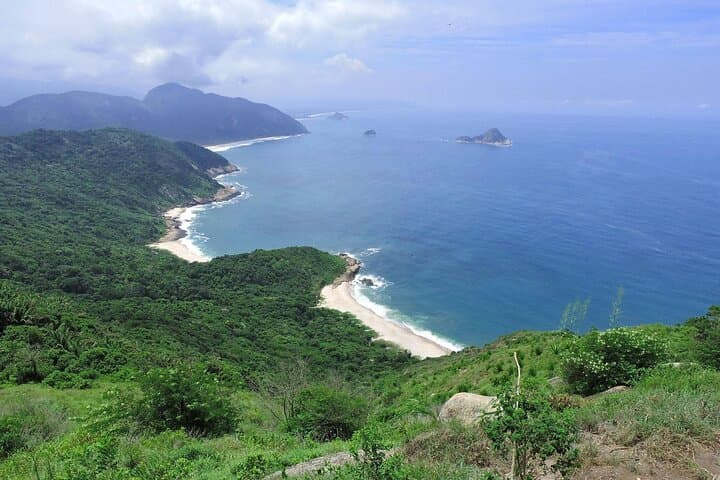
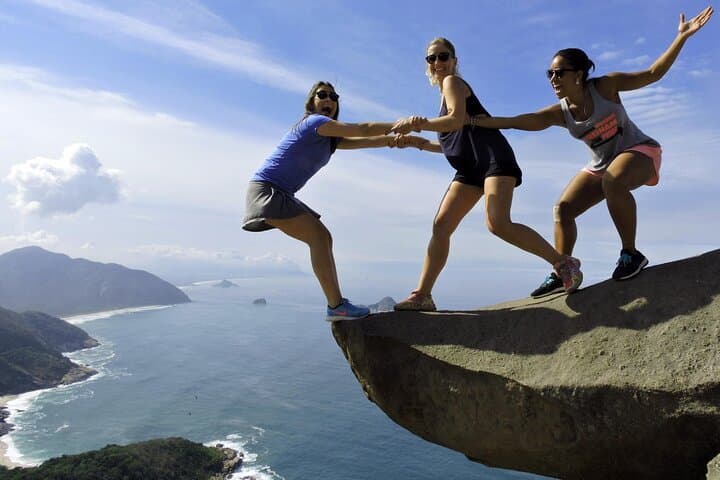

You arrive before the city fully wakes: sun slicing the horizon, Atlantic light gathering on São Conrado and the surf below. A short drive from the hotel drops you at the forest edge and the guide points up—two compact climbs await, each a different kind of reward. Pedra do Telagrafo offers the viral plate-photo and an uncanny perspective of Rio unfurling beneath your feet; Pedra Bonita opens to a broad sweep of Tijuca Forest, Pico da Tijuca and the bay, where paraglider dots drift like punctuation.
You arrive before the city fully wakes: sun slicing the horizon, Atlantic light gathering on São Conrado and the surf below. A short drive from the hotel drops you at the forest edge and the guide points up—two compact climbs await, each a different kind of reward. Pedra do Telagrafo offers the viral plate-photo and an uncanny perspective of Rio unfurling beneath your feet; Pedra Bonita opens to a broad sweep of Tijuca Forest, Pico da Tijuca and the bay, where paraglider dots drift like punctuation.
These outcrops are young cousins in a very old city. The Tijuca Massif is a remnant of ancient crystalline bedrock shaped by tectonics and millennia of erosion; the steep shoulders were left exposed as the surrounding softer material wore away. Culturally, these rocks have become icons of Rio’s outdoor life—weekend escapes for cariocas and a stage for the city’s food and leisure rituals, from beach afternoons to hillside churrasco. Guides often point out how the forest “breathes” in patches, thick with Atlantic Forest species that survived urban expansion.
The hikes are straightforward but distinct. Pedra do Telagrafo: about 1.0 km round-trip with roughly 100–150 m of elevation gain on uneven, rocky trail—20–30 minutes of steady walking one way. Pedra Bonita: a gentler 1.5–2.0 km round-trip with about 200–250 m gain, a mix of packed earth and exposed roots, taking 30–45 minutes to ascend. Terrain varies from compact soil to slabs of gneiss; expect steep stair sections and some scrambling near viewpoints. The illusion photo at Telagrafo is staged on a flat boulder—practice positions slowly and heed your guide.
Practical notes: the full day runs about eight hours including air-conditioned transfers and lunch at a local restaurant that serves regional dishes—feijoada-style options and fresh seafood depending on the season. Tours are private and suitable for most fitness levels, but weather can make trails slippery; midweek or early mornings reduce crowds and give cleaner light for photos.
Bring layered clothing, sturdy trail shoes with grip, sun protection and at least 1–2 liters of water. Respect the sites: stay on paths, follow guide instructions near cliff edges and avoid props that damage vegetation. With a clear sky the city opens like a map—Brazil’s mountains, Atlantic, and neighborhoods all rearranged into a single, unforgettable view.