THE ADVENTURE COLLECTIVE® · Independent discovery and booking for outdoor travel

A private day hike from Chania that walks the 8 km Imbros Gorge — narrow limestone walls, a striking stone arch, and shaded trails suitable for families. This guided transfer-and-hike pairs local insight with practical logistics for a relaxed Cretan adventure.
A private day hike from Chania that walks the 8 km Imbros Gorge — narrow limestone walls, a striking stone arch, and shaded trails suitable for families. This guided transfer-and-hike pairs local insight with practical logistics for a relaxed Cretan adventure.
You step off the minibus at the lip of Imbros Gorge and the world narrows to stone and sky. The trail slips down into a cleft of gray limestone, trees leaning in to make a green roof, and the air takes on that dry, mineral coolness that makes rocks smell like memory. For the next few hours the gorge sets the pace: deliberate, attentive, a place where even casual steps are part of the scenery.
Verified experiences and guided adventures in the surrounding area.
Operated by Sailing Exploring & Driving Creta · Imbros / Komitades, Crete
You step off the minibus at the lip of Imbros Gorge and the world narrows to stone and sky. The trail slips down into a cleft of gray limestone, trees leaning in to make a green roof, and the air takes on that dry, mineral coolness that makes rocks smell like memory. For the next few hours the gorge sets the pace: deliberate, attentive, a place where even casual steps are part of the scenery.
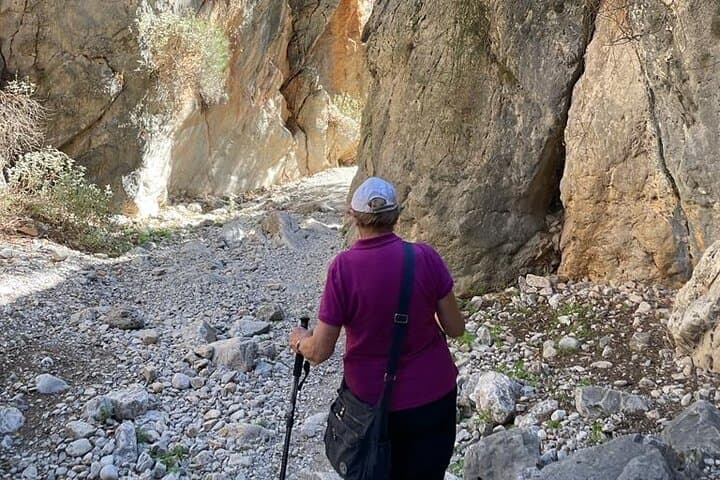
Imbros is short by Cretan standards — roughly 8 km end-to-end — but it moves through several geological moods. The channel cuts through layered limestone and fractured marl; at one point the canyon squeezes to under two meters and a natural stone arch peeks over the path. That arch, and the gravelly scree underfoot, tell a story of tectonic lifts and water that once carved the rock long before tourism arrived. Villages bookend the gorge: the small settlement of Imbros at the north entrance and Komitades where the trail meets the road and your transport waits.
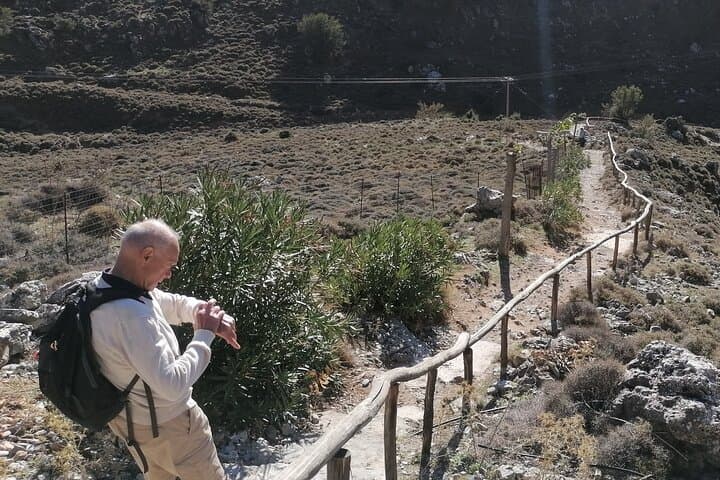
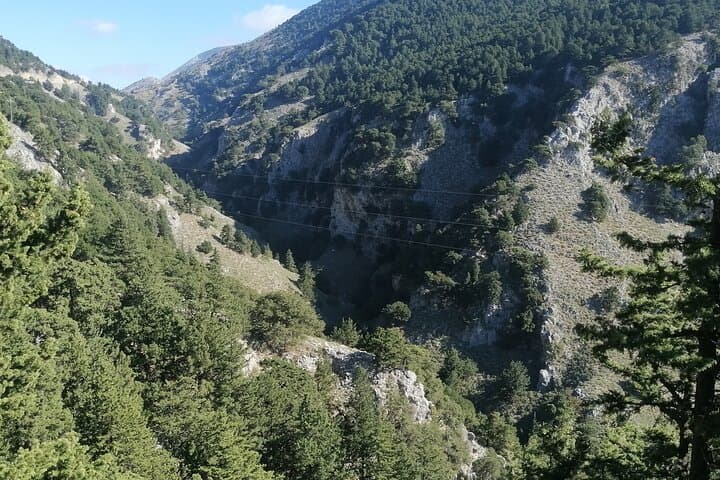
The gorge has been part of local life for centuries — a seasonal route for shepherds and a natural shelter during Ottoman and wartime disruptions. Today the path is an invitation to both photographers and families; it’s shady for much of the way, with stands of plane and olive breaking the light. You’ll pass dry riverbeds and patches of endemic shrubs, and on the return there are dramatic viewpoints over the white-stone walls that drop toward the Libyan Sea.
This private tour from Chania packages the walk with door-to-door pickup, air-conditioned transport and a small snack — and it adds a buffer for slow walkers or photo stops. Expect the hiking section itself to take about 2.5–3.5 hours one way depending on pace, with the full outing (including transfer time and a seaside stop) running 5–7 hours.
Practical: the route is never technically difficult but the surface is stony and uneven. Sturdy trail shoes with good tread are recommended over running shoes if you plan to move quickly. Trekking poles are offered by the operator and are useful on the steeper scree sections and long descents. Bring at least 1.5 liters of water, sun protection and layered clothing — mornings in the shade can be cool, but the road and final village are exposed.
Timing matters: start early in summer to avoid heat, and check transport windows if you’re arriving by cruise ship or staying in central Chania. Leave time at Komitades to sip a cold drink and watch the light shift across the limestone before the van returns. Imbros is not about conquering distance; it’s about slowing down enough to read the geology, listen for rockfall, and let the gorge do the guiding.
moderate.
5–7 hours (including transfers).
Suitable for people with basic fitness who can walk 3–4 hours on uneven ground; some downhill endurance required.
The walking section is roughly 8 km one-way; expect about 2.5–3.5 hours of hiking depending on pace and stops.
Yes — the path is not technically hard and the tour markets itself as family-friendly, though parents should watch children on narrow or loose sections.
Trekking poles are helpful for stability; the tour provides poles if you don’t have your own.
Private transportation from Chania-region pickup points, an English-speaking guide, bottled water, a cold snack and trekking poles are included.
Yes — the supplier offers pickup from accommodation or cruise terminals but requires detailed pickup information at booking.
The tour will cancel in unsafe conditions; their policy allows a full refund if cancelled at least 24 hours before departure due to weather.
Imbros has long served as a pastoral corridor and wartime refuge; the villages around the gorge retain traditional Cretan architecture and farming practices.
Stick to the marked trail to avoid trampling fragile shrubs; local guides support low-impact visits and encourage carrying out waste.
Sailing Exploring & Driving Creta operates guided outdoor trips and adventures with an emphasis on safety, stewardship, and memorable experiences.
You step off the minibus at the lip of Imbros Gorge and the world narrows to stone and sky. The trail slips down into a cleft of gray limestone, trees leaning in to make a green roof, and the air takes on that dry, mineral coolness that makes rocks smell like memory. For the next few hours the gorge sets the pace: deliberate, attentive, a place where even casual steps are part of the scenery.
You step off the minibus at the lip of Imbros Gorge and the world narrows to stone and sky. The trail slips down into a cleft of gray limestone, trees leaning in to make a green roof, and the air takes on that dry, mineral coolness that makes rocks smell like memory. For the next few hours the gorge sets the pace: deliberate, attentive, a place where even casual steps are part of the scenery.
Imbros is short by Cretan standards — roughly 8 km end-to-end — but it moves through several geological moods. The channel cuts through layered limestone and fractured marl; at one point the canyon squeezes to under two meters and a natural stone arch peeks over the path. That arch, and the gravelly scree underfoot, tell a story of tectonic lifts and water that once carved the rock long before tourism arrived. Villages bookend the gorge: the small settlement of Imbros at the north entrance and Komitades where the trail meets the road and your transport waits.
The gorge has been part of local life for centuries — a seasonal route for shepherds and a natural shelter during Ottoman and wartime disruptions. Today the path is an invitation to both photographers and families; it’s shady for much of the way, with stands of plane and olive breaking the light. You’ll pass dry riverbeds and patches of endemic shrubs, and on the return there are dramatic viewpoints over the white-stone walls that drop toward the Libyan Sea.
This private tour from Chania packages the walk with door-to-door pickup, air-conditioned transport and a small snack — and it adds a buffer for slow walkers or photo stops. Expect the hiking section itself to take about 2.5–3.5 hours one way depending on pace, with the full outing (including transfer time and a seaside stop) running 5–7 hours.
Practical: the route is never technically difficult but the surface is stony and uneven. Sturdy trail shoes with good tread are recommended over running shoes if you plan to move quickly. Trekking poles are offered by the operator and are useful on the steeper scree sections and long descents. Bring at least 1.5 liters of water, sun protection and layered clothing — mornings in the shade can be cool, but the road and final village are exposed.
Timing matters: start early in summer to avoid heat, and check transport windows if you’re arriving by cruise ship or staying in central Chania. Leave time at Komitades to sip a cold drink and watch the light shift across the limestone before the van returns. Imbros is not about conquering distance; it’s about slowing down enough to read the geology, listen for rockfall, and let the gorge do the guiding.