THE ADVENTURE COLLECTIVE® · Independent discovery and booking for outdoor travel

Spend a day hiking Table Mountain’s front face, standing on Maclear’s Beacon, then descend to taste Cape Malay culture in Bo‑Kaap. This private full‑day tour blends rugged mountain terrain, panoramic views and a concise city history lesson.
Spend a day hiking Table Mountain’s front face, standing on Maclear’s Beacon, then descend to taste Cape Malay culture in Bo‑Kaap. This private full‑day tour blends rugged mountain terrain, panoramic views and a concise city history lesson.
The day starts before the city wakes: an air‑conditioned vehicle pulls away from the waterfront and the flat crown of Table Mountain fills the windshield like an approaching wall. Your guide eases you into the granite amphitheatre—steep slabs, narrow ravines and a scent of sun‑baked fynbos. The route climbs a deep front‑face ravine, the rock underfoot changing from loose grit to solid sandstone as the city drops away and the Atlantic begins to glitter.
Verified experiences and guided adventures in the surrounding area.
Operated by ILIOS Travel · Cape Town, Western Cape
The day starts before the city wakes: an air‑conditioned vehicle pulls away from the waterfront and the flat crown of Table Mountain fills the windshield like an approaching wall. Your guide eases you into the granite amphitheatre—steep slabs, narrow ravines and a scent of sun‑baked fynbos. The route climbs a deep front‑face ravine, the rock underfoot changing from loose grit to solid sandstone as the city drops away and the Atlantic begins to glitter.
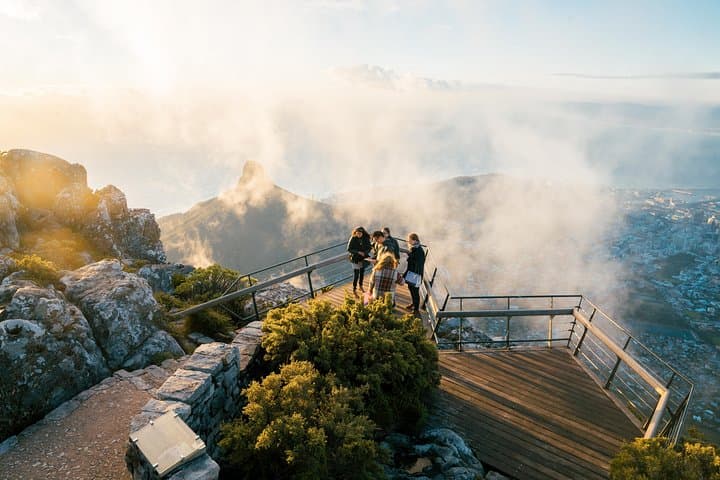
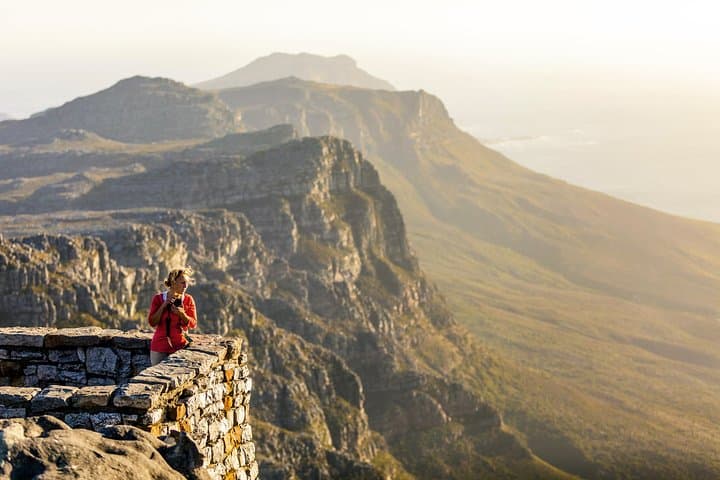
On the plateau the world flips: cliffs turn to a broad, wind‑swept table and the pace slows to take in Maclear’s Beacon, the mountain’s high point at roughly 1,086 metres. From here you have a panoramic argument between ocean and city—Robben Island sitting like a coin in Table Bay, the sculpted curve of Cape Town fanning beneath you. The guide points out geological lines—millions of years of sediment folded into the quartzitic sandstone—and flags the plants that dominate these slopes: small, fire‑adapted fynbos species that hold soil and color the rocks.
If the cable car is running you’ll descend in minutes; if not, the return walk is adapted to fitness levels and can include a gentler traverse toward the eastern rim. Either way, the afternoon softens into town: a relaxed transfer to Bo‑Kaap, its painted houses announcing the history of the Cape Malay community. Over an optional lunch you’ll hear stories of sailors, spice routes and the slave trade that shaped Cape Town’s culture—context that sits alongside a short walk through the Company Gardens and a visit to the Slave Lodge, where exhibits unpack the human history behind the city’s cosmopolitan face.
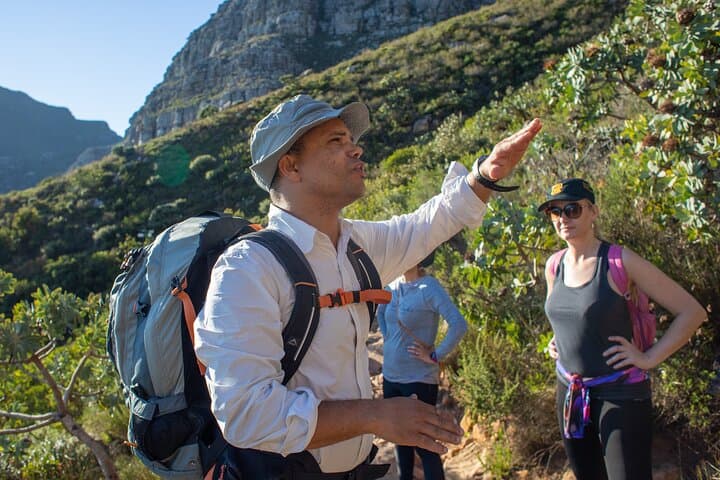
Practicalities are straightforward: this private, full‑day itinerary runs about nine hours, with roughly 6–10 km of hiking and up to 800–900 m of ascent on rough, often exposed terrain. Weather governs the mountain—wind and visibility can change the plan—so flexibility matters. Your guide supplies local knowledge: the best lines up the ravine, where to pause for light and where the rock takes a bite out of your boots. Bring layers, sun protection, and at least 2–3 liters of water; expect a mix of steep scrambling, well‑worn steps and flat, windblown sections on the top. The payoff is clear—intimate mountain time and a compact city tour that stitches geology, history and culture into one accessible Cape Town day.
moderate.
9 hours.
Moderate fitness: comfortable on sustained uphill hiking and short scrambles, able to walk 6–10 km and handle 800–900 m of ascent.
If the cable car isn’t operating the guide will adapt the route based on your fitness—expect a longer descent on foot or an alternate trail that’s less exposed.
The route is moderate: steep sections and short scrambles, 6–10 km overall and up to ~900 m total ascent; basic stamina and stable footing are required.
Snacks are included, but lunch in Bo‑Kaap is at your own expense—your guide will recommend local eateries.
Infant seats are available in the vehicle, but the hike requires a moderate fitness level—check with the operator about child suitability.
Entrance fees for Table Mountain are included in the tour; the Slave Lodge requires no extra ticket for the guided visit listed in the itinerary.
Keep distance from dassies and any baboons; do not feed wildlife and secure food during stops to avoid attracting animals.
Table Mountain’s sandstone was laid down over 450 million years ago; Bo‑Kaap reflects Cape Malay culture descended from slaves and traders who shaped the city’s cuisine and language.
The plateau hosts vulnerable fynbos; stick to trails to limit erosion and avoid introducing invasive plant seeds—local guides often brief groups on low‑impact behavior.
ILIOS Travel operates guided outdoor trips and adventures with an emphasis on safety, stewardship, and memorable experiences.
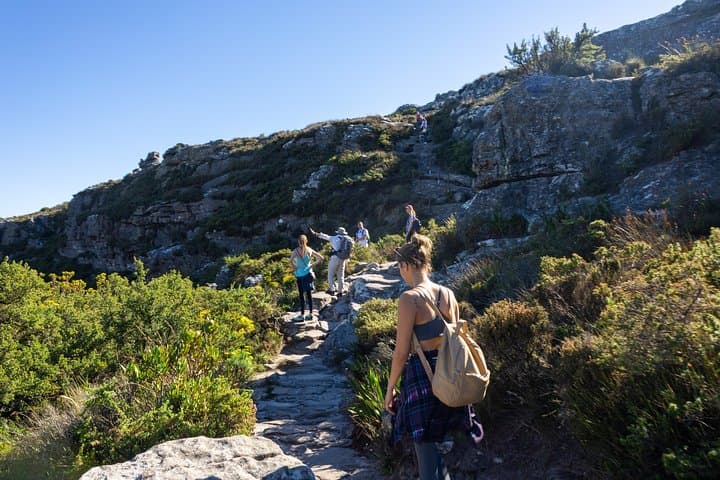
The day starts before the city wakes: an air‑conditioned vehicle pulls away from the waterfront and the flat crown of Table Mountain fills the windshield like an approaching wall. Your guide eases you into the granite amphitheatre—steep slabs, narrow ravines and a scent of sun‑baked fynbos. The route climbs a deep front‑face ravine, the rock underfoot changing from loose grit to solid sandstone as the city drops away and the Atlantic begins to glitter.
The day starts before the city wakes: an air‑conditioned vehicle pulls away from the waterfront and the flat crown of Table Mountain fills the windshield like an approaching wall. Your guide eases you into the granite amphitheatre—steep slabs, narrow ravines and a scent of sun‑baked fynbos. The route climbs a deep front‑face ravine, the rock underfoot changing from loose grit to solid sandstone as the city drops away and the Atlantic begins to glitter.
On the plateau the world flips: cliffs turn to a broad, wind‑swept table and the pace slows to take in Maclear’s Beacon, the mountain’s high point at roughly 1,086 metres. From here you have a panoramic argument between ocean and city—Robben Island sitting like a coin in Table Bay, the sculpted curve of Cape Town fanning beneath you. The guide points out geological lines—millions of years of sediment folded into the quartzitic sandstone—and flags the plants that dominate these slopes: small, fire‑adapted fynbos species that hold soil and color the rocks.
If the cable car is running you’ll descend in minutes; if not, the return walk is adapted to fitness levels and can include a gentler traverse toward the eastern rim. Either way, the afternoon softens into town: a relaxed transfer to Bo‑Kaap, its painted houses announcing the history of the Cape Malay community. Over an optional lunch you’ll hear stories of sailors, spice routes and the slave trade that shaped Cape Town’s culture—context that sits alongside a short walk through the Company Gardens and a visit to the Slave Lodge, where exhibits unpack the human history behind the city’s cosmopolitan face.
Practicalities are straightforward: this private, full‑day itinerary runs about nine hours, with roughly 6–10 km of hiking and up to 800–900 m of ascent on rough, often exposed terrain. Weather governs the mountain—wind and visibility can change the plan—so flexibility matters. Your guide supplies local knowledge: the best lines up the ravine, where to pause for light and where the rock takes a bite out of your boots. Bring layers, sun protection, and at least 2–3 liters of water; expect a mix of steep scrambling, well‑worn steps and flat, windblown sections on the top. The payoff is clear—intimate mountain time and a compact city tour that stitches geology, history and culture into one accessible Cape Town day.