THE ADVENTURE COLLECTIVE® · Independent discovery and booking for outdoor travel

Two days of volcanic ridgelines, crater rims and cliff-carved gorges just outside Nairobi. Hike Mount Longonot’s crater loop, sleep under canvas, then bike and walk through Hell’s Gate for close-up Rift Valley scenery and wildlife.
Two days of volcanic ridgelines, crater rims and cliff-carved gorges just outside Nairobi. Hike Mount Longonot’s crater loop, sleep under canvas, then bike and walk through Hell’s Gate for close-up Rift Valley scenery and wildlife.
You start before dawn, the minibus threading out of Nairobi while the Rift Valley light lifts like a hand on the horizon. By the time the camp cook has set a kettle on the coals, Mount Longonot’s black silhouette has resolved into a clear cone above the valley floor. The day’s first climb begins at a steady, steep pitch — the mountain doesn’t ask for finesse, only steady feet and an appetite for rim-to-crater views.
Verified experiences and guided adventures in the surrounding area.
Operated by Gracepatt Ecotours Kenya · Naivasha, Nakuru County
You start before dawn, the minibus threading out of Nairobi while the Rift Valley light lifts like a hand on the horizon. By the time the camp cook has set a kettle on the coals, Mount Longonot’s black silhouette has resolved into a clear cone above the valley floor. The day’s first climb begins at a steady, steep pitch — the mountain doesn’t ask for finesse, only steady feet and an appetite for rim-to-crater views.
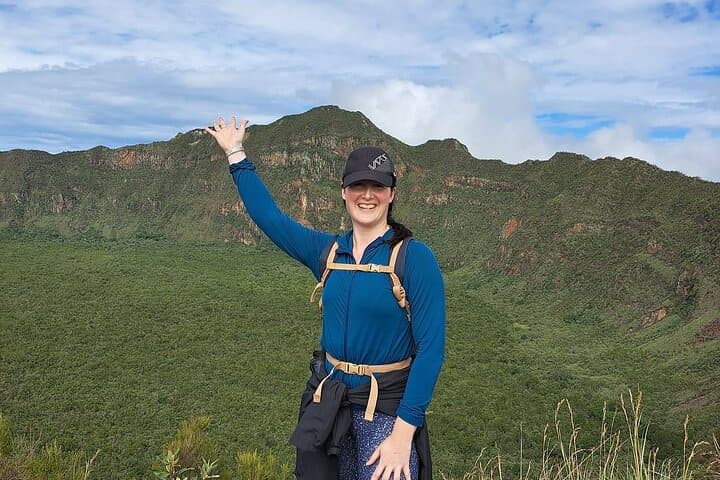
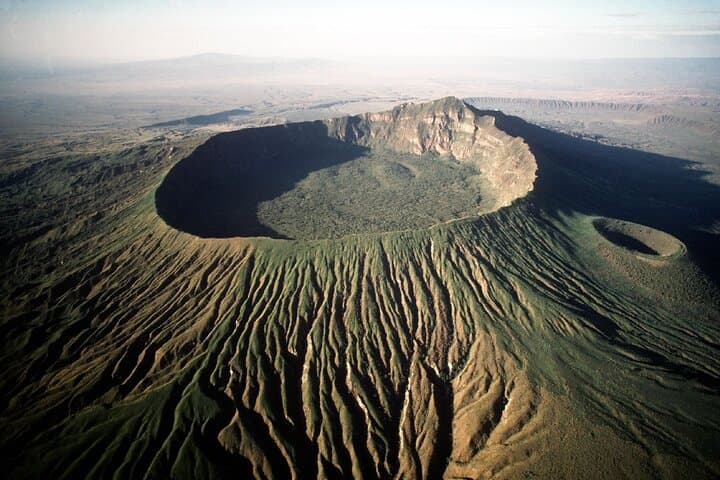
Mount Longonot (2,886 m) is a young volcanic form in geological terms: a crater rim carved by collapse and time, with a dense stand of forest clinging to the hollowed floor. The summit rim circuit is an exposed loop of ridgeline and switchbacks roughly 8–10 km that rewards the effort with sweeping views across the Great Rift Valley to Lake Naivasha and the Loita Plains. Wildlife here is opportunistic; buffalo, eland and Grant’s gazelles graze lower slopes, while zebras and giraffe are often visible on the plains beyond.
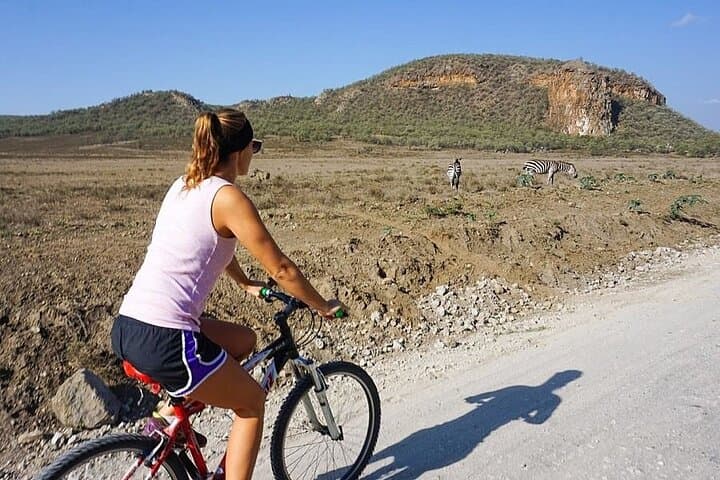
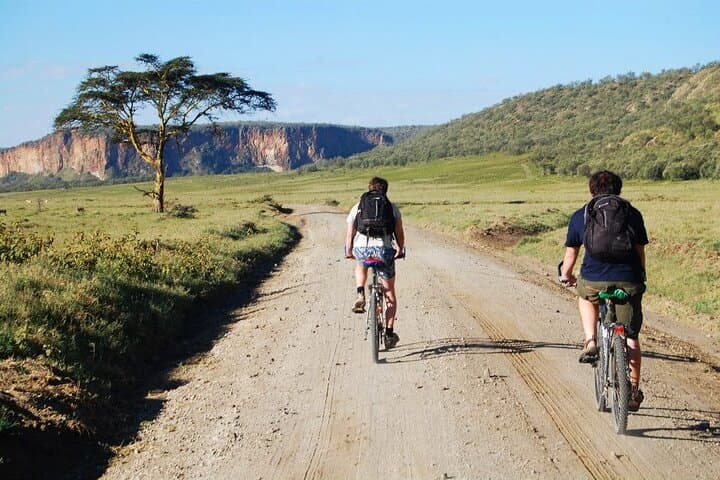
Day two switches pace at Hell’s Gate National Park. Where Longonot makes you climb, Hell’s Gate invites movement — a landscape of sculpted cliffs, gorges and fumaroles that inspired the park’s name. The itinerary pairs a 7 km cycle through open veld with a 3-hour walking safari through narrow gorges and past hot springs. Rangers post and clearly marked trails make the route accessible, and the limestone cliffs frame dramatic photo angles against the blue Rift Valley sky.
Both parks bear human histories: Longonot’s slopes are crossed by Maasai and Kikuyu grazing routes, and Hell’s Gate’s geothermal features were landmarks for local communities long before Kenyan independence. Conservation is active here — the parks balance tourism with habitat protection, and park fees contribute to wildlife management and community projects.
Practicalities matter: bring a daypack with 2–3 liters of water, a wind layer, and solid hiking shoes with good grip for loose volcanic scree. Start early to avoid midday heat and to catch wildlife in low light. Expect steep climbs on day one and mixed terrain on day two — cycling skills are helpful but not essential; operators provide bikes and support vehicle pickup points.
This two-day loop is compact but complete: a dawn climb that drills into the Rift’s geology, an overnight in a permanent tented camp, and a second day of active exploration through Hell’s Gate’s gorges. It’s a trip that pairs physical effort with plain, wide-open African scenery — practical, immediate, and rewarding for hikers who want both viewpoints and wildlife without a week-long commitment.
moderate.
2 days (approx. 8–10 hours hiking/cycling total).
Suitable for travelers in good general fitness who can handle sustained uphill hiking and a few hours of cycling or walking on uneven terrain
Moderate fitness is enough — expect a steep 600–800 m ascent overall and 8–10 km round-trip on rough trails; take breaks and move at your own pace.
Yes — the tour supplies bikes and basic helmets; guides will show the route and a support vehicle follows if you need a rest.
Yes — one night in a permanent tented camp with basic bedding; meals and park/camping fees are included in the tour price.
Large predators like lion and leopard are present in the region but sightings are uncommon; the itinerary focuses on landscape, plains species and easy-access game viewing.
Dry months (June–September and January–February) offer clearer skies and easier trails, though the parks are accessible year-round with wetter trails during rainy seasons.
Park entrance fees and camping fees are included; local guides/drivers provided by the operator lead the hike and handle logistics.
Mount Longonot and the surrounding Rift landscape have long been part of Maasai and Kikuyu grazing and travel routes; colonial-era roads later opened the parks to organized tourism.
Entrance and camping fees contribute to park management and community programs; stick to trails and avoid feeding wildlife to reduce human-wildlife conflict.
Gracepatt Ecotours Kenya operates guided outdoor trips and adventures with an emphasis on safety, stewardship, and memorable experiences.
You start before dawn, the minibus threading out of Nairobi while the Rift Valley light lifts like a hand on the horizon. By the time the camp cook has set a kettle on the coals, Mount Longonot’s black silhouette has resolved into a clear cone above the valley floor. The day’s first climb begins at a steady, steep pitch — the mountain doesn’t ask for finesse, only steady feet and an appetite for rim-to-crater views.
You start before dawn, the minibus threading out of Nairobi while the Rift Valley light lifts like a hand on the horizon. By the time the camp cook has set a kettle on the coals, Mount Longonot’s black silhouette has resolved into a clear cone above the valley floor. The day’s first climb begins at a steady, steep pitch — the mountain doesn’t ask for finesse, only steady feet and an appetite for rim-to-crater views.
Mount Longonot (2,886 m) is a young volcanic form in geological terms: a crater rim carved by collapse and time, with a dense stand of forest clinging to the hollowed floor. The summit rim circuit is an exposed loop of ridgeline and switchbacks roughly 8–10 km that rewards the effort with sweeping views across the Great Rift Valley to Lake Naivasha and the Loita Plains. Wildlife here is opportunistic; buffalo, eland and Grant’s gazelles graze lower slopes, while zebras and giraffe are often visible on the plains beyond.
Day two switches pace at Hell’s Gate National Park. Where Longonot makes you climb, Hell’s Gate invites movement — a landscape of sculpted cliffs, gorges and fumaroles that inspired the park’s name. The itinerary pairs a 7 km cycle through open veld with a 3-hour walking safari through narrow gorges and past hot springs. Rangers post and clearly marked trails make the route accessible, and the limestone cliffs frame dramatic photo angles against the blue Rift Valley sky.
Both parks bear human histories: Longonot’s slopes are crossed by Maasai and Kikuyu grazing routes, and Hell’s Gate’s geothermal features were landmarks for local communities long before Kenyan independence. Conservation is active here — the parks balance tourism with habitat protection, and park fees contribute to wildlife management and community projects.
Practicalities matter: bring a daypack with 2–3 liters of water, a wind layer, and solid hiking shoes with good grip for loose volcanic scree. Start early to avoid midday heat and to catch wildlife in low light. Expect steep climbs on day one and mixed terrain on day two — cycling skills are helpful but not essential; operators provide bikes and support vehicle pickup points.
This two-day loop is compact but complete: a dawn climb that drills into the Rift’s geology, an overnight in a permanent tented camp, and a second day of active exploration through Hell’s Gate’s gorges. It’s a trip that pairs physical effort with plain, wide-open African scenery — practical, immediate, and rewarding for hikers who want both viewpoints and wildlife without a week-long commitment.