THE ADVENTURE COLLECTIVE® · Independent discovery and booking for outdoor travel

Explore Los Haitises by foot and paddle: hike under tropical canopy, visit Taino caves, then kayak through mangrove tunnels and karst islets. A six-hour trip that blends geology, wildlife, and history.
Explore Los Haitises by foot and paddle: hike under tropical canopy, visit Taino caves, then kayak through mangrove tunnels and karst islets. A six-hour trip that blends geology, wildlife, and history.
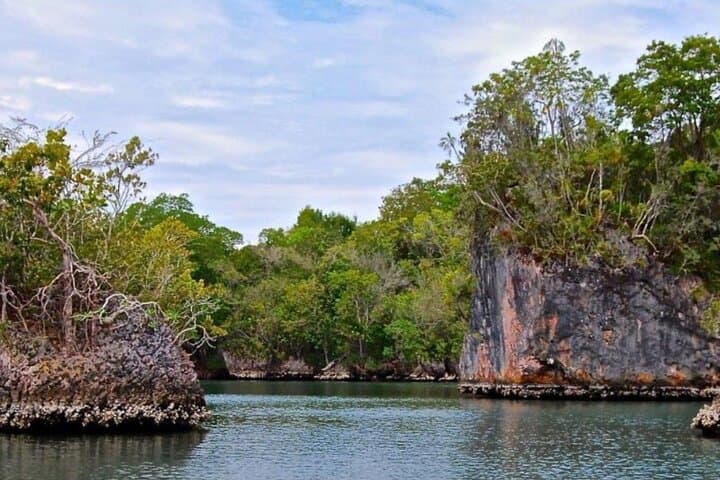
You push off from a narrow beach and the water clamps around your kayak like a cool sleeve. Mangrove branches stitch a ceiling above you; light sifts through in green, leaf-shaped stamps. The guide slips ahead, pointing at a black slit in the limestone where Taino hands left petroglyphs centuries ago. Footsteps on a compacted trail later, and you can feel the forest breathe—humid, alive, and keen to reveal both the small (herons frozen on roots) and the large (limestone domes rising from the sea as if sculpted by patient waves).
Verified experiences and guided adventures in the surrounding area.
Operated by Parque Nacional Los Haitises · Sabana de la Mar, Hato Mayor
You push off from a narrow beach and the water clamps around your kayak like a cool sleeve. Mangrove branches stitch a ceiling above you; light sifts through in green, leaf-shaped stamps. The guide slips ahead, pointing at a black slit in the limestone where Taino hands left petroglyphs centuries ago. Footsteps on a compacted trail later, and you can feel the forest breathe—humid, alive, and keen to reveal both the small (herons frozen on roots) and the large (limestone domes rising from the sea as if sculpted by patient waves).
Los Haitises National Park is one of the Dominican Republic’s rawer coastal wilds: a jumble of karst islands, mangrove-lined estuaries, and hidden caves. Geologically it’s a story of soluble limestone—ancient reef and sediment laid down and then hollowed by water—so the park reads like a cliffside novel of sinkholes, caverns, and bowl-shaped islets. Culturally the area carries Taino echoes; in the caves, the petroglyphs and pictographs speak of a people who navigated these waters and left marks where they sheltered and honored the sea.
The route of this combined hike-and-kayak tour threads those elements together. You hike beneath a humid canopy where roots grab the trail and the air tastes faintly of salt; you slip into small caves ringed with fossilized shells; then you launch into a tangle of mangrove tunnels where currents insist you pay attention to steering. Wildlife is a constant companion—pelicans scan the surface, ibis probe the mud, and bright kingfishers flash like punctuation.
Practicalities are straightforward: the experience runs about six hours and departs from the Parador Los Haitises near Sabana de la Mar. Expect flat, easy trail walking punctuated by short, occasionally slick cave approaches; kayaks are stable sit-on-top models suited to sheltered water. Guides handle logistics and background on ecology and pre-Columbian history, and trips typically welcome most fitness levels.
Plan for sun, humidity, and mosquitoes. Bring reef-safe sunscreen and a quick-dry change of clothes, plus waterproof storage for your phone. Launch and landing are gentle but the mangrove tunnels require basic paddle control—if you can make steady, short strokes and brace when needed, you’ll be comfortable.
This day in Los Haitises is equal parts geology lesson, wildlife watch, and slow-motion sea voyage. It’s ideal for anyone who wants to move between feet-on-earth and paddle-on-water without sacrificing context: every bend in the channel or opening in the cave comes with a piece of history or a geological explanation. Move deliberately, listen closely, and let the place set its own tempo.
easy.
5–6 hours.
Suitable for most active travelers — basic walking on compact trails and sustained paddling for several hours.
The full experience runs about six hours, typically departing from Parador Los Haitises and returning there.
No — guides use stable sit-on-top kayaks and give basic instruction; reasonable comfort with paddling helps but beginners are welcome.
Guides assess cave access for safety; caves visited are shallow and historical with manageable approaches, but they can be slippery and low-ceilinged in places.
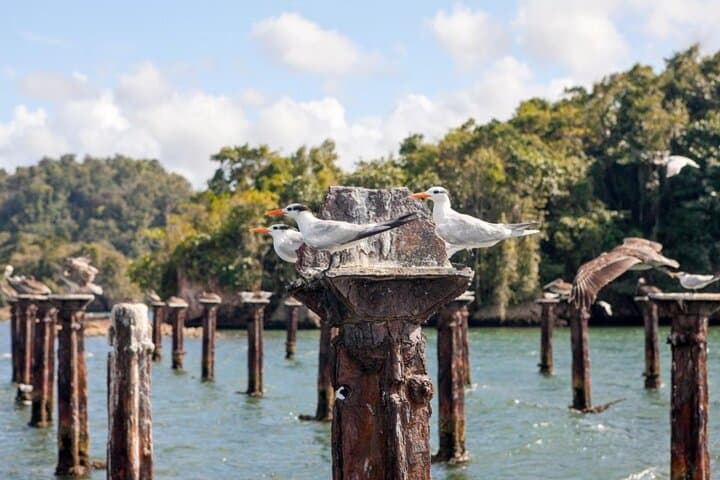
Expect coastal birds like pelicans, herons, egrets, and kingfishers; small mammals and marine life are present but more elusive.
The tour listing notes wheelchair accessibility for certain parts, but cave and kayak access require mobility—contact the operator to confirm specific needs.
Bring at least 1–2 liters of water, snacks, and any personal medication; some tours include a light snack but confirm when booking.
Los Haitises contains important Taino archaeological sites—caves with petroglyphs and pictographs mark pre-Columbian habitation and ritual activity.
The park is protected but sensitive—stick to marked trails, avoid touching petroglyphs, and use reef-safe products to reduce impacts on marine and mangrove ecosystems.
Parque Nacional Los Haitises operates guided outdoor trips and adventures with an emphasis on safety, stewardship, and memorable experiences.

You push off from a narrow beach and the water clamps around your kayak like a cool sleeve. Mangrove branches stitch a ceiling above you; light sifts through in green, leaf-shaped stamps. The guide slips ahead, pointing at a black slit in the limestone where Taino hands left petroglyphs centuries ago. Footsteps on a compacted trail later, and you can feel the forest breathe—humid, alive, and keen to reveal both the small (herons frozen on roots) and the large (limestone domes rising from the sea as if sculpted by patient waves).
You push off from a narrow beach and the water clamps around your kayak like a cool sleeve. Mangrove branches stitch a ceiling above you; light sifts through in green, leaf-shaped stamps. The guide slips ahead, pointing at a black slit in the limestone where Taino hands left petroglyphs centuries ago. Footsteps on a compacted trail later, and you can feel the forest breathe—humid, alive, and keen to reveal both the small (herons frozen on roots) and the large (limestone domes rising from the sea as if sculpted by patient waves).
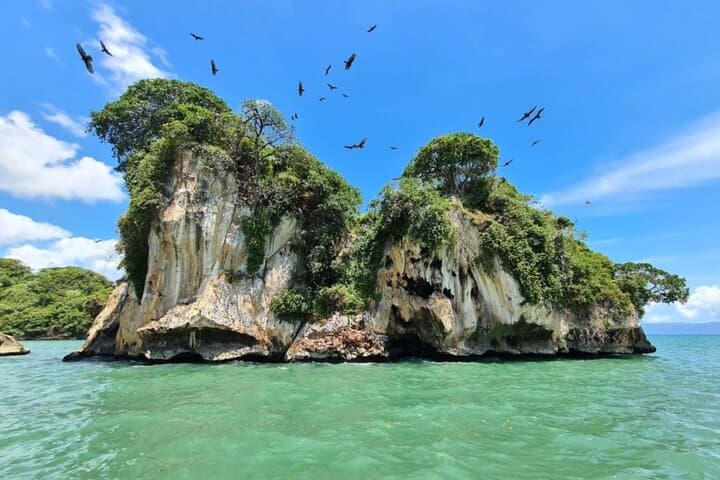
Los Haitises National Park is one of the Dominican Republic’s rawer coastal wilds: a jumble of karst islands, mangrove-lined estuaries, and hidden caves. Geologically it’s a story of soluble limestone—ancient reef and sediment laid down and then hollowed by water—so the park reads like a cliffside novel of sinkholes, caverns, and bowl-shaped islets. Culturally the area carries Taino echoes; in the caves, the petroglyphs and pictographs speak of a people who navigated these waters and left marks where they sheltered and honored the sea.
The route of this combined hike-and-kayak tour threads those elements together. You hike beneath a humid canopy where roots grab the trail and the air tastes faintly of salt; you slip into small caves ringed with fossilized shells; then you launch into a tangle of mangrove tunnels where currents insist you pay attention to steering. Wildlife is a constant companion—pelicans scan the surface, ibis probe the mud, and bright kingfishers flash like punctuation.
Practicalities are straightforward: the experience runs about six hours and departs from the Parador Los Haitises near Sabana de la Mar. Expect flat, easy trail walking punctuated by short, occasionally slick cave approaches; kayaks are stable sit-on-top models suited to sheltered water. Guides handle logistics and background on ecology and pre-Columbian history, and trips typically welcome most fitness levels.
Plan for sun, humidity, and mosquitoes. Bring reef-safe sunscreen and a quick-dry change of clothes, plus waterproof storage for your phone. Launch and landing are gentle but the mangrove tunnels require basic paddle control—if you can make steady, short strokes and brace when needed, you’ll be comfortable.
This day in Los Haitises is equal parts geology lesson, wildlife watch, and slow-motion sea voyage. It’s ideal for anyone who wants to move between feet-on-earth and paddle-on-water without sacrificing context: every bend in the channel or opening in the cave comes with a piece of history or a geological explanation. Move deliberately, listen closely, and let the place set its own tempo.