THE ADVENTURE COLLECTIVE® · Independent discovery and booking for outdoor travel

A compact 10-day loop that stitches together Sri Lanka’s signature sights — Sigiriya’s rock fortress, Kandy’s sacred temple, misty tea country and game-rich south. Expect culture, wildlife and quick transitions between contrasting landscapes.
A compact 10-day loop that stitches together Sri Lanka’s signature sights — Sigiriya’s rock fortress, Kandy’s sacred temple, misty tea country and game-rich south. Expect culture, wildlife and quick transitions between contrasting landscapes.
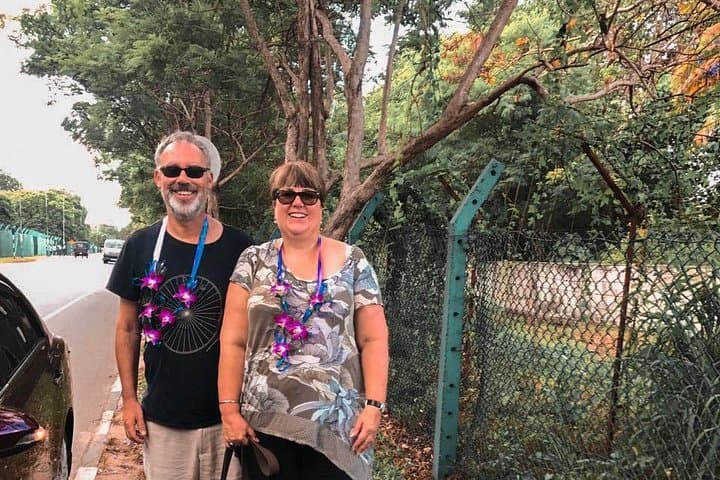
You step out of the car into a humid morning that smells of cinnamon and diesel — Sri Lanka announces itself in layers: frangipani trees crowding the roadside, the distant low rumble of blue-green tea pickers on a hillside, and a chorus of birds that seems to time its tempo with your breath.
Verified experiences and guided adventures in the surrounding area.
Operated by Lakpura LLC · Negombo, Western Province
You step out of the car into a humid morning that smells of cinnamon and diesel — Sri Lanka announces itself in layers: frangipani trees crowding the roadside, the distant low rumble of blue-green tea pickers on a hillside, and a chorus of birds that seems to time its tempo with your breath.
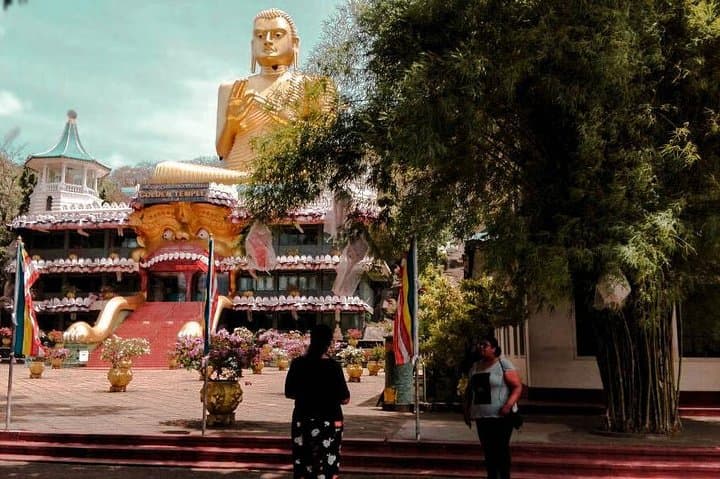
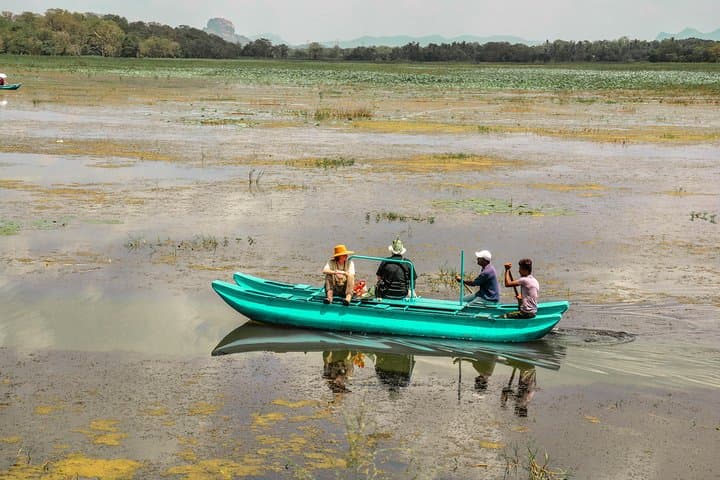
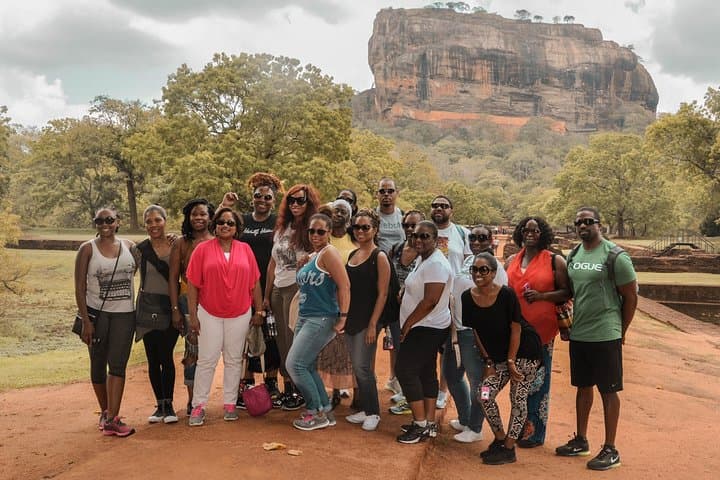
This 10-day circuit threads the island’s different faces together: the painted caverns of Dambulla, the vertiginous plaster and rock stairway up Sigiriya, the open plains of Minneriya where elephants treat the lagoon like a magnet, cool colonial lanes in Galle, and the mist-laced tea country around Nuwara Eliya. Geology is visible at every turn — ancient granite domes and monolithic outcrops that once served as royal perches, rivers carved through red soil feeding wetlands, and granite buttresses that protect the ancient capitals.
History here is tangible. Polonnaruwa’s ruined temples recall a medieval kingdom that rivaled contemporary Asian courts, and Galle Fort’s Dutch ramparts hold layers of Portuguese, Dutch and British trade history. You’ll pass spice gardens where the kitchen staples that changed global trade still perfume the air, and tea factories where leaves are bruised and fired into the Ceylon you’ll sip at altitude.
Culture is immediate: morning puja at the Temple of the Tooth in Kandy, fishermen balancing on stilted perches off the southern coast, and a slow, deliberate ritual of hospitality in hill-country villages. Wildlife punctuates the quieter days — leopards watch from shady thickets in Yala, elephants herd in the open, and birds patrol wetlands.
Practical guidance: the tour is built as a road loop with many short walks and a few steeper climbs (Sigiriya is roughly a 200–250 m ascent via steps; allow 60–90 minutes round trip). Nuwara Eliya sits at about 1,868 m, so nights can be cool; Yala safaris are best at dawn or dusk when animals are active. The itinerary includes private transport, an English-speaking chauffeur-guide, bottled water, and time for a 2–3 hour game drive in Minneriya or Yala.
Plan for sudden rain in the southwest monsoon (May–September) and the northeast monsoon (October–January) depending on which coast you’re near. Footwear should handle dusty roads and wet stone steps; a light rain shell and quick-dry layers will get you through temperature swings.
If you want photographs, bring a zoom for wildlife and a wide lens for Sigiriya’s plateau and Galle’s ramparts. Respect temple dress codes, support local guides and vendors, and give wildlife space — the best encounters are patient ones.
This circuit rewards travelers who want variety: culture, geology, and wildlife in a single, compact itinerary that moves with purpose but leaves room to watch an elephant cross a lagoon or sip tea while the mist pulls apart over the hills.
moderate.
10 days.
Comfortable for travelers who can handle several hours of sightseeing per day, a short uphill climb (Sigiriya) and some uneven terrain; not strenuous.
Most nationalities require an ETA (Electronic Travel Authorization) obtained online before arrival; check current government requirements and process times.
December to March generally offers drier weather on the southern and western coasts and clear skies in the hill country; shoulder months can be quieter but watch for regional monsoon patterns.
Yala has one of the highest leopard densities, so sightings are possible but never guaranteed; dawn and dusk drives improve your chances.
Yes — the itinerary is paced with road transfers and short activities; however, temple steps and uneven surfaces may be challenging for limited mobility.
The listed inclusions cover bottled water and transport; meals are typically not included so you can try local cuisine at recommended restaurants along the route.
Sri Lankan rupees (LKR) are used; carry some cash for small purchases and tipping. A modest tip for drivers, guides and service staff is customary.
Sri Lanka’s recorded history spans over two millennia; Polonnaruwa and Sigiriya reflect island kingdoms that shaped regional trade and irrigation systems.
Wildlife areas operate under strict park rules — keep distance from animals, avoid feeding, and support local conservation guides to help sustain community livelihoods.
Lakpura LLC operates guided outdoor trips and adventures with an emphasis on safety, stewardship, and memorable experiences.
You step out of the car into a humid morning that smells of cinnamon and diesel — Sri Lanka announces itself in layers: frangipani trees crowding the roadside, the distant low rumble of blue-green tea pickers on a hillside, and a chorus of birds that seems to time its tempo with your breath.
You step out of the car into a humid morning that smells of cinnamon and diesel — Sri Lanka announces itself in layers: frangipani trees crowding the roadside, the distant low rumble of blue-green tea pickers on a hillside, and a chorus of birds that seems to time its tempo with your breath.
This 10-day circuit threads the island’s different faces together: the painted caverns of Dambulla, the vertiginous plaster and rock stairway up Sigiriya, the open plains of Minneriya where elephants treat the lagoon like a magnet, cool colonial lanes in Galle, and the mist-laced tea country around Nuwara Eliya. Geology is visible at every turn — ancient granite domes and monolithic outcrops that once served as royal perches, rivers carved through red soil feeding wetlands, and granite buttresses that protect the ancient capitals.
History here is tangible. Polonnaruwa’s ruined temples recall a medieval kingdom that rivaled contemporary Asian courts, and Galle Fort’s Dutch ramparts hold layers of Portuguese, Dutch and British trade history. You’ll pass spice gardens where the kitchen staples that changed global trade still perfume the air, and tea factories where leaves are bruised and fired into the Ceylon you’ll sip at altitude.
Culture is immediate: morning puja at the Temple of the Tooth in Kandy, fishermen balancing on stilted perches off the southern coast, and a slow, deliberate ritual of hospitality in hill-country villages. Wildlife punctuates the quieter days — leopards watch from shady thickets in Yala, elephants herd in the open, and birds patrol wetlands.
Practical guidance: the tour is built as a road loop with many short walks and a few steeper climbs (Sigiriya is roughly a 200–250 m ascent via steps; allow 60–90 minutes round trip). Nuwara Eliya sits at about 1,868 m, so nights can be cool; Yala safaris are best at dawn or dusk when animals are active. The itinerary includes private transport, an English-speaking chauffeur-guide, bottled water, and time for a 2–3 hour game drive in Minneriya or Yala.
Plan for sudden rain in the southwest monsoon (May–September) and the northeast monsoon (October–January) depending on which coast you’re near. Footwear should handle dusty roads and wet stone steps; a light rain shell and quick-dry layers will get you through temperature swings.
If you want photographs, bring a zoom for wildlife and a wide lens for Sigiriya’s plateau and Galle’s ramparts. Respect temple dress codes, support local guides and vendors, and give wildlife space — the best encounters are patient ones.
This circuit rewards travelers who want variety: culture, geology, and wildlife in a single, compact itinerary that moves with purpose but leaves room to watch an elephant cross a lagoon or sip tea while the mist pulls apart over the hills.