THE ADVENTURE COLLECTIVE® · Independent discovery and booking for outdoor travel

Drive the Crest of the Smokies on a three-hour guided tour that climbs above 5,000 feet to Clingmans Dome. Expect sweeping overlooks, spruce-fir forests and stories of Cherokee history and post-logging recovery.
Drive the Crest of the Smokies on a three-hour guided tour that climbs above 5,000 feet to Clingmans Dome. Expect sweeping overlooks, spruce-fir forests and stories of Cherokee history and post-logging recovery.
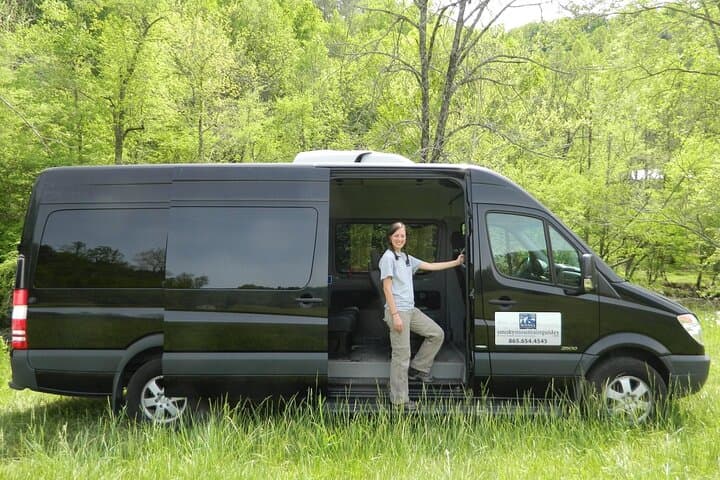
The van rises into the clouds as Newfound Gap Road climbs out of Sugarlands Valley, and the world outside the window thins to ridgelines, spruce crowns and an unexpected cold that arrives several thousand feet above the towns below.
Verified experiences and guided adventures in the surrounding area.
Operated by Smoky Mountain Guides · Gatlinburg, Tennessee
The van rises into the clouds as Newfound Gap Road climbs out of Sugarlands Valley, and the world outside the window thins to ridgelines, spruce crowns and an unexpected cold that arrives several thousand feet above the towns below.
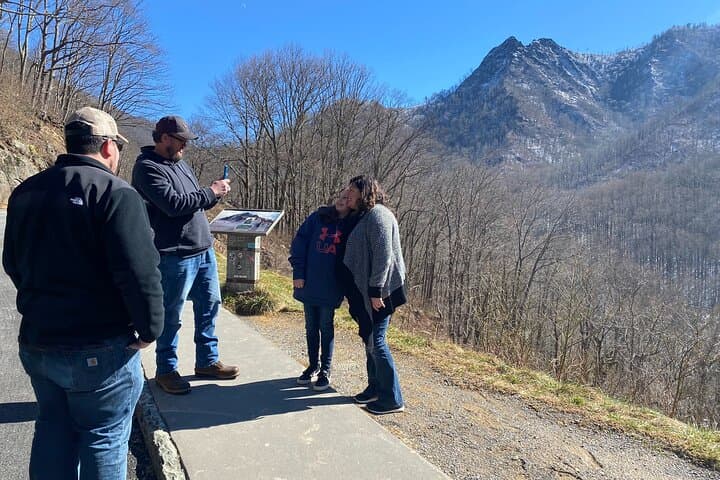
On this three-hour drive you move through the Smokies in transit and in time: logged chest-high stumps give way to young hardwoods, the road traces the Appalachian Trail and the guide stitches together Cherokee place names and 20th-century logging history while you pull over at overlooks to let the mountains fill the frame.
Geology here is patient—these rounded peaks are the worn shoulders of the ancient Appalachians, folded and eroded over hundreds of millions of years. Clingmans Dome itself is not a volcanic summit but a high, resistant knob capped by hard metamorphic rocks that shrug off erosion more stubbornly than the valleys below. The air thins predictably as you move above 5,000 feet and a different forest takes over: a damp, cool spruce-fir community more akin to southern Canada than to Tennessee.
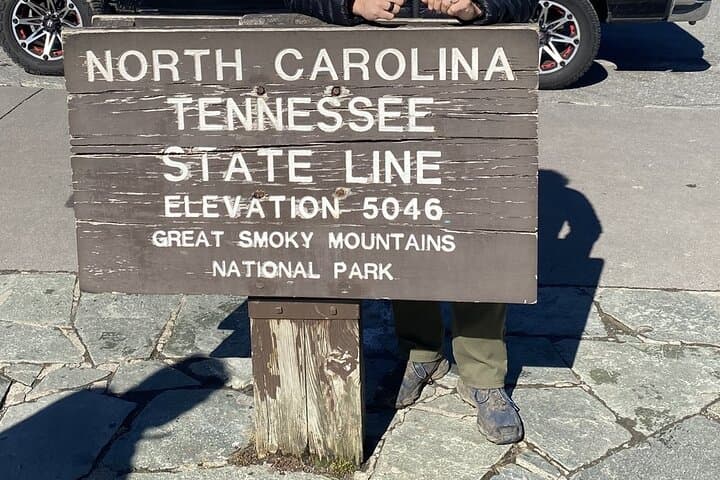
Cultural layers sit alongside the natural ones. The Cherokee called this place Kuwahi; modern guides recount stories of native use and the fraught changes that came with settlement and industrial logging. In the 1930s, after massive deforestation, the park was dedicated in part by President Franklin Roosevelt on a stone stage along the route near the state line. Standing there you can feel the deliberate act of restoration—trees reclaiming old scars, trails woven along contour lines, and a park whose purpose is both protection and access.
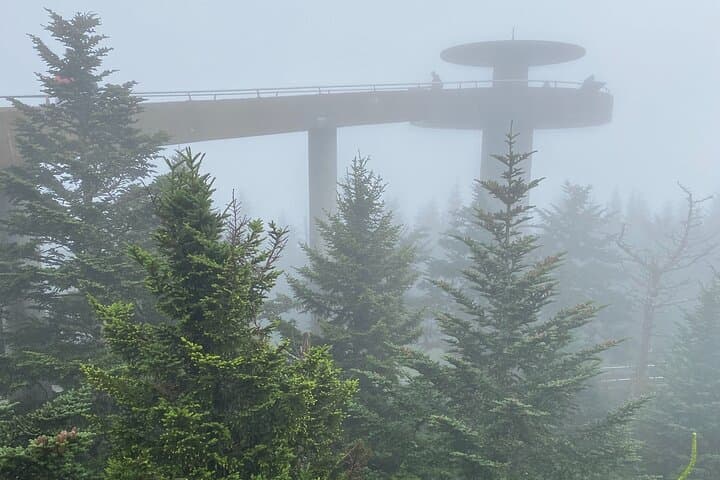
The itinerary moves into North Carolina, climbs to Clingmans Dome parking and gift shop—the highest point in the park at 6,643 feet—and offers an optional short walk through the spruce-fir forest. It is a compact taste of the high country: big views, cool air, and a reminder that weather and road conditions are part of the experience.
Plan practically: dress in layers, even in summer—temperatures drop sharply with elevation. Expect easy walking if you choose to step out; the tour is drive-forward with several photo stops, so it works for most fitness levels. Bring a camera and a jacket, and check the park road status before you go—fog, ice or wind can close Newfound Gap Road. If you crave deeper exploration, tack on extra time in Gatlinburg to hike nearby trails or to visit interpretive exhibits that expand on the stories you hear from the guide.
This is a tour designed to orient you—to the land, to its history and to the high-country ecology that often surprises first-time visitors. It’s an efficient way to stand above the tree line and understand how these mountains were made, used and slowly become whole again.
easy.
3 hours.
Suitable for most fitness levels; primarily a vehicle-based tour with short, optional walks on even paths.
The tour runs about three hours and follows Newfound Gap Road with several stops and short walks; most time is spent in the vehicle between overlooks.
No—walking is optional. Stops include brief, accessible viewpoints; an optional short walk through spruce-fir forest is available at Clingmans Dome parking.
The tour reaches the Clingmans Dome parking and gift shop; access to the paved half-mile trail up to the tower depends on your chosen optional walk and weather conditions.
Basic restroom facilities are typically available at Clingmans Dome parking and some overlooks, but offerings are limited—plan accordingly.
Most stops accept cards at the gift shop, but it’s wise to have a small amount of cash for incidental needs; parking is handled as part of the tour.
The operator cancels tours for unsafe conditions; check park alerts and the tour’s cancellation policy—rescheduling or refunds are typically available if the road is closed.
The area experienced large-scale logging in the early 20th century. The creation of the national park and reforestation efforts in the 1930s allowed the forest to recover over decades.
Stay on designated overlooks and trails to protect fragile high-elevation spruce-fir habitat; packed litter and road runoff can harm regrowing forest soils.
Smoky Mountain Guides operates guided outdoor trips and adventures with an emphasis on safety, stewardship, and memorable experiences.
The van rises into the clouds as Newfound Gap Road climbs out of Sugarlands Valley, and the world outside the window thins to ridgelines, spruce crowns and an unexpected cold that arrives several thousand feet above the towns below.
The van rises into the clouds as Newfound Gap Road climbs out of Sugarlands Valley, and the world outside the window thins to ridgelines, spruce crowns and an unexpected cold that arrives several thousand feet above the towns below.
On this three-hour drive you move through the Smokies in transit and in time: logged chest-high stumps give way to young hardwoods, the road traces the Appalachian Trail and the guide stitches together Cherokee place names and 20th-century logging history while you pull over at overlooks to let the mountains fill the frame.
Geology here is patient—these rounded peaks are the worn shoulders of the ancient Appalachians, folded and eroded over hundreds of millions of years. Clingmans Dome itself is not a volcanic summit but a high, resistant knob capped by hard metamorphic rocks that shrug off erosion more stubbornly than the valleys below. The air thins predictably as you move above 5,000 feet and a different forest takes over: a damp, cool spruce-fir community more akin to southern Canada than to Tennessee.
Cultural layers sit alongside the natural ones. The Cherokee called this place Kuwahi; modern guides recount stories of native use and the fraught changes that came with settlement and industrial logging. In the 1930s, after massive deforestation, the park was dedicated in part by President Franklin Roosevelt on a stone stage along the route near the state line. Standing there you can feel the deliberate act of restoration—trees reclaiming old scars, trails woven along contour lines, and a park whose purpose is both protection and access.
The itinerary moves into North Carolina, climbs to Clingmans Dome parking and gift shop—the highest point in the park at 6,643 feet—and offers an optional short walk through the spruce-fir forest. It is a compact taste of the high country: big views, cool air, and a reminder that weather and road conditions are part of the experience.
Plan practically: dress in layers, even in summer—temperatures drop sharply with elevation. Expect easy walking if you choose to step out; the tour is drive-forward with several photo stops, so it works for most fitness levels. Bring a camera and a jacket, and check the park road status before you go—fog, ice or wind can close Newfound Gap Road. If you crave deeper exploration, tack on extra time in Gatlinburg to hike nearby trails or to visit interpretive exhibits that expand on the stories you hear from the guide.
This is a tour designed to orient you—to the land, to its history and to the high-country ecology that often surprises first-time visitors. It’s an efficient way to stand above the tree line and understand how these mountains were made, used and slowly become whole again.