THE ADVENTURE COLLECTIVE® · Independent discovery and booking for outdoor travel

Skip the safari van and move through Hells Gate on foot, by bike, and—if you dare—by rope. This full-day (with optional overnight) adventure threads Ol Njorowa Gorge, plains ridden with zebra, and an optional climb of Fischer’s Tower.
Skip the safari van and move through Hells Gate on foot, by bike, and—if you dare—by rope. This full-day (with optional overnight) adventure threads Ol Njorowa Gorge, plains ridden with zebra, and an optional climb of Fischer’s Tower.
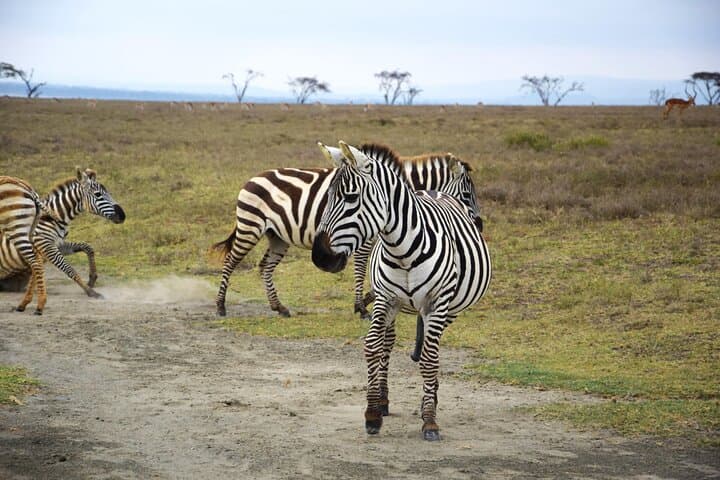
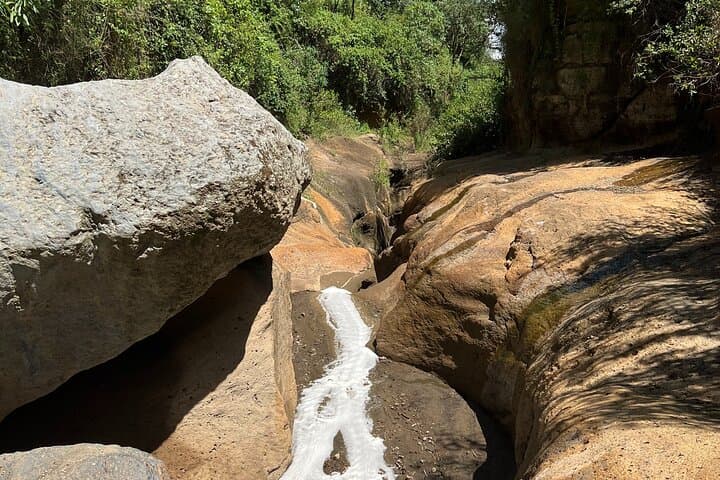
You step through Elsa Gate before sunrise and the gorge is already speaking—steam drifting from vents, gullies cutting shadows into the volcanic rock, and a breeze that tugs at your cap like an impatient guide. The first hours are spent in the Ol Njorowa Gorge, a raw corridor of basalt walls and loose scree where the ground remembers fire and tectonic force. Your guide moves easily over the boulders, calling out zebra and gazelle ahead; the animals treat the cycling line like an open road.
Verified experiences and guided adventures in the surrounding area.
Operated by Daring Escapes · Naivasha, Nakuru County
You step through Elsa Gate before sunrise and the gorge is already speaking—steam drifting from vents, gullies cutting shadows into the volcanic rock, and a breeze that tugs at your cap like an impatient guide. The first hours are spent in the Ol Njorowa Gorge, a raw corridor of basalt walls and loose scree where the ground remembers fire and tectonic force. Your guide moves easily over the boulders, calling out zebra and gazelle ahead; the animals treat the cycling line like an open road.
Hells Gate feels less like a park and more like a geological classroom. The Rift Valley opened here under tectonic pressure; centuries of eruptions left plugs of volcanic necks and sheer cliffs—Fischer’s Tower is one of those weathered spires daring climbers to test their nerve. The Maasai and Kikuyu communities who live around Naivasha have worked these plains for generations, and you’ll see their influence in grazing patterns, seasonal fires, and the occasional homestead on the horizon.
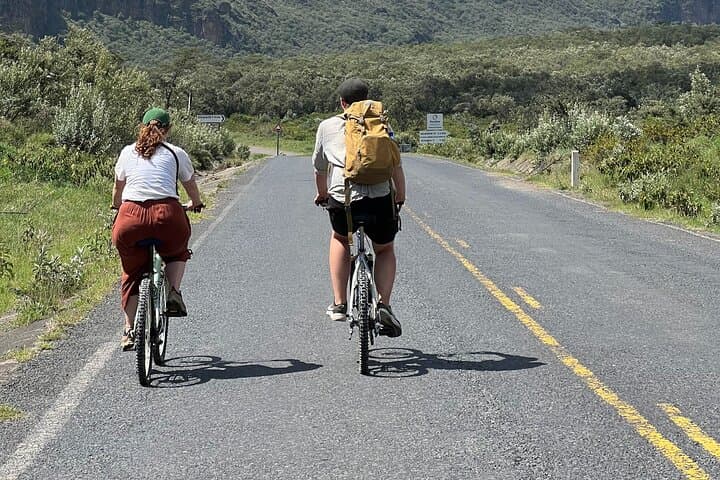
The route is modular: a 3–6 km gorge hike with intermittent scrambling, followed by a flat, wind-ready bike section across open savanna that can add 10–25 km depending on how far you push. If you opt for the climbing add-on (extra fee), expect technical rock pitches on rough volcanic stone—standard single-pitch trad/top-rope terrain in Kenyan terms.
As day turns to dusk, the option to camp at Fisherman’s Campsite by Lake Naivasha turns an active day into an overnight under a dark sky. Hippos call from the shallows and the Milky Way—unhindered by city light—reads like a map above the fire. There’s an optional morning boat trip to stretch legs and look for waterbirds before the transfer back to Nairobi.
Practical notes: the park sits around 1,900 m elevation; trails are rocky and can be dusty—sturdy boots and layered sun protection are non-negotiable. Guides supply helmets and ropes for Fischer’s Tower, but bring confidence in basic climbing movement if you choose that option. Water is limited on-trail; carry at least 2–3 liters and a lightweight daypack for food and layers. Pickup options from Nairobi are common and transit time is roughly 1.5–2 hours depending on traffic.
This is a full-day, tailor-made adventure for people who want to trade the safari box for movement—hiking, cycling, and the chance to climb a volcanic spire before a campfire by the lake. The landscape won’t politely wait for you; it will push, challenge, and reward in equal measure.
moderate.
Full day (up to 24 hours).
Suitable for travelers with good baseline fitness—able to hike 3–6 km with some scrambling and cycle 10–25 km on mixed terrain.
Driving time from Nairobi to Hells Gate is typically 1.5–2 hours (about 90–100 km) depending on traffic; many operators include hotel pickup.
No—Fischer’s Tower is an optional add-on that requires additional fees for guide time and safety gear; book in advance if you want to climb.
Bicycles are provided by the operator for the safari ride—expect rugged hybrid or mountain bikes suitable for gravel and plains.
Yes—basic fitness is enough for the hike and cycling sections, but the climbing option is best for those with some rock-experience or who are comfortable with exposure.
Campsites used by operators are monitored and close to staff, but hippos are present in night waters—follow guide briefings and keep clear of shorelines after dark.
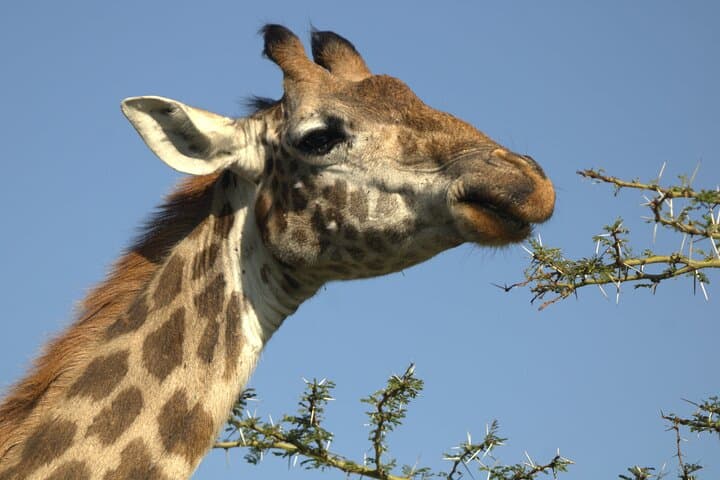
Common sightings include zebra and Thomson’s gazelle; birdlife is prolific, and you may spot buffalo and warthog in quieter sectors.
Hells Gate sits on the eastern branch of the East African Rift; locals have long used the valley’s geothermal hot springs and the park’s landscape played a role in early geological study of the Rift.
Visitors are asked to stay on designated paths and avoid feeding wildlife; the park balances tourism with pastoral land use and local community livelihoods.
Daring Escapes operates guided outdoor trips and adventures with an emphasis on safety, stewardship, and memorable experiences.
You step through Elsa Gate before sunrise and the gorge is already speaking—steam drifting from vents, gullies cutting shadows into the volcanic rock, and a breeze that tugs at your cap like an impatient guide. The first hours are spent in the Ol Njorowa Gorge, a raw corridor of basalt walls and loose scree where the ground remembers fire and tectonic force. Your guide moves easily over the boulders, calling out zebra and gazelle ahead; the animals treat the cycling line like an open road.
You step through Elsa Gate before sunrise and the gorge is already speaking—steam drifting from vents, gullies cutting shadows into the volcanic rock, and a breeze that tugs at your cap like an impatient guide. The first hours are spent in the Ol Njorowa Gorge, a raw corridor of basalt walls and loose scree where the ground remembers fire and tectonic force. Your guide moves easily over the boulders, calling out zebra and gazelle ahead; the animals treat the cycling line like an open road.
Hells Gate feels less like a park and more like a geological classroom. The Rift Valley opened here under tectonic pressure; centuries of eruptions left plugs of volcanic necks and sheer cliffs—Fischer’s Tower is one of those weathered spires daring climbers to test their nerve. The Maasai and Kikuyu communities who live around Naivasha have worked these plains for generations, and you’ll see their influence in grazing patterns, seasonal fires, and the occasional homestead on the horizon.
The route is modular: a 3–6 km gorge hike with intermittent scrambling, followed by a flat, wind-ready bike section across open savanna that can add 10–25 km depending on how far you push. If you opt for the climbing add-on (extra fee), expect technical rock pitches on rough volcanic stone—standard single-pitch trad/top-rope terrain in Kenyan terms.
As day turns to dusk, the option to camp at Fisherman’s Campsite by Lake Naivasha turns an active day into an overnight under a dark sky. Hippos call from the shallows and the Milky Way—unhindered by city light—reads like a map above the fire. There’s an optional morning boat trip to stretch legs and look for waterbirds before the transfer back to Nairobi.
Practical notes: the park sits around 1,900 m elevation; trails are rocky and can be dusty—sturdy boots and layered sun protection are non-negotiable. Guides supply helmets and ropes for Fischer’s Tower, but bring confidence in basic climbing movement if you choose that option. Water is limited on-trail; carry at least 2–3 liters and a lightweight daypack for food and layers. Pickup options from Nairobi are common and transit time is roughly 1.5–2 hours depending on traffic.
This is a full-day, tailor-made adventure for people who want to trade the safari box for movement—hiking, cycling, and the chance to climb a volcanic spire before a campfire by the lake. The landscape won’t politely wait for you; it will push, challenge, and reward in equal measure.