THE ADVENTURE COLLECTIVE® · Independent discovery and booking for outdoor travel

A full‑day escape from Zurich to Interlaken and Harder Kulm: a steep funicular ride, a floating panoramic platform at 1,322 m, and sweeping views of the Eiger, Mönch and Jungfrau. Practical timing and local tips make this an easy, high‑reward alpine day trip.
A full‑day escape from Zurich to Interlaken and Harder Kulm: a steep funicular ride, a floating panoramic platform at 1,322 m, and sweeping views of the Eiger, Mönch and Jungfrau. Practical timing and local tips make this an easy, high‑reward alpine day trip.
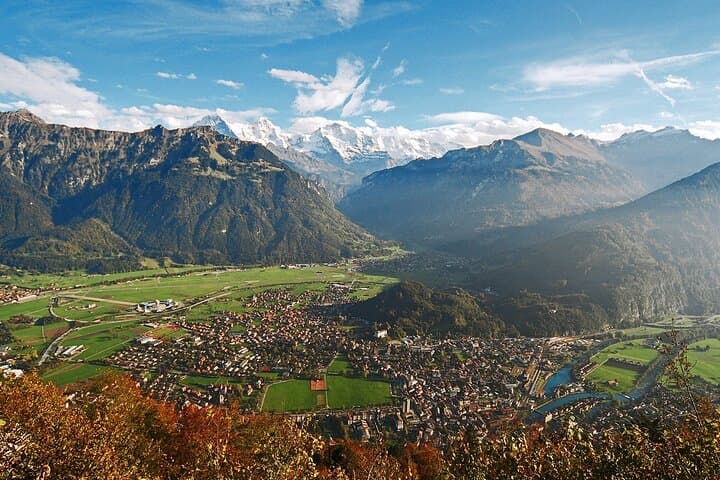
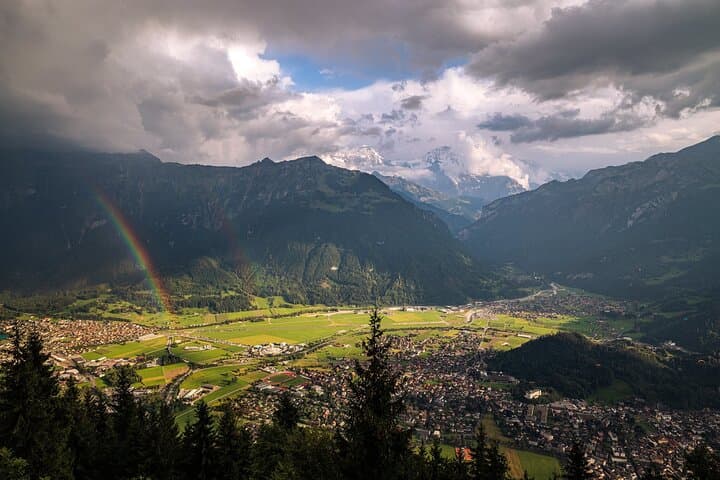
The bus slides out of Zurich before dawn and the city’s glass and granite fade into fields edged with Alps. By mid-morning the valley opens like a stage: twin lakes—Brienz and Thun—frame a low, green platform where Interlaken sits, and above it the Harder Kulm clifftop waits like a vantage carved for spectators.
Verified experiences and guided adventures in the surrounding area.
Operated by Keytours (Switzerland) · Interlaken, Bern
The bus slides out of Zurich before dawn and the city’s glass and granite fade into fields edged with Alps. By mid-morning the valley opens like a stage: twin lakes—Brienz and Thun—frame a low, green platform where Interlaken sits, and above it the Harder Kulm clifftop waits like a vantage carved for spectators.
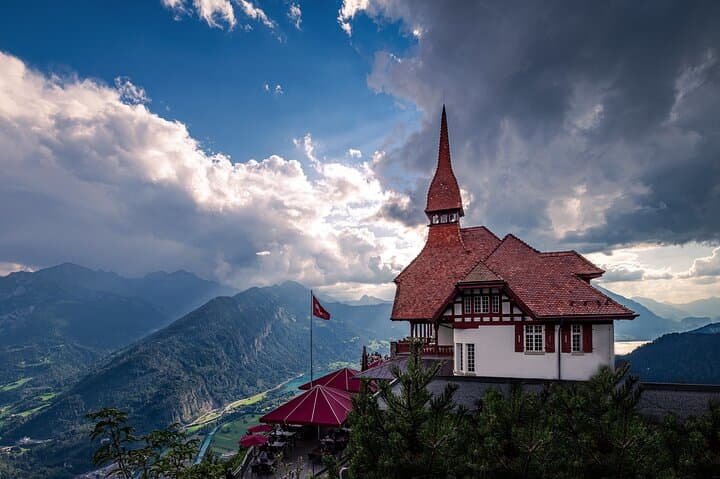
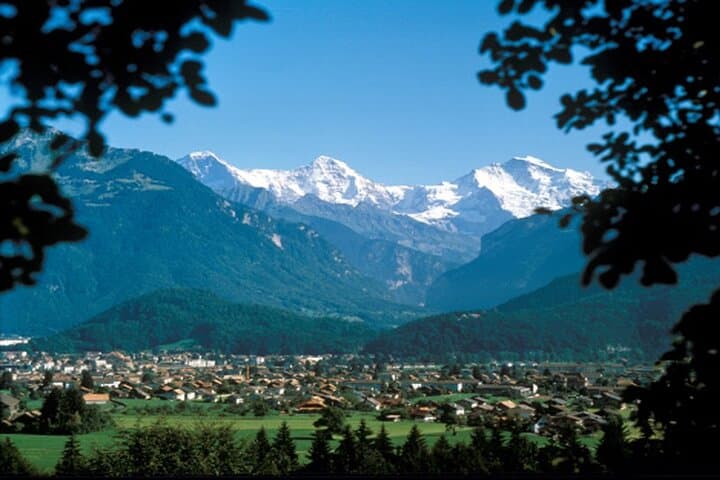
A quick funicular climb of roughly 750 meters lifts visitors from Interlaken’s Bödeli up to Harder Kulm’s 1,322‑meter platform. The ride itself is a short, steep exchange—wooden trestles and forested slope give way to a floating terrace with a view that squares the Eiger, Mönch and Jungfrau into one horizon. Wind sculpts the clouds and the Aare river threads between the lakes, daring you to trace its currents with your gaze.
This corner of the Bernese Oberland is a product of ice and time. Glaciers gouged the valleys, leaving steep faces and deep lake basins; the Eiger’s north wall remains a challenge to climbers and a landmark for everyone else. Interlaken’s role as a gateway dates to 19th‑century tourism—Victorians arrived by rail to hunt light and alpine air—and those hotels and promenades still shape the town today.
Culturally, the day balances scenery with small pleasures: a fondue or rösti at the Harder Kulm panorama restaurant, shopfronts selling cuckoo clocks and regional wool, and a stroll along the Aare for quiet reflections. Locals value efficient timing—Swiss trains and funiculars run to the minute—so the rhythm of the day is part spectacle, part planning.
Practicalities are simple but decisive. The full excursion runs about 11–12 hours from Zurich including travel; expect roughly two hours driving each way plus time in Interlaken and at Harder Kulm. Wear layers—the elevation change means you feel summer sun in the town and a cooler wind at the platform. Footwear should be sturdy but not alpine‑grade; the main walking is gentle, though some viewpoints have rocky, uneven paths.
Photographers will want to time visits for golden hour when light slants across the peaks and lake reflections sharpen. If you prefer fewer people, schedule the funicular earlier or later in the afternoon; midday brings busier terraces and tour groups.
For families and casual hikers this is an easy, high‑reward day: minimal technical skill required, maximum alpine exposure. Book ahead in high season to secure funicular time and consider local currency or card for small purchases. Leave the mountains as you found them—stick to paths, respect signage, and take only photos.
easy.
10–12 hours (round trip from Zurich).
Suitable for most fitness levels; minimal walking with short uneven sections at viewpoints
The Harderbahn funicular is a short but steep ride—about 8–10 minutes—covering the roughly 750 m elevation gain to the 1,322 m viewpoint.
Yes; the operator notes stroller accessibility in town, though the funicular and terrace have steps—folding strollers are easiest to manage.
Yes, a panorama restaurant and bar operate on the Harder Kulm platform offering local dishes like fondue and light snacks.
Unlikely—the elevation is modest and the ascent is gradual via funicular, but if you have a history of altitude sensitivity consult your doctor.
This tour includes access to the panoramic platform and the funicular ride as described in the inclusions—confirm at booking for specifics.
The cancellation policy allows refund if you cancel 24 hours in advance; the operator can continue in light rain, but visibility may be reduced—bring waterproof layers.
Interlaken grew as a 19th‑century tourist hub on the Bödeli between Lakes Thun and Brienz; the Harderbahn funicular opened in 1908 to give visitors dramatic views.
The region emphasizes trail preservation and lift‑based access to reduce erosion; visitors are asked to stay on marked paths and pack out litter.
Keytours (Switzerland) operates guided outdoor trips and adventures with an emphasis on safety, stewardship, and memorable experiences.
The bus slides out of Zurich before dawn and the city’s glass and granite fade into fields edged with Alps. By mid-morning the valley opens like a stage: twin lakes—Brienz and Thun—frame a low, green platform where Interlaken sits, and above it the Harder Kulm clifftop waits like a vantage carved for spectators.
The bus slides out of Zurich before dawn and the city’s glass and granite fade into fields edged with Alps. By mid-morning the valley opens like a stage: twin lakes—Brienz and Thun—frame a low, green platform where Interlaken sits, and above it the Harder Kulm clifftop waits like a vantage carved for spectators.
A quick funicular climb of roughly 750 meters lifts visitors from Interlaken’s Bödeli up to Harder Kulm’s 1,322‑meter platform. The ride itself is a short, steep exchange—wooden trestles and forested slope give way to a floating terrace with a view that squares the Eiger, Mönch and Jungfrau into one horizon. Wind sculpts the clouds and the Aare river threads between the lakes, daring you to trace its currents with your gaze.
This corner of the Bernese Oberland is a product of ice and time. Glaciers gouged the valleys, leaving steep faces and deep lake basins; the Eiger’s north wall remains a challenge to climbers and a landmark for everyone else. Interlaken’s role as a gateway dates to 19th‑century tourism—Victorians arrived by rail to hunt light and alpine air—and those hotels and promenades still shape the town today.
Culturally, the day balances scenery with small pleasures: a fondue or rösti at the Harder Kulm panorama restaurant, shopfronts selling cuckoo clocks and regional wool, and a stroll along the Aare for quiet reflections. Locals value efficient timing—Swiss trains and funiculars run to the minute—so the rhythm of the day is part spectacle, part planning.
Practicalities are simple but decisive. The full excursion runs about 11–12 hours from Zurich including travel; expect roughly two hours driving each way plus time in Interlaken and at Harder Kulm. Wear layers—the elevation change means you feel summer sun in the town and a cooler wind at the platform. Footwear should be sturdy but not alpine‑grade; the main walking is gentle, though some viewpoints have rocky, uneven paths.
Photographers will want to time visits for golden hour when light slants across the peaks and lake reflections sharpen. If you prefer fewer people, schedule the funicular earlier or later in the afternoon; midday brings busier terraces and tour groups.
For families and casual hikers this is an easy, high‑reward day: minimal technical skill required, maximum alpine exposure. Book ahead in high season to secure funicular time and consider local currency or card for small purchases. Leave the mountains as you found them—stick to paths, respect signage, and take only photos.