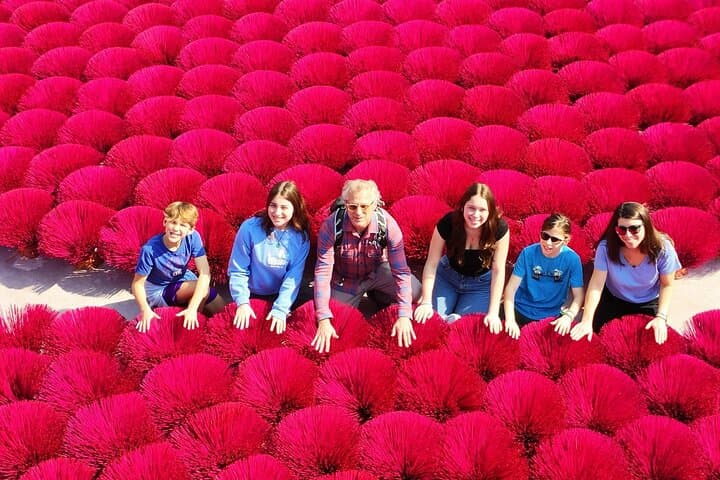
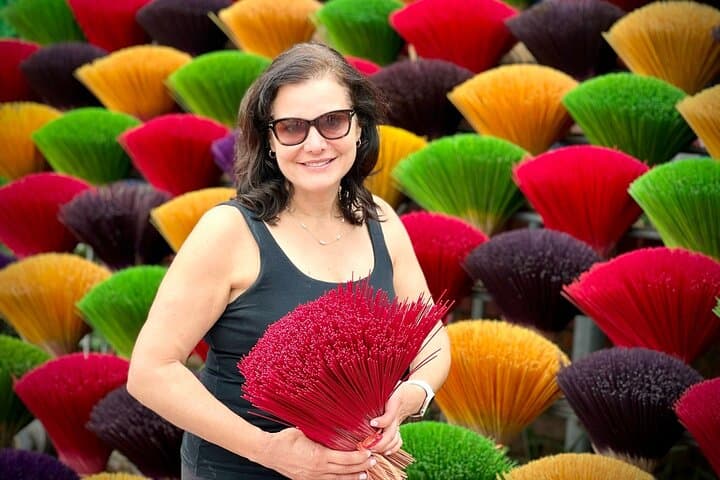
You arrive before dawn on a narrow lane in Quang Phu Cau where bundles of red and natural-hued incense lean like stacked crops, and the air smells faintly of sandalwood and smoke.
Workers move between racks, hands deft from decades of craft, while motorbikes hum past rice paddies that stretch toward limestone peaks. The day moves south to Ninh Binh: a sampan waits, rowed by a local who will push you through low, cool caves as the Ngo Dong river dares you to look up at dripping stalactites.
Tam Coc's karst towers are ancient limestone, sculpted by rivers over millions of years, their sheer faces punctuating flat, irrigated fields. After the boat, the tour pauses at Hoa Lu, Vietnam’s 10th-century capital where stone temples honor early emperors and reveal a political center that shaped regional identity.
The itinerary blends culture and geology: incense-making offers a window into village economies and worship practices, while Tam Coc demonstrates the river’s role carving the landscape.
Practical notes: this is a full-day, mostly low-impact outing with short walks, multiple photo stops and seated boat travel. Expect heat in summer and cool mornings in winter; dress in layers, bring cash for small purchases, and carry sun protection and a refillable water bottle. Photography is welcome but ask before shooting inside homes or workshops. Respect boat crews and consider a small tip for skilled rowers who guide through tight caves.
The route is accessible to most travelers but plan for a 1–1.5 hour drive each way from Hanoi and an active, camera-ready day in the field.