
Hanoi to Mai Chau Day Trip: Biking White Thai Villages & Thung Khe Pass
Escape Hanoi for a full-day cycling trip to Mai Chau: climb Thung Khe Pass, pedal through White Thai villages, and watch artisans weave traditional brocade. This accessible day trip pairs scenic viewpoints with cultural immersion.
An Adventure In Hanoi.
Escape Hanoi for a full-day cycling trip to Mai Chau: climb Thung Khe Pass, pedal through White Thai villages, and watch artisans weave traditional brocade. This accessible day trip pairs scenic viewpoints with cultural immersion.
Read the full experience
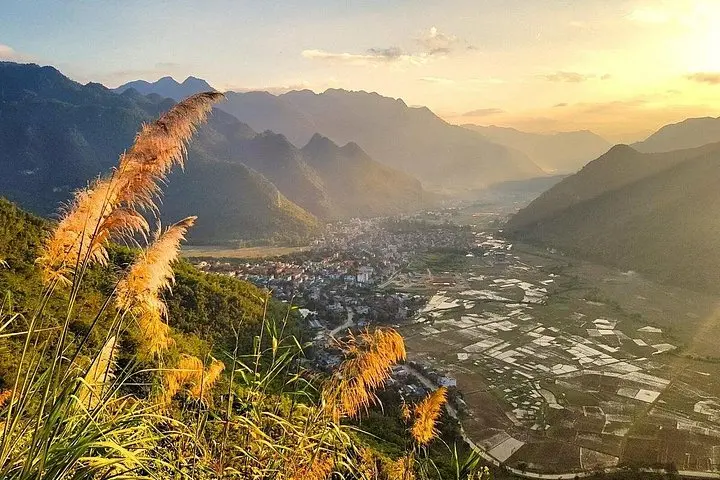
The minibus hums out of Hanoi before dawn, the city shrinking into rice paddies and long ridgelines that pull the sky down toward the road. By the time the group hits Thung Khe Pass, clouds and limestone peaks are trading places: valleys of green unfurl below like pages. Guides point out a temporary market where Muong traders display jars of honey and handwoven cloth—an early, tactile introduction to the highland life waiting in Mai Chau.
The minibus hums out of Hanoi before dawn, the city shrinking into rice paddies and long ridgelines that pull the sky down toward the road. By the time the group hits Thung Khe Pass, clouds and limestone peaks are trading places: valleys of green unfurl below like pages. Guides point out a temporary market where Muong traders display jars of honey and handwoven cloth—an early, tactile introduction to the highland life waiting in Mai Chau.
Mai Chau sits in Hoa Binh Province, a river valley cut between limestone karsts of the Truong Son Range. Geologically, those karsts are older than the rice fields; rain and time sculpted cliffs and caves while rivers deposited the silt that feeds paddies today. The valley is home to White Thai communities whose stilt houses and brocade weaving reflect centuries of adaptation to seasonal flooding and mountain microclimates. French colonial maps marked the pass as a strategic route; modern travelers use the same switchbacks to access an altogether different kind of reconnaissance: close observation of local lifeways and craft.
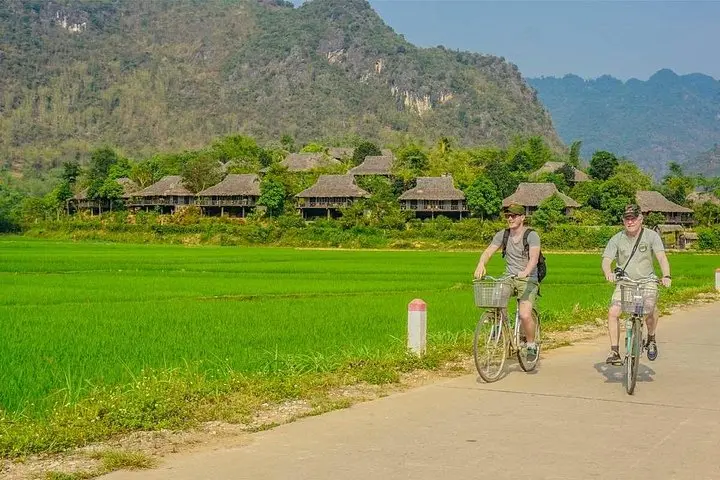
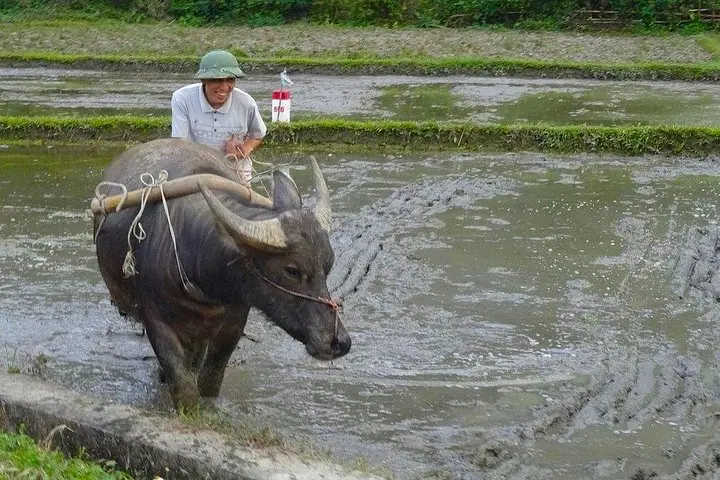
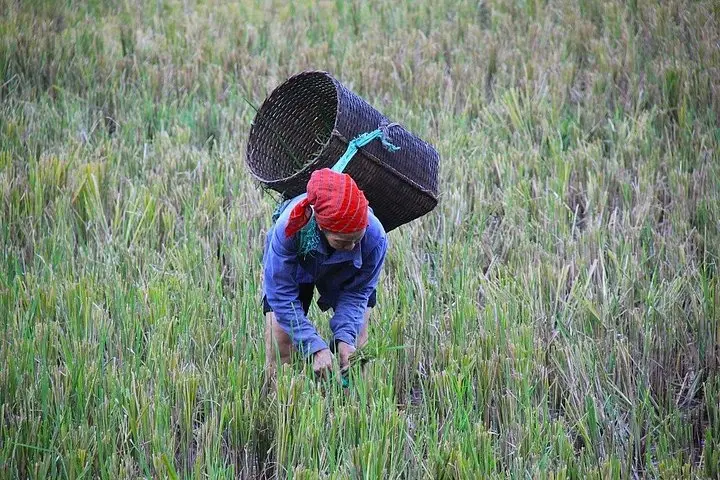
Cycling here slows translation between sight and story. The tour’s mid-day pedal threads through lanes where water buffalo graze and women work on indigo-dyed brocade—long-time cultural markers and ongoing sources of income. The guide explains the symbolism woven into patterns: motifs for harvest, for protection, for lineage. Lunch at a village restaurant brings traditional dishes—com tam, kho, and sticky rice—served plain and honest, the kind you eat with hands and a readiness to talk.
Practical guidance keeps the day enjoyable. Expect a long transfer: roughly 4 hours each way from Hanoi’s Old Quarter, with a morning stop at Thung Khe and a 2-hour cycling window through flat valley roads. Terrain is mostly paved or compact dirt; the ride suits travelers with basic cycling experience. Weather shifts quickly in the highlands—sun can bake the valley midday and late afternoon often cools suddenly.
Plan for hydration and sun protection, and leave expensive jewelry in Hanoi. Wear comfortable shoes and a light layer you can shed; a lightweight rain shell helps when clouds close in. Bring small local currency for market purchases and tips—artisans appreciate direct support. The day closes with a slow drive back to Hanoi as the valley exhales; by then the rhythm of village life has a way of staying with you, one pedal stroke and conversation at a time.
Frequently asked questions
The transfer takes about 4 hours each way, including a short stop en route and a viewpoint stop at Thung Khe Pass.
No — the cycling section is mostly flat valley roads suitable for riders with basic cycling experience; bikes provided are standard city/touring bikes.
Yes — a traditional Vietnamese lunch is included and guides can accommodate dietary needs if requested at booking.
Yes — the itinerary includes a visit to White Thai villages and a chance to see weaving demonstrations and local markets.
The tour includes an English-speaking guide; local villagers may speak Thai or Muong and limited Vietnamese.
Bring small denominations of Vietnamese dong and a reusable bag; bargaining is polite but modest—prices support local households.
About This Experience
Asia Local Tour operates guided outdoor trips and adventures with an emphasis on safety, stewardship, and memorable experiences.
Adventure tips
Recommended gear
- Reusable water bottle or hydration bladder: Keeps you hydrated during the 2–3 hour active portion and saves plastic waste.
- Lightweight rain shell: Protects against sudden mountain showers common June–August.
- Padded cycling shorts or comfortable activewear: Adds comfort for the 2-hour cycling loop on village roads.
- Small daypack with sunscreen and cash: Carries essentials for village stops and market purchases.
Photos of the experience
Related adventures & guides
Read the full experience
The minibus hums out of Hanoi before dawn, the city shrinking into rice paddies and long ridgelines that pull the sky down toward the road. By the time the group hits Thung Khe Pass, clouds and limestone peaks are trading places: valleys of green unfurl below like pages. Guides point out a temporary market where Muong traders display jars of honey and handwoven cloth—an early, tactile introduction to the highland life waiting in Mai Chau.
The minibus hums out of Hanoi before dawn, the city shrinking into rice paddies and long ridgelines that pull the sky down toward the road. By the time the group hits Thung Khe Pass, clouds and limestone peaks are trading places: valleys of green unfurl below like pages. Guides point out a temporary market where Muong traders display jars of honey and handwoven cloth—an early, tactile introduction to the highland life waiting in Mai Chau.
Mai Chau sits in Hoa Binh Province, a river valley cut between limestone karsts of the Truong Son Range. Geologically, those karsts are older than the rice fields; rain and time sculpted cliffs and caves while rivers deposited the silt that feeds paddies today. The valley is home to White Thai communities whose stilt houses and brocade weaving reflect centuries of adaptation to seasonal flooding and mountain microclimates. French colonial maps marked the pass as a strategic route; modern travelers use the same switchbacks to access an altogether different kind of reconnaissance: close observation of local lifeways and craft.
Cycling here slows translation between sight and story. The tour’s mid-day pedal threads through lanes where water buffalo graze and women work on indigo-dyed brocade—long-time cultural markers and ongoing sources of income. The guide explains the symbolism woven into patterns: motifs for harvest, for protection, for lineage. Lunch at a village restaurant brings traditional dishes—com tam, kho, and sticky rice—served plain and honest, the kind you eat with hands and a readiness to talk.
Practical guidance keeps the day enjoyable. Expect a long transfer: roughly 4 hours each way from Hanoi’s Old Quarter, with a morning stop at Thung Khe and a 2-hour cycling window through flat valley roads. Terrain is mostly paved or compact dirt; the ride suits travelers with basic cycling experience. Weather shifts quickly in the highlands—sun can bake the valley midday and late afternoon often cools suddenly.
Plan for hydration and sun protection, and leave expensive jewelry in Hanoi. Wear comfortable shoes and a light layer you can shed; a lightweight rain shell helps when clouds close in. Bring small local currency for market purchases and tips—artisans appreciate direct support. The day closes with a slow drive back to Hanoi as the valley exhales; by then the rhythm of village life has a way of staying with you, one pedal stroke and conversation at a time.
Make a day of it nearby.
Verified experiences and guided adventures in the surrounding area.