You leave the hum of central Hanoi behind and cross the bridge toward Bat Trang, where the air tastes faintly of clay and kiln smoke.
Narrow alleyways funnel you past low-tiled houses and open workshops; the village’s centuries-old pottery craft presses into every surface. At a hands-on bench, a local artisan guides your hands on the wheel—wet clay shaping under steady palms, the rhythm of making grounding the outskirts’ slower pace.
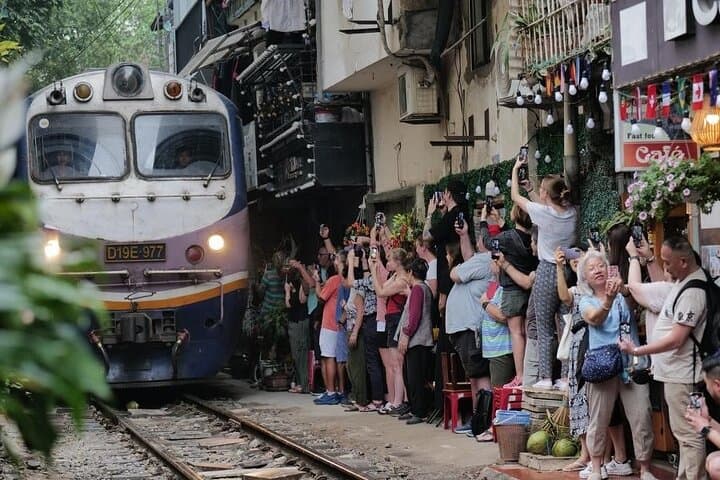
Returning to the city, the scene flips. Train Street threads between narrow terraces, cafes perched inches from the track. You sip thick, sweet egg coffee and wait—anticipation building as locals check schedules, and the train’s horn slices through the neighborhood. The moment the metal ribbon passes, the corridor seems to inhale and then exhale, bikes and stools tucked back into doorways as the train moves on.
Finish with a rickshaw glide through the French Quarter: colonial facades, leafy boulevards and a skyline that blends pagoda roofs with modern high-rises.
Bat Trang’s pottery tradition dates to the 14th century and persists in family-run kilns and communal knowledge; Train Street is a modern urban ritual born from dense, centuries-old city fabric.
Practicalities: expect about 4–5 hours total, light walking on uneven village lanes and tight urban streets, and a moderate amount of standing during the train viewing. Bring cash for small purchases, dress for humidity, and keep cameras compact—Train Street photos are best from a short distance. Be mindful of local life: support artisans by buying directly and follow guides’ directions near the tracks for safety.