THE ADVENTURE COLLECTIVE® · Independent discovery and booking for outdoor travel

Learn to make momo and Dal Bhat with village cooks on the edge of the Manaslu region. This hands-on class pairs practical technique with cultural context and a shared meal.
Learn to make momo and Dal Bhat with village cooks on the edge of the Manaslu region. This hands-on class pairs practical technique with cultural context and a shared meal.
You step off a dusty lane into a low stone courtyard where wood smoke curls like a question and a friendly chef waits with a wooden rolling pin. The Himalayan foothills lean in around the village; terraces step down toward a river that dares you to follow its sound. Inside the cooking room, the rhythm is simple: pulse, pinch, steam — local women guide your hands through dough and lentils while stories of high passes and festivals float in.
Verified experiences and guided adventures in the surrounding area.
Operated by Himalayan Trekking Path (P). Ltd. · Kathmandu, Bagmati Province
You step off a dusty lane into a low stone courtyard where wood smoke curls like a question and a friendly chef waits with a wooden rolling pin. The Himalayan foothills lean in around the village; terraces step down toward a river that dares you to follow its sound. Inside the cooking room, the rhythm is simple: pulse, pinch, steam — local women guide your hands through dough and lentils while stories of high passes and festivals float in.
Nepal’s food heritage is shaped by geography as much as culture. Dal Bhat — rice with lentil soup and seasonal curries — evolved to fuel hard work in rice terraces and mountain trails, while momo arrived across trade routes from Tibet and adapted to Nepali tastes. The Manaslu-Ganesh corridor frames local life: rugged granite and green ridgelines, with villages that have traded trans-Himalayan goods for centuries.
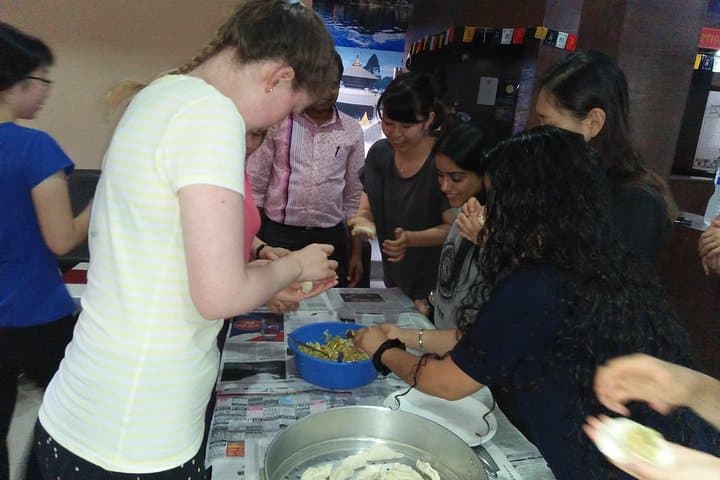
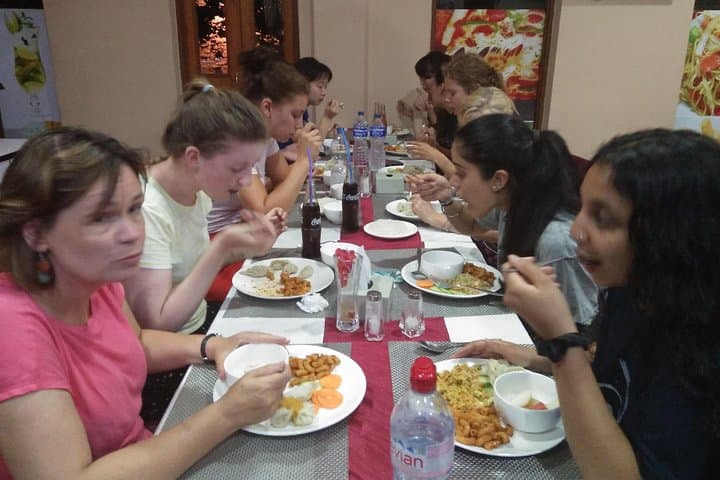
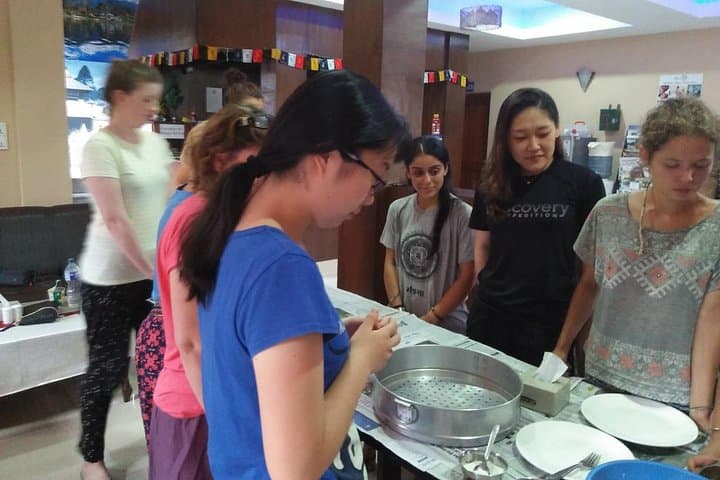
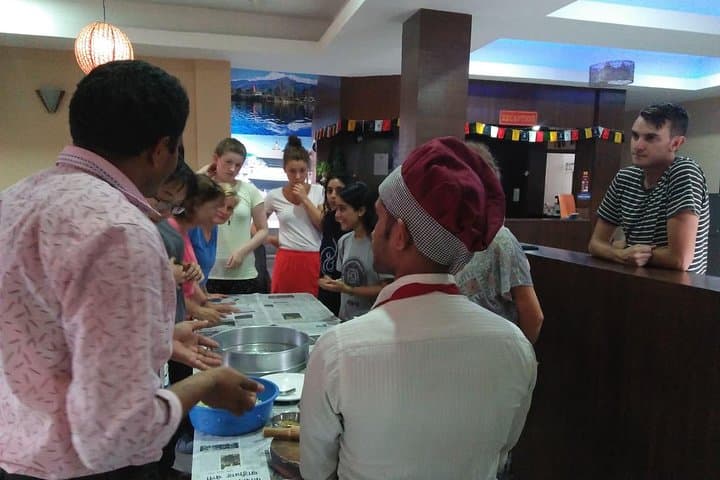
Expect a hands-on session of about four hours that covers momo-making, Dal Bhat components, pickles and simple vegetable curries, followed by a shared meal. The class doubles as a short cultural exchange: learn ingredient names, hear why mustard oil is used, and why meals are structured around energy for labor.
Practical notes: wear clothes you don’t mind splattering with oil, bring a small notebook for recipe notes, and factor in transport time from Kathmandu. Morning classes avoid late-afternoon rains in monsoon season; winter brings crisp air and heartier stews. Cash and a polite greeting in Nepali — namaste — go a long way when you leave with a full plate and a handful of recipes.
easy.
4 hours.
No special fitness required; suitable for most travelers comfortable standing for short periods.
The tour listing includes pickup and drop-off by private vehicle when that option is selected; confirm your pickup point at booking.
Yes—vegetarian options are available if you notify the operator at time of booking.
Most instructors speak Nepali and conversational English; a local guide or translator is often provided for clarity.
Children are permitted but infants must sit on a lap; check the operator’s age policies and safety guidelines when booking.
Local food practices reflect centuries of mountain trade and agriculture; Dal Bhat became central to Nepali diets as a compact energy source for field and trail work.
Small, locally run experiences support village livelihoods—bring reusable containers and avoid single-use plastics to minimize impact.
Himalayan Trekking Path (P). Ltd. operates guided outdoor trips and adventures with an emphasis on safety, stewardship, and memorable experiences.
You step off a dusty lane into a low stone courtyard where wood smoke curls like a question and a friendly chef waits with a wooden rolling pin. The Himalayan foothills lean in around the village; terraces step down toward a river that dares you to follow its sound. Inside the cooking room, the rhythm is simple: pulse, pinch, steam — local women guide your hands through dough and lentils while stories of high passes and festivals float in.
You step off a dusty lane into a low stone courtyard where wood smoke curls like a question and a friendly chef waits with a wooden rolling pin. The Himalayan foothills lean in around the village; terraces step down toward a river that dares you to follow its sound. Inside the cooking room, the rhythm is simple: pulse, pinch, steam — local women guide your hands through dough and lentils while stories of high passes and festivals float in.
Nepal’s food heritage is shaped by geography as much as culture. Dal Bhat — rice with lentil soup and seasonal curries — evolved to fuel hard work in rice terraces and mountain trails, while momo arrived across trade routes from Tibet and adapted to Nepali tastes. The Manaslu-Ganesh corridor frames local life: rugged granite and green ridgelines, with villages that have traded trans-Himalayan goods for centuries.
Expect a hands-on session of about four hours that covers momo-making, Dal Bhat components, pickles and simple vegetable curries, followed by a shared meal. The class doubles as a short cultural exchange: learn ingredient names, hear why mustard oil is used, and why meals are structured around energy for labor.
Practical notes: wear clothes you don’t mind splattering with oil, bring a small notebook for recipe notes, and factor in transport time from Kathmandu. Morning classes avoid late-afternoon rains in monsoon season; winter brings crisp air and heartier stews. Cash and a polite greeting in Nepali — namaste — go a long way when you leave with a full plate and a handful of recipes.