THE ADVENTURE COLLECTIVE® · Independent discovery and booking for outdoor travel

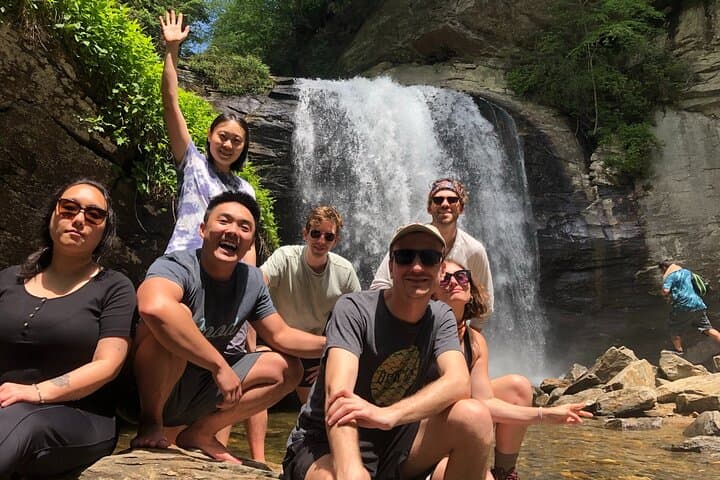
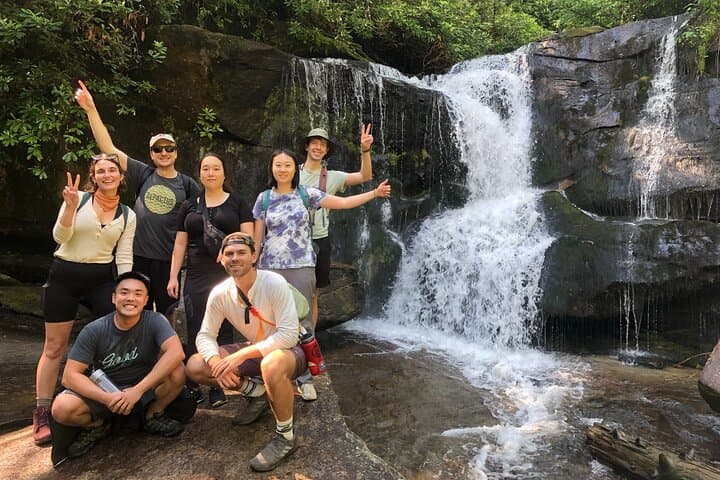
Follow a small-group guide from downtown Asheville into Pisgah National Forest for 2–3 miles of easy-to-moderate trail and multiple hidden waterfalls. Perfect for photographers and outdoorsy travelers who want a compact, guided taste of the Blue Ridge’s famed cascades.
Follow a small-group guide from downtown Asheville into Pisgah National Forest for 2–3 miles of easy-to-moderate trail and multiple hidden waterfalls. Perfect for photographers and outdoorsy travelers who want a compact, guided taste of the Blue Ridge’s famed cascades.
By 8:30 a.m. the bus idles in downtown Asheville, the city’s brick storefronts blinking awake while your guide passes out daypacks and trekking poles. The road climbs out of town and into the Blue Ridge—ridges folding like pages of an old atlas, and the forest begins to speak: small streams rehearsing the next drop, rocks slick with early-season moss. Within an hour the forest closes in and the air smells sharp and green; by the time you step onto the trail, the waterfalls are already announcing themselves, daring you closer with the hush of falling water.
Verified experiences and guided adventures in the surrounding area.
Operated by Blue Ridge Hiking Company · Asheville, North Carolina
By 8:30 a.m. the bus idles in downtown Asheville, the city’s brick storefronts blinking awake while your guide passes out daypacks and trekking poles. The road climbs out of town and into the Blue Ridge—ridges folding like pages of an old atlas, and the forest begins to speak: small streams rehearsing the next drop, rocks slick with early-season moss. Within an hour the forest closes in and the air smells sharp and green; by the time you step onto the trail, the waterfalls are already announcing themselves, daring you closer with the hush of falling water.
This half-day outing visits off-the-beaten-path falls inside Pisgah National Forest, part of the mountain range that earned western North Carolina its reputation as “the land of waterfalls.” The area’s geology is a story of ancient uplift and relentless rain—metamorphic rock and fractured granite guiding water over cliffs and through narrow chutes. Human history is layered too: c. 20th-century logging scars healed by Civilian Conservation Corps plantings and the later conservation push that protected many of these headwater streams.
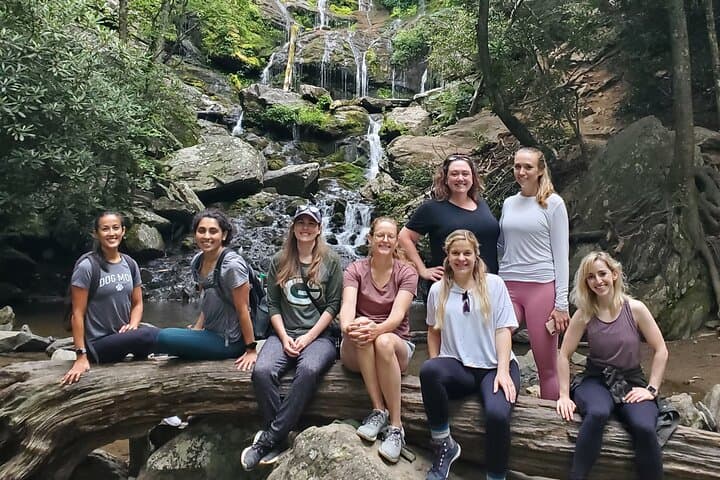
Guides lead a small group (max 6), tailoring the route to ability and interest. Expect 2–3 miles of easy-to-moderate trails, short climbs with modest elevation gain (typically under 600 feet), and 2.5–3 hours of hiking nested inside a 5-hour tour that includes two roughly 45-minute drives from downtown Asheville to trailheads. Snacks, transportation, and basic gear (trekking poles, daypack, bottled water on request) are included—handy when you want to keep your pack light and your camera at the ready.
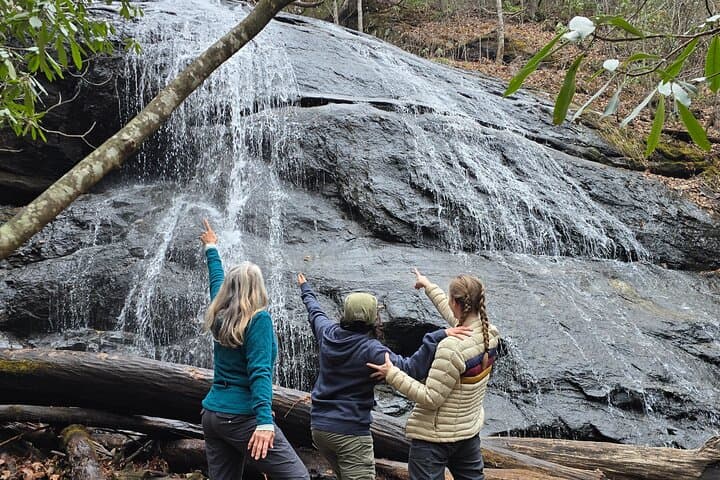
On trail you’ll move through mixed hardwoods where streams braid and rejoin, and you’ll learn to read the falls: broad plunges that roar and narrow cascades that whisper. Guides share practical ecology—how foot traffic affects moss and trout habitat—and cultural notes about the mountain communities that shaped local trail networks.
Practical edge: tuck a lightweight waterproof layer and grippy footwear in your pack—rock and roots get slick near falls. Plan for wet crossings and wear shoes that can take a splash. Morning light keeps photographer-friendly shadows on the falls, while spring and early summer deliver the fullest flows. If you’re chasing solitude, midweek departures and the group’s small size keep crowds minimal.
This trip is ideal for travelers in reasonable shape who want waterfall variety without technical scrambling—children and older hikers often fit the profile when moving at a steady pace. It’s a compact, guided way to sample Pisgah’s best falls in a single morning, with local insight that gets you to the good spots safely and with respect for fragile streamside ecology.
moderate.
5 hours (2.5–3 hours hiking).
Suitable for most fitness levels; participants should be comfortable walking 2–3 miles on uneven terrain with modest climbs.
Meet at 8:30 a.m. in downtown Asheville near the corner of College St and Lexington Ave; the operator’s entrance is through a small gated courtyard.
The route is easy-to-moderate with 2–3 miles of walking and short climbs; guides adapt pace to the group so most people in reasonable health can participate.
Transportation from Asheville, snacks, and access to shared trekking poles, daypacks, and bottled water upon request are included.
The tour is family-friendly and infants may sit on laps; service animals are permitted, but pets should be discussed with the operator beforehand.
Trailhead restrooms may be limited; plan to use facilities in Asheville before departure and expect limited or no toilets on remote sections.
You can cancel for a full refund at least 24 hours in advance; the operator may cancel if weather is severe or if there are insufficient travelers.
Pisgah’s forest reflects cycles of early 20th-century logging and later restoration through Civilian Conservation Corps projects and modern conservation efforts.
Stay on marked trails and avoid stepping on moss or stream banks; these small waterfalls depend on intact riparian vegetation and limited human disturbance.
Blue Ridge Hiking Company operates guided outdoor trips and adventures with an emphasis on safety, stewardship, and memorable experiences.
By 8:30 a.m. the bus idles in downtown Asheville, the city’s brick storefronts blinking awake while your guide passes out daypacks and trekking poles. The road climbs out of town and into the Blue Ridge—ridges folding like pages of an old atlas, and the forest begins to speak: small streams rehearsing the next drop, rocks slick with early-season moss. Within an hour the forest closes in and the air smells sharp and green; by the time you step onto the trail, the waterfalls are already announcing themselves, daring you closer with the hush of falling water.
By 8:30 a.m. the bus idles in downtown Asheville, the city’s brick storefronts blinking awake while your guide passes out daypacks and trekking poles. The road climbs out of town and into the Blue Ridge—ridges folding like pages of an old atlas, and the forest begins to speak: small streams rehearsing the next drop, rocks slick with early-season moss. Within an hour the forest closes in and the air smells sharp and green; by the time you step onto the trail, the waterfalls are already announcing themselves, daring you closer with the hush of falling water.
This half-day outing visits off-the-beaten-path falls inside Pisgah National Forest, part of the mountain range that earned western North Carolina its reputation as “the land of waterfalls.” The area’s geology is a story of ancient uplift and relentless rain—metamorphic rock and fractured granite guiding water over cliffs and through narrow chutes. Human history is layered too: c. 20th-century logging scars healed by Civilian Conservation Corps plantings and the later conservation push that protected many of these headwater streams.
Guides lead a small group (max 6), tailoring the route to ability and interest. Expect 2–3 miles of easy-to-moderate trails, short climbs with modest elevation gain (typically under 600 feet), and 2.5–3 hours of hiking nested inside a 5-hour tour that includes two roughly 45-minute drives from downtown Asheville to trailheads. Snacks, transportation, and basic gear (trekking poles, daypack, bottled water on request) are included—handy when you want to keep your pack light and your camera at the ready.
On trail you’ll move through mixed hardwoods where streams braid and rejoin, and you’ll learn to read the falls: broad plunges that roar and narrow cascades that whisper. Guides share practical ecology—how foot traffic affects moss and trout habitat—and cultural notes about the mountain communities that shaped local trail networks.
Practical edge: tuck a lightweight waterproof layer and grippy footwear in your pack—rock and roots get slick near falls. Plan for wet crossings and wear shoes that can take a splash. Morning light keeps photographer-friendly shadows on the falls, while spring and early summer deliver the fullest flows. If you’re chasing solitude, midweek departures and the group’s small size keep crowds minimal.
This trip is ideal for travelers in reasonable shape who want waterfall variety without technical scrambling—children and older hikers often fit the profile when moving at a steady pace. It’s a compact, guided way to sample Pisgah’s best falls in a single morning, with local insight that gets you to the good spots safely and with respect for fragile streamside ecology.