THE ADVENTURE COLLECTIVE® · Independent discovery and booking for outdoor travel

Short on time but hungry for exposure? Dalkey Quarry’s half-day climbing pairs beginner-friendly granite routes with sweeping Dublin Bay views. Guided instruction, top-rope routes, and a quick DART hop from the city make this an ideal coastal climbing sampler.
Short on time but hungry for exposure? Dalkey Quarry’s half-day climbing pairs beginner-friendly granite routes with sweeping Dublin Bay views. Guided instruction, top-rope routes, and a quick DART hop from the city make this an ideal coastal climbing sampler.
You start on a sharp, salt-bright morning, the wind tugging at your jacket as the stone rises out of grass and scrub: Dalkey Quarry's granite faces stare down at Dublin Bay, ridged and honest, daring you to find purchase. Guides check harnesses with practiced hands, the clack of carabiners and low, clear instructions punctuating the coastal air. A short walk from the station becomes a transition — urban bustle falls behind and the Atlantic pushes forward in sight and sound.
Verified experiences and guided adventures in the surrounding area.
Operated by adventure.ie · Dalkey, Dublin
You start on a sharp, salt-bright morning, the wind tugging at your jacket as the stone rises out of grass and scrub: Dalkey Quarry's granite faces stare down at Dublin Bay, ridged and honest, daring you to find purchase. Guides check harnesses with practiced hands, the clack of carabiners and low, clear instructions punctuating the coastal air. A short walk from the station becomes a transition — urban bustle falls behind and the Atlantic pushes forward in sight and sound.
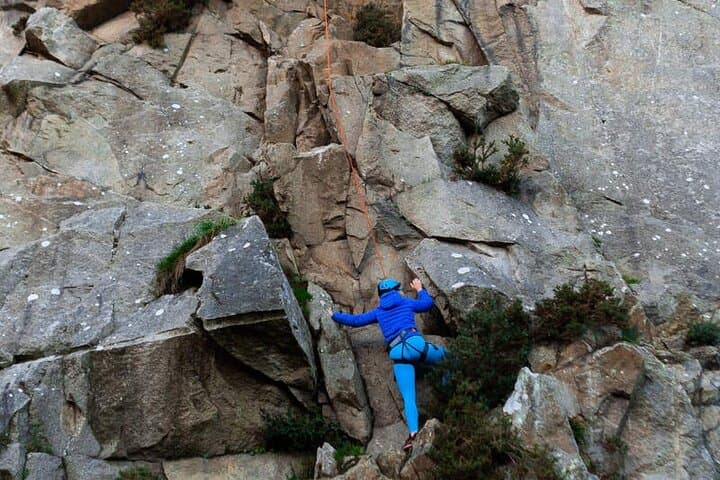
Dalkey Quarry carries a working history as plainly as its lichen-streaked walls. For nearly two centuries the site provided granite for Dublin's piers and streets; today the extraction scars read as routes and belays. Geologically, the rock is coarse-grained granite — excellent friction for smearing and edging — which is why climbers have bolted more than 200 routes into this compact playground. Culturally, the climb sits between village and sea: fishermen's cottages, Victorian promenades, and the distant silhouette of the Wicklow Mountains tie a human scale to the raw coastline.
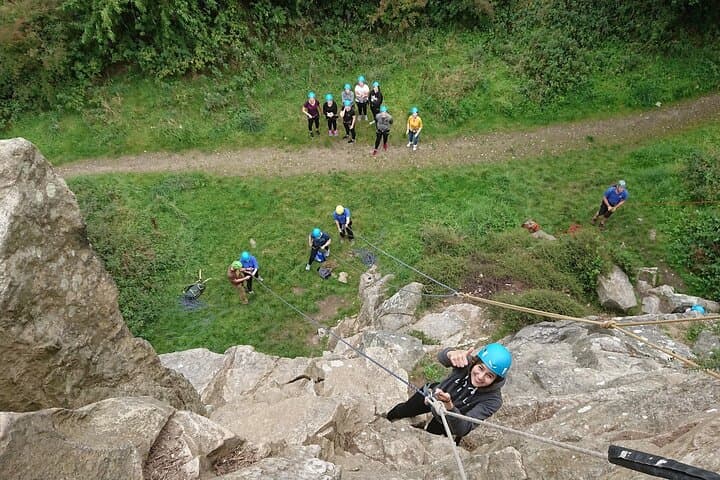
The climbing program here is intentionally pragmatic. Guides begin with a safety briefing, knot-tying and harness checks, then lead you to easy top-rope lines to build footwork and confidence. Each pitch is short — most routes are single-pitch, 10–20 meters — so progress is measured in repetitions and small victories. Between leads, the view shifts: Dublin City like a folded map inland, the bay a sheet of changing light, and if the tide's low you can pick out seals slipping along the rocks below.
This is not about a single summit glory; it’s about steady learning and the tactile pleasure of moving on good rock. Expect wind, occasional spray, and cobbled microclimates — sunny ledges one moment and exposed, damp faces the next. The guides adapt instruction to groups, turning maneuvers into repeatable skills: foot placement, reading holds, trusting the rope.
Practical pointers: dress in layers, bring a secure pair of trainers or approach shoes, and carry water — the half-day runs about 2.5 hours on site. Public transport (DART to Dalkey) drops you within a brief walk; there’s also free parking. The operator provides helmets, harnesses, ropes and expert supervision; participants should have a moderate fitness level and no serious spinal or cardiovascular conditions.
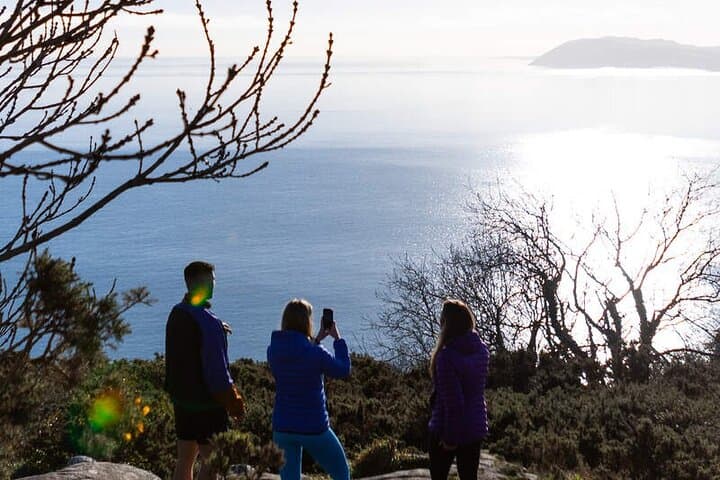
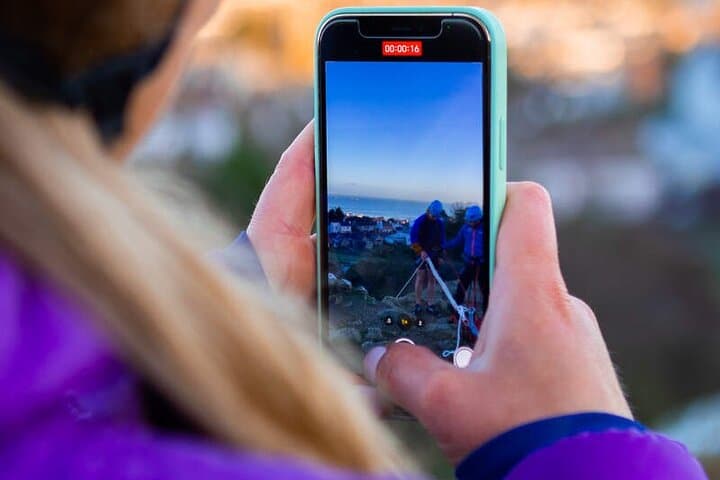
For photographers and casual hikers, combine the session with Killiney Hill afterward for wider panoramas of the bay and Wicklow ridgeline. Leave no trace: chalk sparingly, pack out trash, and respect bird-nesting periods in spring. In short: Dalkey is a compact, high-value climb — quick to reach from Dublin, rich in views, and ideal for anyone who wants to trade pavement for granite without committing to a full-day expedition.
moderate.
2–3 hours.
Moderate fitness — comfortable with short, steep approaches and repeated bouldery moves.
No — sessions are designed for beginners; guides teach knots, belaying basics and movement techniques.
Yes — harnesses, helmets, ropes and necessary climbing kit are supplied by the operator.
Dalkey DART station is about a 10–15 minute walk to the meeting point; guides also note nearby free parking.
Tours may be cancelled for safety if conditions are high wind or heavy rain; the listing indicates no refunds for cancellations by the guest.
Minors can participate depending on operator policy and guardianship; the booking notes stroller accessibility but recommends moderate fitness and mobility.
Yes — Killiney Hill is nearby and offers panoramic viewpoints, making a combined outing easy after the climb.
Dalkey Quarry was quarried for granite in the 19th century to supply Dublin’s piers and streets; the old workings now form the area’s climbing routes.
Respect nesting seasons for seabirds and peregrines; avoid excessive chalking and pack out all gear to minimize impact.
adventure.ie operates guided outdoor trips and adventures with an emphasis on safety, stewardship, and memorable experiences.
You start on a sharp, salt-bright morning, the wind tugging at your jacket as the stone rises out of grass and scrub: Dalkey Quarry's granite faces stare down at Dublin Bay, ridged and honest, daring you to find purchase. Guides check harnesses with practiced hands, the clack of carabiners and low, clear instructions punctuating the coastal air. A short walk from the station becomes a transition — urban bustle falls behind and the Atlantic pushes forward in sight and sound.
You start on a sharp, salt-bright morning, the wind tugging at your jacket as the stone rises out of grass and scrub: Dalkey Quarry's granite faces stare down at Dublin Bay, ridged and honest, daring you to find purchase. Guides check harnesses with practiced hands, the clack of carabiners and low, clear instructions punctuating the coastal air. A short walk from the station becomes a transition — urban bustle falls behind and the Atlantic pushes forward in sight and sound.
Dalkey Quarry carries a working history as plainly as its lichen-streaked walls. For nearly two centuries the site provided granite for Dublin's piers and streets; today the extraction scars read as routes and belays. Geologically, the rock is coarse-grained granite — excellent friction for smearing and edging — which is why climbers have bolted more than 200 routes into this compact playground. Culturally, the climb sits between village and sea: fishermen's cottages, Victorian promenades, and the distant silhouette of the Wicklow Mountains tie a human scale to the raw coastline.
The climbing program here is intentionally pragmatic. Guides begin with a safety briefing, knot-tying and harness checks, then lead you to easy top-rope lines to build footwork and confidence. Each pitch is short — most routes are single-pitch, 10–20 meters — so progress is measured in repetitions and small victories. Between leads, the view shifts: Dublin City like a folded map inland, the bay a sheet of changing light, and if the tide's low you can pick out seals slipping along the rocks below.
This is not about a single summit glory; it’s about steady learning and the tactile pleasure of moving on good rock. Expect wind, occasional spray, and cobbled microclimates — sunny ledges one moment and exposed, damp faces the next. The guides adapt instruction to groups, turning maneuvers into repeatable skills: foot placement, reading holds, trusting the rope.
Practical pointers: dress in layers, bring a secure pair of trainers or approach shoes, and carry water — the half-day runs about 2.5 hours on site. Public transport (DART to Dalkey) drops you within a brief walk; there’s also free parking. The operator provides helmets, harnesses, ropes and expert supervision; participants should have a moderate fitness level and no serious spinal or cardiovascular conditions.
For photographers and casual hikers, combine the session with Killiney Hill afterward for wider panoramas of the bay and Wicklow ridgeline. Leave no trace: chalk sparingly, pack out trash, and respect bird-nesting periods in spring. In short: Dalkey is a compact, high-value climb — quick to reach from Dublin, rich in views, and ideal for anyone who wants to trade pavement for granite without committing to a full-day expedition.