THE ADVENTURE COLLECTIVE® · Independent discovery and booking for outdoor travel

Explore the East Bank of Luxor on a three-hour private tour of Karnak and Luxor Temples. Experience colossal columns, layered history, and practical tips for visiting in the heat.
Explore the East Bank of Luxor on a three-hour private tour of Karnak and Luxor Temples. Experience colossal columns, layered history, and practical tips for visiting in the heat.
Sunrise paints the stone of Karnak in a hard, gold light and the avenue of broken sphinxes seems to hold its breath. Visitors move between columns the size of trees while the Nile, a low ribbon nearby, dares you to slow down and listen to the city’s long history.
Verified experiences and guided adventures in the surrounding area.
Operated by Egypt Lifetime Tours · Luxor, Luxor Governorate
Sunrise paints the stone of Karnak in a hard, gold light and the avenue of broken sphinxes seems to hold its breath. Visitors move between columns the size of trees while the Nile, a low ribbon nearby, dares you to slow down and listen to the city’s long history.
This half-day private tour on Luxor’s East Bank links two of Egypt’s most consequential religious sites. Karnak grew over 2,000 years into a sprawling complex dedicated to Amun, Mut and Khonsu; its hypostyle hall and obelisks reveal layers of New Kingdom ambition and later additions. Luxor Temple — begun under Amenhotep III and finished by Ramesses II — served different ritual roles and later adapted to Christian and Islamic uses, so stone carries multiple eras at once.
Geologically the sandstone and mudbrick here preserve reliefs in an arid climate, but wind and urban pollution wear details away. Culturally, the sites remain living landmarks for local guides whose stories connect pharaohs to present-day Luxor.
Practical guidance: the private tour lasts about three hours with hotel pickup by air‑conditioned vehicle. Admission fees to the sites are paid separately; bring cash or card for tickets. Walk on uneven, sun-baked stone—comfortable walking shoes, sun protection and a refillable water bottle are essential. Peak sun hours get intense in summer; mornings are cooler and offer better light for photography. Guides often provide context that transforms carved names into human stories—ask about individual pharaohs and the Sacred Lake to get the most from the visit.
easy.
3 hours.
Minimal fitness required; you should be comfortable walking 1–2 miles on uneven surfaces and standing during explanations.
No; the tour price typically covers guide and transportation while site admission is paid separately at the ticket office using cash or card.
Parts of the sites have uneven terrain; the supplier notes wheelchair access is possible in some areas—check in advance and request assistance if needed.
Expect about 1–2 miles of walking at a gentle pace with stops for explanations and photos over roughly three hours.
Yes; the operator picks up from hotels or Nile cruises on the East Bank—confirm your pickup point when booking.
Karnak expanded across dynasties as pharaohs added pylons, statues and obelisks; Luxor Temple functioned as the southern shrine in rituals connecting the two cult centers.
High visitor numbers and urban pollution stress the monuments—follow site rules, avoid touching carvings, and limit single-use plastics to reduce impact.
Egypt Lifetime Tours operates guided outdoor trips and adventures with an emphasis on safety, stewardship, and memorable experiences.
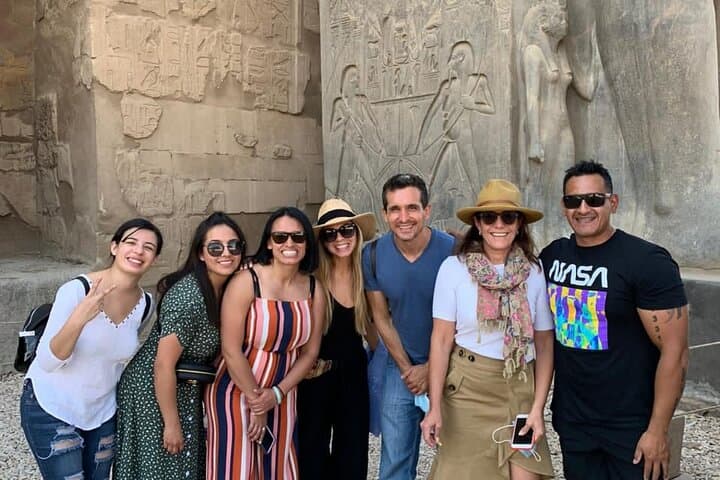
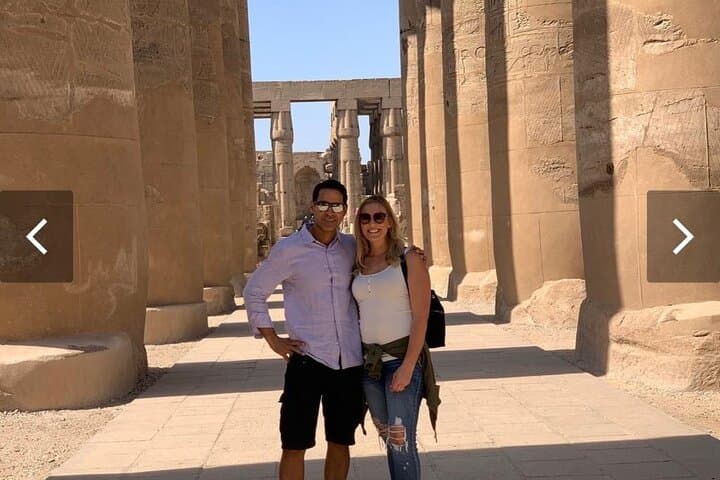
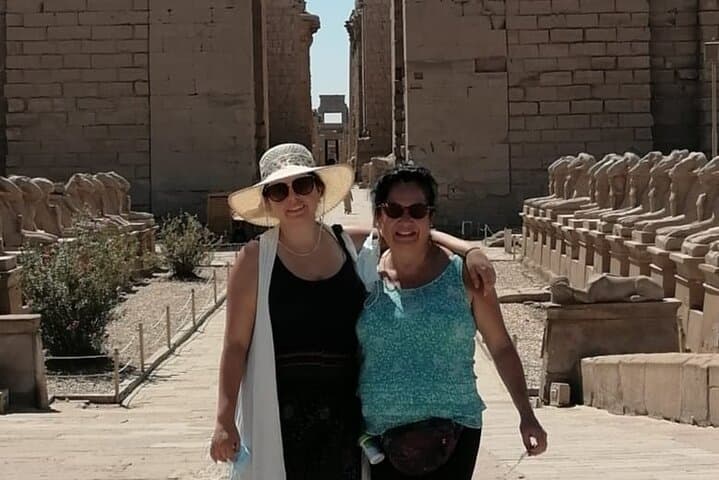
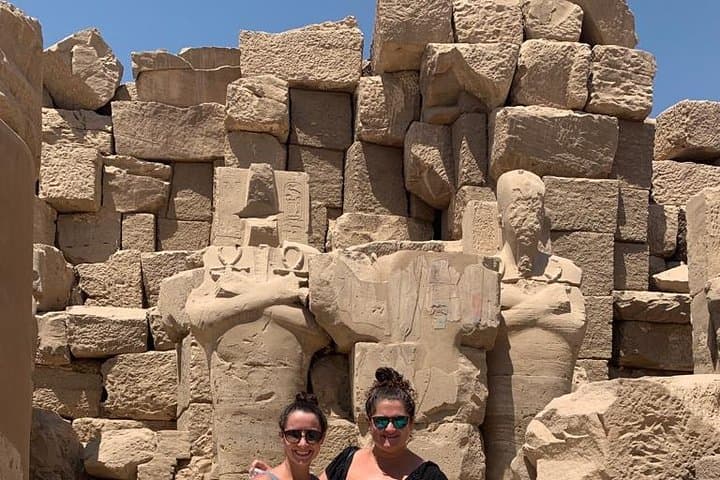
Sunrise paints the stone of Karnak in a hard, gold light and the avenue of broken sphinxes seems to hold its breath. Visitors move between columns the size of trees while the Nile, a low ribbon nearby, dares you to slow down and listen to the city’s long history.
Sunrise paints the stone of Karnak in a hard, gold light and the avenue of broken sphinxes seems to hold its breath. Visitors move between columns the size of trees while the Nile, a low ribbon nearby, dares you to slow down and listen to the city’s long history.
This half-day private tour on Luxor’s East Bank links two of Egypt’s most consequential religious sites. Karnak grew over 2,000 years into a sprawling complex dedicated to Amun, Mut and Khonsu; its hypostyle hall and obelisks reveal layers of New Kingdom ambition and later additions. Luxor Temple — begun under Amenhotep III and finished by Ramesses II — served different ritual roles and later adapted to Christian and Islamic uses, so stone carries multiple eras at once.
Geologically the sandstone and mudbrick here preserve reliefs in an arid climate, but wind and urban pollution wear details away. Culturally, the sites remain living landmarks for local guides whose stories connect pharaohs to present-day Luxor.
Practical guidance: the private tour lasts about three hours with hotel pickup by air‑conditioned vehicle. Admission fees to the sites are paid separately; bring cash or card for tickets. Walk on uneven, sun-baked stone—comfortable walking shoes, sun protection and a refillable water bottle are essential. Peak sun hours get intense in summer; mornings are cooler and offer better light for photography. Guides often provide context that transforms carved names into human stories—ask about individual pharaohs and the Sacred Lake to get the most from the visit.