THE ADVENTURE COLLECTIVE® · Independent discovery and booking for outdoor travel

A brisk longtail-boat circuit through Phi Phi’s most photogenic spots—Maya Bay, Pileh Lagoon, Viking Cave and Monkey Beach—this half-day tour packs swimming, snorkeling and limestone scenery into one efficient outing. Ideal for travelers who want maximum island time on a short schedule.
A brisk longtail-boat circuit through Phi Phi’s most photogenic spots—Maya Bay, Pileh Lagoon, Viking Cave and Monkey Beach—this half-day tour packs swimming, snorkeling and limestone scenery into one efficient outing. Ideal for travelers who want maximum island time on a short schedule.
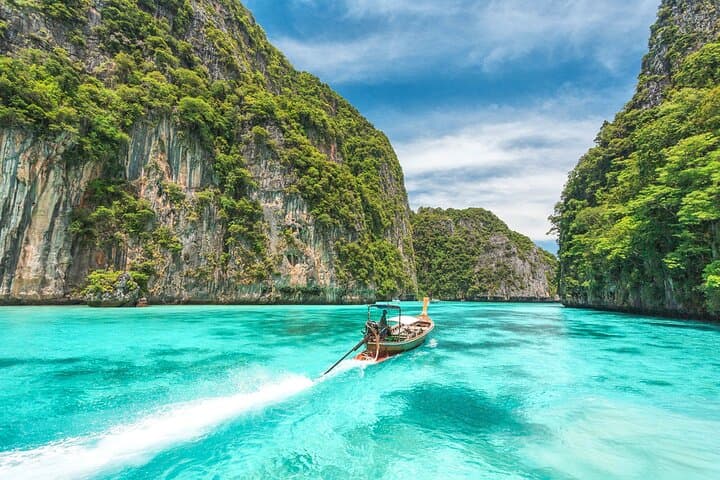
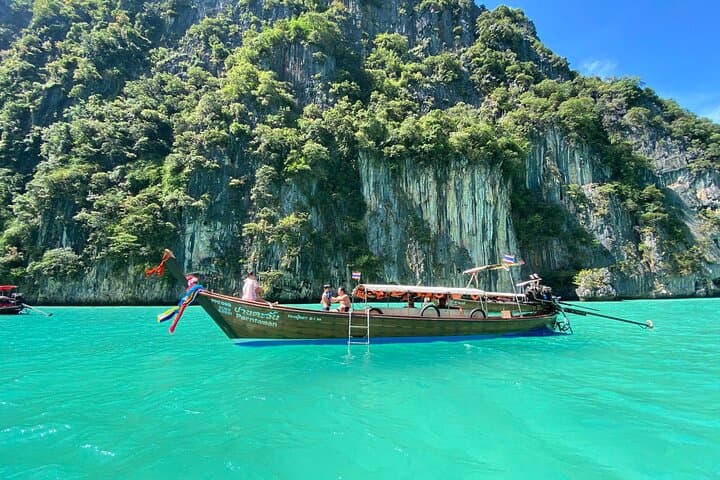
The longtail's engine coughs, then steadies, as limestone walls slide into view and the sea changes color from turquoise to emerald.
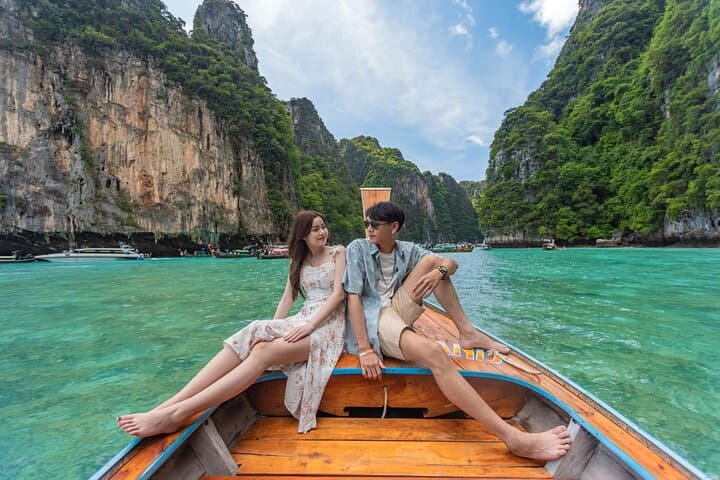
You push forward between towering cliffs into Pileh Lagoon, where the water holds you like a shallow pool and the limestone faces wear streaks of orange and green.
This half-day boat run threads together Phi Phi Leh's showstoppers—Viking Cave's weathered cliff face, Monkey Beach's sunlit sand and bold macaques, the reef shoals of Loh Samah, and the iconic sweep of Maya Bay.
Geology here is obvious: eroded carbonate cliffs formed by uplifted coral and marine sediments, cut by sea and rain into sheer towers that funnel wind and waves. Culturally, Viking Cave hints at a local economy tied to swiftlet nests and fishing traditions; on Phi Phi Don you'll find the island's tourism hub where day-trippers and liveaboards intersect.
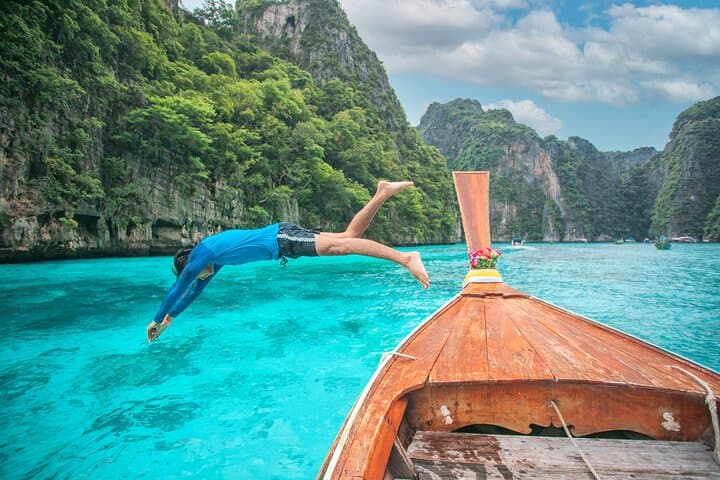
Expect 4–5 hours afloat, multiple short swims or snorkel stops, and repeated photo opportunities—bring a reef‑safe sunscreen and a waterproof camera.
Timing matters: mornings are calmer and less crowded; afternoons can be choppier. Guides provide life jackets and masks, but basic swimming ability is necessary for snorkeling. The area is managed for conservation; access to Maya Bay can be limited or regulated during restoration or high-season limits, so confirm current access before you go.
Practically: arrive at Ao Ton Sai pier early, carry cash for small purchases, stow valuables in a dry bag, and be prepared for sun and wind. The route is compact but dramatic—fast, marine, and unmistakably tropical.
Verified experiences and guided adventures in the surrounding area.
Operated by Siam Scape Journeys · Ko Phi Phi (Tonsai Village), Krabi Province
The longtail's engine coughs, then steadies, as limestone walls slide into view and the sea changes color from turquoise to emerald.
You push forward between towering cliffs into Pileh Lagoon, where the water holds you like a shallow pool and the limestone faces wear streaks of orange and green.
This half-day boat run threads together Phi Phi Leh's showstoppers—Viking Cave's weathered cliff face, Monkey Beach's sunlit sand and bold macaques, the reef shoals of Loh Samah, and the iconic sweep of Maya Bay.
Geology here is obvious: eroded carbonate cliffs formed by uplifted coral and marine sediments, cut by sea and rain into sheer towers that funnel wind and waves. Culturally, Viking Cave hints at a local economy tied to swiftlet nests and fishing traditions; on Phi Phi Don you'll find the island's tourism hub where day-trippers and liveaboards intersect.
Expect 4–5 hours afloat, multiple short swims or snorkel stops, and repeated photo opportunities—bring a reef‑safe sunscreen and a waterproof camera.
Timing matters: mornings are calmer and less crowded; afternoons can be choppier. Guides provide life jackets and masks, but basic swimming ability is necessary for snorkeling. The area is managed for conservation; access to Maya Bay can be limited or regulated during restoration or high-season limits, so confirm current access before you go.
Practically: arrive at Ao Ton Sai pier early, carry cash for small purchases, stow valuables in a dry bag, and be prepared for sun and wind. The route is compact but dramatic—fast, marine, and unmistakably tropical.
easy.
5 hours.
Suitable for most fitness levels; must be able to board small boats and swim short distances for snorkeling.
The tour runs about 5 hours and typically includes snorkeling stops, life jackets, masks, drinking water, fruit, a guide and basic accident insurance.
Yes—both spots have shallow snorkeling areas; life jackets are provided and you should be able to swim short distances from the boat.
Access to Maya Bay has been subject to seasonal closures and limits for ecological recovery; operators may route you to nearby Loh Samah if access is restricted—confirm before booking.
Families can join; children 4–10 may require child tickets and non-swimmers should wear life jackets and remain cautious during beach landings and snorkeling.
Phi Phi’s cliffs are raised coral platforms shaped by sea-level change; Viking Cave’s bamboo scaffolds reflect a long history of swiftlet nest harvesting and coastal livelihoods.
The islands are under active management to limit visitor impact—expect regulated access, mooring rules, and reef-protection measures; use reef‑safe products and follow guides’ instructions.
Siam Scape Journeys operates guided outdoor trips and adventures with an emphasis on safety, stewardship, and memorable experiences.
The longtail's engine coughs, then steadies, as limestone walls slide into view and the sea changes color from turquoise to emerald.
You push forward between towering cliffs into Pileh Lagoon, where the water holds you like a shallow pool and the limestone faces wear streaks of orange and green.
This half-day boat run threads together Phi Phi Leh's showstoppers—Viking Cave's weathered cliff face, Monkey Beach's sunlit sand and bold macaques, the reef shoals of Loh Samah, and the iconic sweep of Maya Bay.
Geology here is obvious: eroded carbonate cliffs formed by uplifted coral and marine sediments, cut by sea and rain into sheer towers that funnel wind and waves. Culturally, Viking Cave hints at a local economy tied to swiftlet nests and fishing traditions; on Phi Phi Don you'll find the island's tourism hub where day-trippers and liveaboards intersect.
Expect 4–5 hours afloat, multiple short swims or snorkel stops, and repeated photo opportunities—bring a reef‑safe sunscreen and a waterproof camera.
Timing matters: mornings are calmer and less crowded; afternoons can be choppier. Guides provide life jackets and masks, but basic swimming ability is necessary for snorkeling. The area is managed for conservation; access to Maya Bay can be limited or regulated during restoration or high-season limits, so confirm current access before you go.
Practically: arrive at Ao Ton Sai pier early, carry cash for small purchases, stow valuables in a dry bag, and be prepared for sun and wind. The route is compact but dramatic—fast, marine, and unmistakably tropical.
The longtail's engine coughs, then steadies, as limestone walls slide into view and the sea changes color from turquoise to emerald.
You push forward between towering cliffs into Pileh Lagoon, where the water holds you like a shallow pool and the limestone faces wear streaks of orange and green.
This half-day boat run threads together Phi Phi Leh's showstoppers—Viking Cave's weathered cliff face, Monkey Beach's sunlit sand and bold macaques, the reef shoals of Loh Samah, and the iconic sweep of Maya Bay.
Geology here is obvious: eroded carbonate cliffs formed by uplifted coral and marine sediments, cut by sea and rain into sheer towers that funnel wind and waves. Culturally, Viking Cave hints at a local economy tied to swiftlet nests and fishing traditions; on Phi Phi Don you'll find the island's tourism hub where day-trippers and liveaboards intersect.
Expect 4–5 hours afloat, multiple short swims or snorkel stops, and repeated photo opportunities—bring a reef‑safe sunscreen and a waterproof camera.
Timing matters: mornings are calmer and less crowded; afternoons can be choppier. Guides provide life jackets and masks, but basic swimming ability is necessary for snorkeling. The area is managed for conservation; access to Maya Bay can be limited or regulated during restoration or high-season limits, so confirm current access before you go.
Practically: arrive at Ao Ton Sai pier early, carry cash for small purchases, stow valuables in a dry bag, and be prepared for sun and wind. The route is compact but dramatic—fast, marine, and unmistakably tropical.