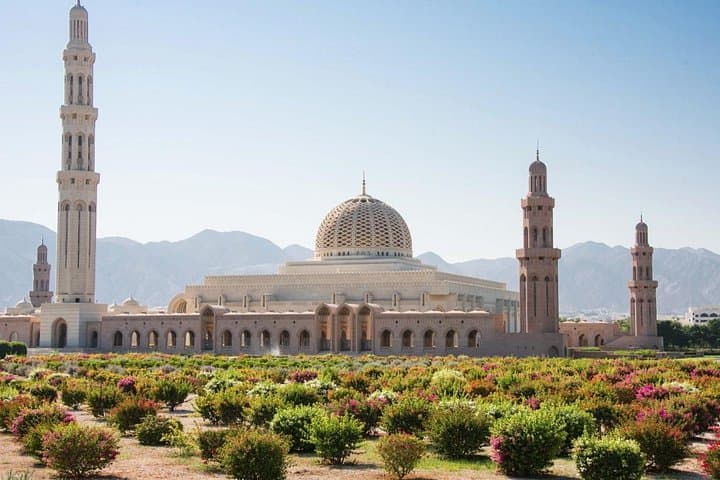
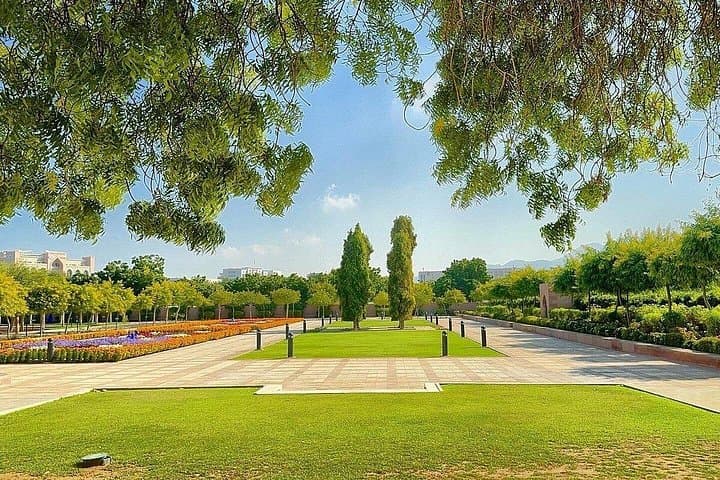
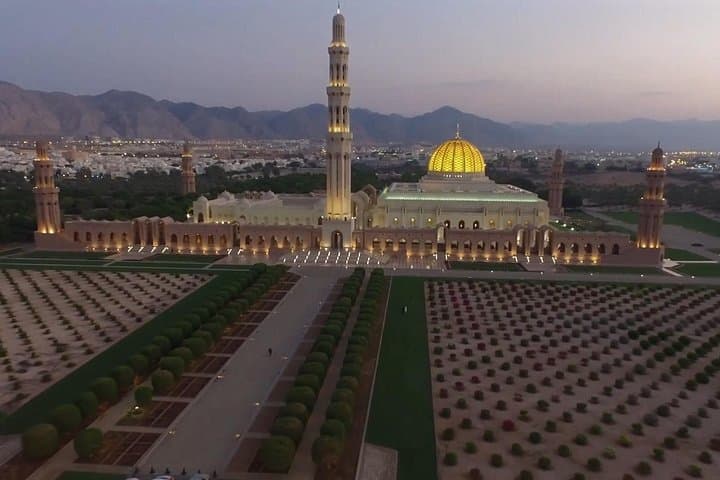
Morning light sharpens the mosque’s white façades as you step from a quiet Muscat street into cool marble and shadow.
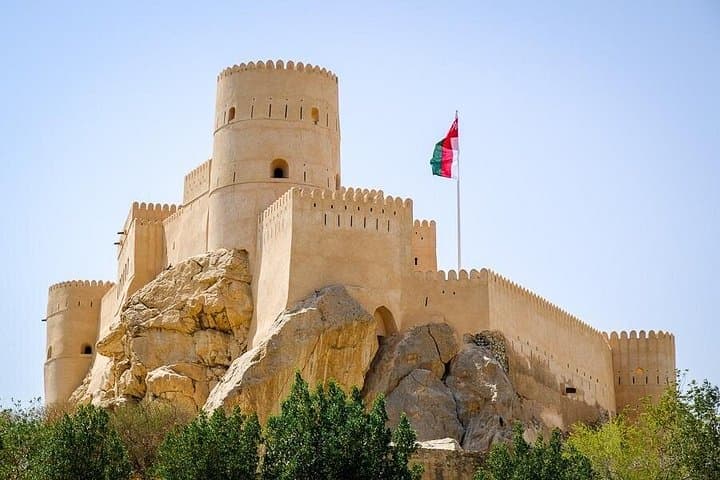
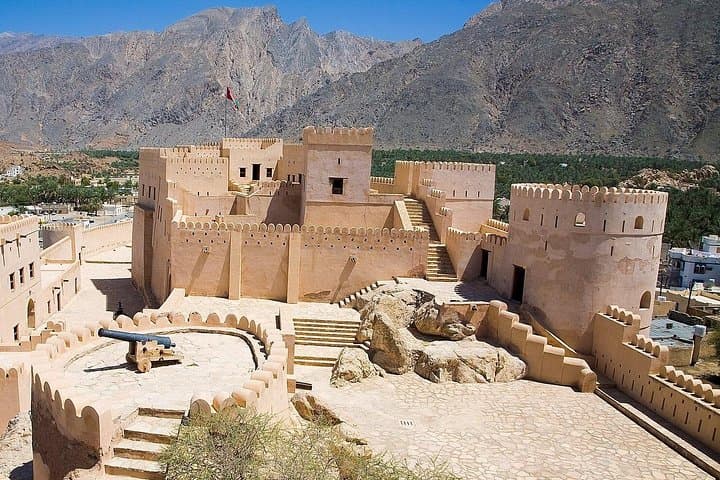
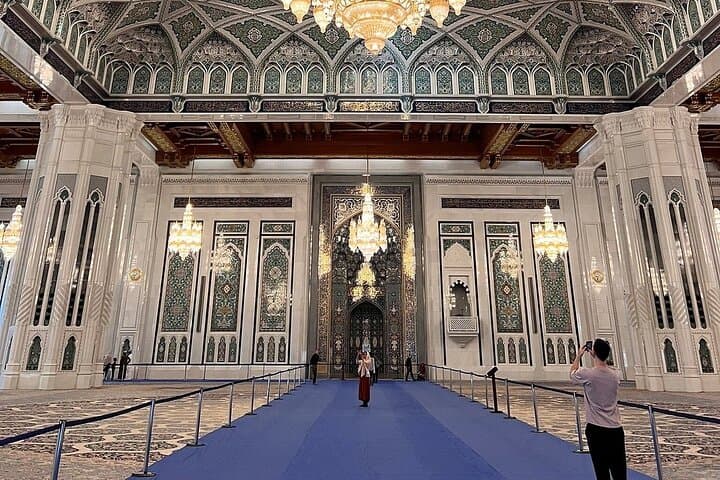
The Sultan Qaboos Grand Mosque greets visitors with vast prayer halls, a single-piece Persian carpet and light that filters through carved screens—an architectural pause before the road west. A short drive carries you out of the city into a changing world of date palms and low, folded rock. Nakhal Fort appears like a hand placed on the plain, its towers and crenellations clinging to a rocky spur above an oasis. The fort’s rooms and small museum catalog weapons and local life; weekly markets still pulse with barter and goats on market day.
Nearby, Ain Al Thawarah’s hot spring slips through limestone, filling a man-made pool where locals and travelers bathe—the water’s warmth a contrast to desert winds that can push and test your layers.
Geology here is visible: fractured Hajar foothills and aquifers feeding springs, while centuries of trade and tribal power left their marks on forts and towns. Culturally, Oman’s quieter hospitality and careful conservatism shape how you move and dress—modest clothing and polite distance are expected.
Practically, the half-day fits into a four-hour window that includes transfer time (expect 45–60 minutes each way). Wear closed-toe shoes for the fort’s uneven stone, carry water and sun protection, and plan mosque visits for morning non-prayer hours. Bring a quick-dry swimsuit if you plan to enter the spring and keep cash for small purchases—this short loop mixes architecture, history and a tangible slice of Oman’s landscape.